






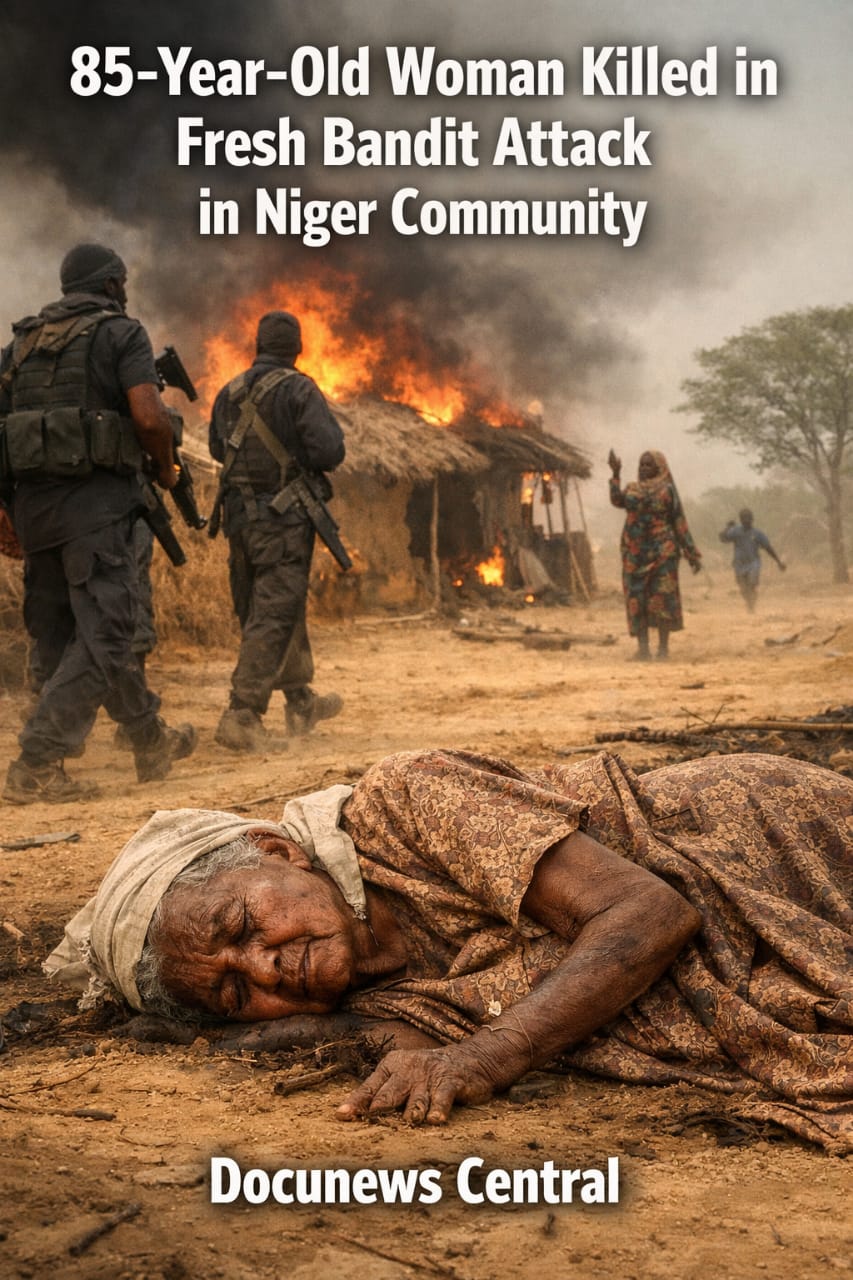
Insecurity continues to plague rural communities in Niger State, leaving residents vulnerable to bandit attacks that disrupt daily life and livelihoods. Over the past several months, villages along forested corridors in Borgu Local Government Area have faced repeated raids, forcing families to live under constant fear. This week, Kabe Village experienced yet another violent attack that left an 85-year-old woman dead and several villagers abducted.
On Wednesday night, 14 January 2026, (“Not on Thursday night as many news reported in on Thursday morning”) armed bandits descended upon Kabe Village, targeting households and food storage areas in search of supplies. The raid resulted in the tragic death of Amina Adamu, a respected elder in the community, and caused panic among villagers who witnessed the violence unfold firsthand.
The incident highlights both the human cost of banditry and the challenges of securing rural settlements in northern Nigeria. Families, farmers, and traders in the area continue to grapple with fear, loss, and uncertainty about the future.
Detailed Account of the Bandit Attack
Residents of Kabe Village described the bandits’ arrival as sudden and overwhelming. Armed men moved through the village under the cover of darkness, targeting homes and community storage facilities. Eyewitnesses reported hearing gunfire as villagers scrambled to escape the attackers’ path.
The bandits demanded food, grains, and other supplies, taking whatever they could carry before retreating into the nearby forests. Many villagers fled to the surrounding bush, fearing for their lives. Amid the chaos, Amina Adamu, who was attempting to escape, was shot and killed. Her death left a lasting emotional impact on the community, which revered her as a source of wisdom and guidance.
In addition to the fatality, several residents were abducted during the raid. The exact number of abductees is still uncertain, though families continue to search for information and hope for safe returns.
The violence caused widespread disruption, with children unable to attend school, farmers abandoning their fields, and households left to cope with the loss of food supplies and the trauma of the attack.
Profile of the Victim and Community Impact
Amina Adamu was an 85-year-old woman known throughout Kabe Village for her counsel and involvement in community affairs. She often mediated disputes, advised younger residents, and contributed to local decision-making. Her loss is deeply felt, not only by her family but also by neighbors and community members who relied on her guidance.
The emotional toll of her death has been compounded by the abductions and looting. Residents have described sleepless nights and anxiety over the possibility of future attacks. Community elders have convened meetings to discuss protective measures and how to support affected families.
Villagers are also calling for a more visible security presence. Many expressed frustration that prior appeals to local authorities have not resulted in sufficient protection, leaving them vulnerable to repeated attacks.
Abductions and Trauma
The abductions during the raid have added another layer of trauma to the community. Families are left in distress, unsure about the fate of their loved ones. Historical patterns in the region suggest that abducted villagers may be held for ransom, which puts additional financial and emotional strain on already vulnerable households.
Psychological impact is significant, particularly among children and the elderly. Local health workers report rising anxiety, fear, and symptoms of trauma following these repeated attacks. Experts suggest that without proper mental health support, the long-term effects could include social withdrawal, stress-related illness, and reduced community cohesion.
Impact on Food Security and Livelihoods
Kabe Village is primarily an agrarian community, relying on stored grains, tubers, and farm produce to survive between planting seasons. The bandits’ raid, which involved looting essential food items, has disrupted these critical supplies.
The economic consequences extend beyond individual households. Local markets have experienced reduced activity due to fear of movement outside the village. Farmers are hesitant to tend their fields, which could lead to decreased crop yields and higher food prices in the coming months.
Food insecurity is particularly concerning for households that rely solely on subsistence farming. Community leaders have warned that repeated raids could exacerbate hunger and force families to seek temporary relocation or assistance from humanitarian agencies.
Security Situation in Borgu Local Government Area
Borgu LGA is geographically challenging, with dense forests and limited infrastructure, making surveillance and rapid response difficult. Analysts note that the terrain allows armed groups to plan and execute raids with relative ease while evading security forces.
In recent months, multiple villages in Borgu have reported similar attacks, ranging from food looting to violent assaults and abductions. The frequency of these incidents underscores the need for long-term strategies rather than temporary patrols.
Local leaders have highlighted the importance of collaboration between state security forces, federal agencies, and community vigilante groups to ensure effective protection for residents.
Government Response and Ongoing Efforts
The Niger State Government has acknowledged the security challenges facing rural communities and pledged to strengthen protection measures. Governor Mohammed Umaru Bago has announced intensified operations to dismantle criminal hideouts and improve coordination between security agencies.
Authorities have also emphasized community-based intelligence gathering and rapid response capabilities as key strategies for reducing attacks. Despite these assurances, residents continue to express the need for sustained and visible security presence, citing repeated failures of short-term interventions.
Community Voices and Reactions
Following the raid, village elders, youth groups, and religious leaders convened emergency meetings to discuss safety measures. Recommendations included coordinated patrols, watch groups, and improved communication with local authorities.
Religious leaders urged calm and unity, emphasizing that fear and panic could make communities more vulnerable. Meanwhile, civil society organizations called for policy-level interventions to address the root causes of insecurity, including poverty and limited rural infrastructure.
Contextual Analysis of Rural Insecurity
The incident in Kabe Village is part of a wider pattern of insecurity affecting northern Nigeria. Factors such as porous borders, difficult terrain, and limited surveillance infrastructure have contributed to the rise of banditry in rural areas.
Analysts argue that long-term solutions must combine security interventions with socio-economic development programs. Enhancing community resilience through education, economic opportunities, and infrastructure development could help reduce the vulnerability of rural populations to attacks.
Calls for Sustainable Solutions
Community leaders and experts have outlined several strategies to reduce future attacks:
- Permanent security outposts in vulnerable villages
- Enhanced intelligence gathering and early warning systems
- Economic programs to reduce incentives for banditry
- Support systems for victims of attacks and abductions
- Strengthened coordination between state, federal, and local authorities
These measures, if implemented effectively, could help restore confidence among residents and prevent similar tragedies in the future.
Conclusion
The attack on Kabe Village on Wednesday night, 14 January 2026, resulting in the death of 85-year-old Amina Adamu and the abduction of several villagers, underscores the urgent need for effective security interventions in Niger State. Beyond the immediate loss of life and property, the incident highlights the psychological, economic, and social challenges faced by rural communities.
As residents mourn and search for abducted villagers, it is clear that a multi-faceted approach involving security reinforcement, community engagement, and socio-economic support is essential to prevent future attacks and ensure the safety and well-being of vulnerable populations.




2 thoughts on “85-Year-Old Woman Killed in Fresh Bandit Attack in Niger Community”