
National
Federal Government Confirms Sustained U.S. Partnership

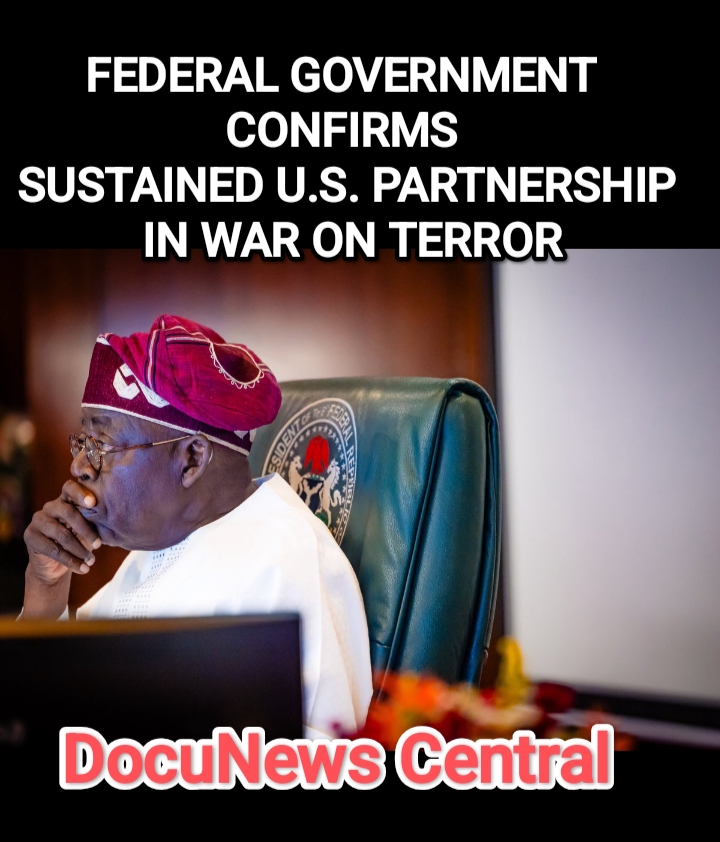
President Bola Ahmed Tinubu in his office
Federal Government Confirms Sustained U.S. Partnership in War on Terror
The Federal Government on Friday reaffirmed Nigeria’s sustained security partnership with the United States as part of a broader international effort to combat terrorism and violent extremism across the country. The confirmation came amid renewed concerns over regional insecurity, cross-border insurgency movements, and the evolving tactics of terror groups operating within the Sahel and Lake Chad regions.
According to official statements, Nigeria continues to engage in structured security cooperation with several global partners. However, the United States remains a central ally due to its intelligence capacity, military training support, and counter-terrorism expertise. Government officials stressed that this partnership prioritizes Nigeria’s sovereignty while strengthening operational effectiveness.
This development signals continuity rather than change. Over the years, Nigeria has relied on multilateral cooperation to confront threats posed by Boko Haram, ISWAP, and other extremist networks. Nevertheless, current security realities demand deeper collaboration, especially as terror groups adopt more sophisticated methods.
Security analysts believe the renewed assurance from the Federal Government sends a strong message to both allies and adversaries. On one hand, it reassures international partners of Nigeria’s commitment. On the other hand, it warns terror groups that Nigeria will not retreat from coordinated global counter-terrorism strategies.
Growing Security Challenges Demand Global Cooperation
Nigeria’s security landscape has grown increasingly complex. While the military has recorded notable successes in recent years, insurgent factions continue to exploit porous borders and weak regional coordination. As a result, the Federal Government has emphasized the importance of international intelligence sharing and joint capacity building.
Speaking to DocuNews Central, a senior security official explained that terrorism no longer respects national boundaries. Therefore, Nigeria must remain proactive in engaging countries that possess advanced surveillance systems, cyber intelligence capabilities, and counter-terrorism training frameworks.
“We face an enemy that adapts quickly,” the official said. “Because of that, Nigeria cannot afford isolation. Strategic partnerships, especially with the United States, give us access to intelligence and technology that save lives.”
Furthermore, security experts argue that cooperation goes beyond military hardware. It includes financial intelligence tracking, ideological counter-radicalization programs, and digital monitoring of extremist recruitment channels.
FG Emphasizes Structured, Not Dependent, Partnership
The Federal Government took care to clarify that Nigeria’s partnership with the United States does not undermine national independence. Instead, officials described the relationship as structured, mutually beneficial, and guided by clearly defined terms.
According to government sources, Nigeria determines its security priorities internally. International partners only support implementation through technical assistance and strategic advice. This approach ensures that foreign cooperation strengthens rather than controls domestic security policy.
A spokesperson from the Ministry of Defence noted that Nigeria has consistently invested in its armed forces. While foreign partnerships add value, Nigerian troops remain at the forefront of counter-terrorism operations.
In addition, the government highlighted ongoing reforms within the military and intelligence agencies. These reforms aim to improve coordination, accountability, and operational speed. International cooperation complements these efforts rather than replaces them. Read also “We Hit Them Hard”: Trump Confirms Lethal Military Strike Against Islamic State in Nigeria at www.docunewscentral.com
DocuNews Central Interview: Inside the U.S.–Nigeria Security Framework
DocuNews Central correspondents conducted an exclusive interview with a retired Nigerian Army General who previously participated in joint training programs with U.S. forces. His insights shed light on how the partnership functions in practice.
“Many people misunderstand this cooperation,” he explained. “The United States does not fight Nigeria’s battles. Instead, they train, advise, and share intelligence. Nigerian soldiers still take the risks on the ground.”
He further revealed that joint exercises have improved tactical planning and reduced operational errors. According to him, these improvements directly enhance civilian protection during military operations.
Moreover, the retired General emphasized that Nigeria has also contributed knowledge to international partners. He noted that Nigerian forces possess deep experience in counter-insurgency within complex civilian environments.
Counter-Terrorism Beyond the Battlefield
The Federal Government also acknowledged that military action alone cannot defeat terrorism. Therefore, Nigeria’s cooperation with the United States includes non-kinetic strategies that address the root causes of extremism.
These strategies focus on community engagement, economic empowerment, and ideological counter-messaging. Government officials believe that reducing unemployment and social exclusion weakens extremist recruitment pipelines.
Additionally, deradicalization programs supported by international partners aim to rehabilitate former fighters and reintegrate them into society. Although these initiatives face challenges, authorities maintain that they remain essential.
Experts argue that without such programs, military victories may prove temporary. Sustainable peace requires social stability, education, and trust between communities and security agencies.
Regional Security and the Sahel Factor
Nigeria’s security concerns extend beyond its borders. Instability across the Sahel region continues to affect national safety. Terror groups exploit regional conflicts, arms trafficking routes, and governance gaps.
For this reason, Nigeria’s partnership with the United States aligns with broader regional security initiatives. These include cooperation with neighboring countries and support for multinational task forces.
A DocuNews Central analyst explained that regional instability directly impacts Nigeria. Therefore, global partnerships help coordinate responses across borders.
“When one country weakens, terrorists shift operations,” the analyst said. “International cooperation helps close those gaps.”
Public Perception and National Confidence
Public trust plays a crucial role in counter-terrorism success. The Federal Government acknowledged growing public concern over insecurity and emphasized transparency in addressing these fears.
Officials stated that confirming sustained U.S. partnership reassures citizens that Nigeria remains proactive rather than reactive. Furthermore, it demonstrates commitment to learning from global best practices.
However, civil society groups urge the government to balance security cooperation with human rights protections. They argue that trust erodes when civilians feel targeted or marginalized.
In response, authorities stressed that Nigeria’s security framework includes accountability mechanisms and ongoing human rights training.
DocuNews Central Field Interview: Voices From the Community
DocuNews Central reporters also spoke with residents in communities previously affected by insurgent violence. Their perspectives highlight the human impact of security cooperation.
“We want peace more than anything,” said a local trader from the North East. “If working with America helps our soldiers protect us, then it is good.”
Another resident emphasized the importance of development alongside security. According to her, military presence alone cannot rebuild destroyed livelihoods.
These voices reflect a broader national sentiment that supports cooperation but demands tangible improvements in daily life.
Also read Kidnappers Strike in Akure, Abduct Six Health Workers.
International Perspective on Nigeria’s Role
International observers view Nigeria as a key player in African security. Due to its population size and economic influence, Nigeria’s stability affects the entire region.
Reports from global policy institutions frequently highlight Nigeria’s leadership in peacekeeping and counter-terrorism. As a result, sustained cooperation with the United States strengthens not only national security but also continental stability.
For more on U.S. counter-terrorism policy, readers can visit the official U.S. State Department website: U.S. Department of State.
Similarly, information on Nigeria’s defence strategy remains available through the Ministry of Defence: Nigeria Ministry of Defence.
Linking Security Awareness With Historical Context
Understanding present security realities also requires historical awareness. Nigeria’s struggle against extremism reflects broader global patterns of ideological conflict.
Readers interested in historical narratives shaping belief systems can revisit our previous in-depth report: THE SHOCKING HISTORY BEHIND THE ORIGIN OF CHRISTMAS .
Such context helps explain how belief, ideology, and power intersect in both historical and modern conflicts.
The Road Ahead
As Nigeria moves forward, the Federal Government insists that sustained U.S. partnership will continue under clearly defined frameworks. Officials remain confident that collaboration, combined with domestic reforms, will weaken terrorist networks.
Nevertheless, challenges persist. Funding constraints, regional instability, and evolving extremist tactics demand constant adaptation. Therefore, Nigeria must maintain both vigilance and flexibility.
Security experts recommend continuous evaluation of partnerships to ensure effectiveness. They also emphasize the importance of public communication to sustain trust.
Ultimately, Nigeria’s war on terror requires unity, resilience, and strategic cooperation. By confirming sustained partnership with the United States, the Federal Government has signaled determination to confront threats head-on while safeguarding national interests.
DocuNews Central Editorial Note
DocuNews Central remains committed to balanced, fact-driven reporting on national security issues. Our editorial team will continue to monitor developments in Nigeria’s counter-terrorism efforts and provide in-depth analysis.
DocuNews Central
