
Security updates Nigeria
Catholic Mission House Burnt as Terrorists Kill 42 in Niger State

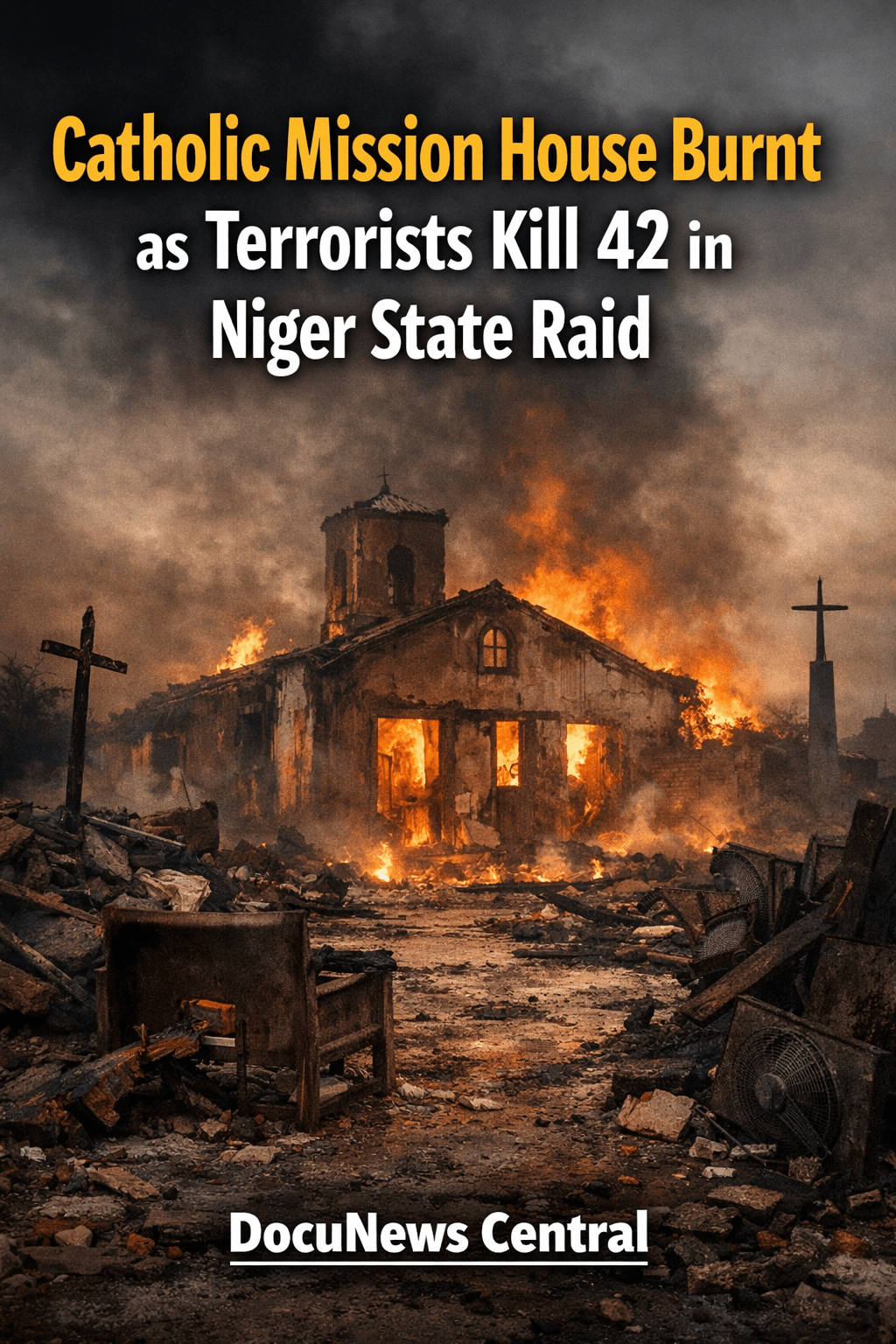
The quiet farming communities of Niger State woke to grief and disbelief after a coordinated assault shattered lives, homes, and places of worship. Families fled in fear, survivors searched for missing relatives, and local leaders struggled to make sense of the scale of loss. The attack struck without warning, leaving behind burned structures, shattered trust, and a deep sense of vulnerability across the region. And this made headlines “Catholic Mission House Burnt as Terrorists Kill 42 in Niger State Raid”
Residents described how the violence unfolded swiftly, with armed men moving from one location to another, forcing people to scatter into nearby bushes. By dawn, the full extent of the damage became clear. Dozens had lost their lives, many were unaccounted for, and a long-standing religious facility lay in ruins. The incident added to a growing list of security challenges facing rural communities in the state.
Beyond the immediate human toll, the incident raised urgent questions about protection for remote settlements, the safety of faith institutions, and the capacity of security forces to prevent repeat occurrences. For many locals, the event marked a turning point that will shape how they live, worship, and farm for years to come. Read also Fresh Bandit Attacks in Zamfara and Niger Leave Dozens Dead, Travellers Abducted
What Happened During the Niger State Raid
According to eyewitness accounts, the attackers arrived late in the night, exploiting darkness and limited security presence. Villages were approached from multiple directions, a tactic that left residents confused and unable to identify safe escape routes. Gunshots echoed for hours, while homes and community buildings were set ablaze.
People who managed to flee said the attackers appeared organized and familiar with the terrain. Footpaths and farmlands were used to move quickly, allowing the assailants to avoid detection for extended periods. By the time help arrived, the damage had already been done.
Local volunteers and community leaders coordinated early rescue efforts, helping injured victims reach nearby clinics. Traditional rulers also played a role, offering temporary shelter to displaced families and organizing food supplies for those who escaped with nothing.
Security agencies later confirmed casualties and acknowledged the scale of the operation. While patrols were increased afterward, residents expressed concern that the response came too late to prevent widespread destruction. Many people are reacting to this headline Nation Shocked as Terrorists Kill Over 40 in Niger State Market Raid
Impact on the Catholic Mission House and Surrounding Community
The destruction of the mission house sent shockwaves far beyond its immediate surroundings. For decades, the facility had served as a place of worship, education, and community support. It hosted religious services, literacy programs, and humanitarian outreach that benefited both Christians and non-Christians alike.
With the building reduced to ashes, many services abruptly came to a halt. School materials, medical supplies, and historical records were lost in the fire. Clergy members who narrowly escaped described the loss as both physical and emotional, noting that the mission represented hope and unity in an area often divided by hardship.
Residents living nearby also suffered significant losses. Farms were abandoned, livestock scattered, and food stores destroyed. For a population that depends heavily on agriculture, the timing of the attack threatened food security and household income.
Security Challenges in Rural Niger State
Niger State’s vast landmass and scattered settlements make security coverage difficult. Many villages sit far from major roads, with limited access to police posts or military bases. This gap has allowed armed groups to exploit weaknesses and carry out attacks with minimal resistance.
Community leaders have repeatedly called for stronger security partnerships, including the establishment of forward operating bases and improved intelligence sharing. They argue that early warnings from locals often go unheeded, reducing the chances of prevention.
Experts note that insecurity in rural areas often feeds on broader issues such as poverty, unemployment, and weak infrastructure. Without addressing these underlying factors, they warn that military responses alone may not deliver lasting peace.
Voices From Survivors and Local Leaders
Survivors recounted moments of terror as they fled into the night, guided only by instinct and familiarity with the land. Parents spoke of carrying children for hours, unsure whether their homes still stood behind them. Others described hiding in tall grass until silence returned.
Religious leaders urged calm while calling for justice and accountability. They emphasized the need for unity among different faith groups, stressing that violence against one community ultimately affects all.
Traditional authorities echoed similar sentiments, appealing to the government for immediate relief and long-term protection. They highlighted the resilience of their people but warned that repeated attacks could push communities beyond their breaking point. You can also read this Deadly Bandit Attack in Kogi: Idofin Community Suffers Casualties
Government Response and Ongoing Investigations
State officials condemned the attack and promised a thorough investigation. Security agencies launched manhunts and increased patrols along suspected escape routes. Relief materials were also dispatched to support displaced families.
However, residents questioned whether these measures would translate into lasting safety. Past incidents, they said, often followed a familiar pattern of condemnation, short-term deployment, and eventual withdrawal.
Lawmakers from the affected areas called for legislative support to strengthen local security structures. They also urged collaboration between state and federal authorities to ensure consistent funding and oversight.
Humanitarian Needs and Community Recovery
The immediate needs of survivors include shelter, food, medical care, and psychological support. Many families lost breadwinners, leaving women and children particularly vulnerable. Aid groups have begun assessments to determine the scale of assistance required.
Rebuilding the destroyed mission house has become a symbol of recovery for many residents. Faith groups across the country have pledged solidarity, while local artisans offered labor to help restore what was lost.
Community-based healing initiatives, including interfaith dialogues and trauma counseling, are also being considered. Leaders believe such efforts can reduce fear and prevent cycles of retaliation.
Broader Implications for National Security
The incident added to national conversations about insecurity and the protection of vulnerable communities. Analysts argue that attacks on religious and social institutions undermine social cohesion and fuel displacement.
They also warn that unchecked violence could discourage investment in agriculture and rural development, worsening economic challenges. Ensuring safety, they say, remains critical to national stability.
Calls for Accountability and Lasting Solutions
Civil society groups have called for transparent investigations and the prosecution of those responsible. They stress that justice plays a key role in restoring trust between citizens and the state.
Long-term solutions proposed include improved rural policing, technology-driven surveillance, and stronger collaboration with local vigilante groups under lawful frameworks. Education and youth empowerment programs were also highlighted as preventive tools.
As Niger State mourns, many hope the tragedy will prompt decisive action rather than fade into statistics. The memory of those lost continues to drive demands for a safer future.
Looking Ahead After the Tragedy
Recovery will take time, patience, and sustained support. Families are beginning to return cautiously, assessing what can be salvaged and what must be rebuilt from scratch.
For the wider public, the event serves as a reminder of the human cost of insecurity. It underscores the need for collective resolve, compassionate leadership, and policies that protect every community, regardless of size or location.
As discussions continue at local and national levels, many residents hold onto hope that meaningful change can emerge from loss, and that peace can once again take root in their land. For more verified news like ours visit Legit.ng
Niger State security updates | Rural community safety
Read more here BBC Africa News | Al Jazeera Nigeria