
Security updates Nigeria
US Congressman Confirms Violence Against Nigerian Christians

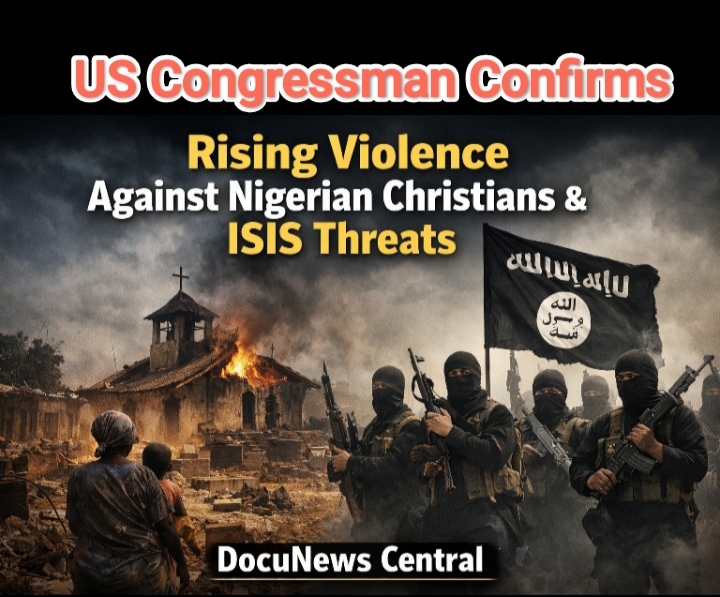
Growing insecurity across several regions of Nigeria has drawn renewed international attention after a senior United States lawmaker confirmed that attacks on Christian communities are increasing alongside the expanding presence of extremist groups linked to global terror networks. And this made headlines “US Congressman Confirms Violence Against Nigerian Christians”
The confirmation followed weeks of briefings, intelligence assessments, and discussions with religious freedom advocates and security analysts. According to the lawmaker, the evolving pattern of attacks shows a troubling mix of ideological extremism, organized crime, and local grievances, which together have created a volatile security environment for civilians.
Although Nigeria has faced security challenges for more than a decade, recent incidents indicate a shift in both coordination and intent. Armed groups now operate with greater reach, striking vulnerable communities before help arrives. Consequently, families flee their homes, farmland lies abandoned, and social trust continues to erode.
What makes the situation especially concerning is its growing international dimension. Extremist movements no longer act in isolation. Instead, they operate across borders, share tactics, and draw inspiration from wider ideological networks. As a result, what unfolds in Nigeria increasingly affects regional and global security discussions. Read also Edo Abduction: Gunmen Kill One Doctor, Second Remains Captive
Why Violence Against Nigerian Christians Has Reached the U.S. Congress
Nigeria’s diversity has long been both its strength and its challenge. With large Christian and Muslim populations spread across its states, peaceful coexistence has depended on stable governance and effective security. However, that balance has weakened as violence spreads into rural and semi-urban areas.
In recent years, repeated attacks on farming communities, worship centers, and residential settlements have forced thousands to relocate. While insecurity affects many Nigerians, advocacy groups and faith leaders report that Christian communities in parts of the Middle Belt and northern regions experience sustained pressure.
These developments raised serious concerns among international observers. During congressional briefings, analysts highlighted how extremist factions exploit local disputes over land, resources, and political representation. Over time, ideological narratives become tools used to justify attacks and sustain recruitment.
The lawmaker explained that intelligence reports point to increasing involvement of factions aligned with Islamic State ideology. These groups operate through local cells, blending criminal activity with extremist messaging. Kidnappings, raids, and forced displacement often follow initial attacks, leaving survivors with little choice but to abandon their homes.
Humanitarian organizations tracking displacement estimate that millions of Nigerians now live away from their communities due to insecurity. Among them are families who have lost livelihoods built over generations. Schools close, markets collapse, and access to healthcare becomes limited.
Source: https://www.hrw.org/world-report/2025/country-chapters/nigeria
The issue gained further attention because religious freedom remains a core component of United States foreign policy. Lawmakers argue that when civilians face harm linked to identity or belief, silence risks enabling further abuses.
At the same time, the congressman stressed the importance of careful language. While acknowledging patterns that affect specific communities, he noted that terrorism harms Nigerians of all backgrounds. Therefore, responses must protect vulnerable groups without deepening divisions. Many people are reacting to this headline too Terror Strikes Katsina as Armed Men Raid Communities at Night
US Congressman Raises Alarm as ISIS Influence Expands
During committee sessions and public remarks, the lawmaker warned that extremist networks aligned with Islamic State ideology are steadily expanding their footprint in West Africa. In Nigeria, these groups exploit weak governance, economic hardship, and long-standing local conflicts.
Security experts briefed Congress on how these factions establish influence. Initially, they move into poorly governed spaces. Then, they recruit locals using fear, incentives, or coercion. Over time, they secure supply routes that allow weapons and fighters to move across difficult terrain.
This expansion alarms international partners because similar patterns preceded instability in other regions. Once extremist groups embed themselves within communities, dismantling them becomes far more complex and costly.
The congressman emphasized Nigeria’s strategic importance. As Africa’s most populous nation and a key regional actor, prolonged instability poses risks beyond its borders. For that reason, U.S. officials continue to support collaborative security efforts focused on intelligence sharing, training, and targeted operations.
In late 2025, joint actions reportedly targeted extremist hideouts with the aim of reducing operational capacity. Officials described these steps as preventive rather than punitive, designed to limit further spread rather than escalate conflict.
Source: https://www.state.gov/u-s-relations-with-nigeria/
Beyond security operations, lawmakers highlighted the need for economic development and governance reforms. Without addressing unemployment, education gaps, and land disputes, military gains risk remaining temporary.
Life on the ground reflects the toll of prolonged insecurity. Farmers often leave fields unharvested. Traders avoid once-busy routes. Families move frequently, seeking safer locations.
Community leaders describe an atmosphere of constant uncertainty. Attacks occur unpredictably, sometimes at night and sometimes during daily routines. In many cases, help arrives too late.
Religious leaders report reduced attendance in affected areas. Congregations adapt by meeting in smaller groups or relocating services. Faith remains strong, yet fear shapes daily decisions.
Displacement has reshaped family structures. Extended families scatter across states, while young people migrate toward cities. Urban centers struggle to absorb newcomers, increasing pressure on housing, employment, and social services.
Source: https://www.unhcr.org/ng
Disagreement persists over how to frame the violence. Nigerian government officials emphasize that terrorism affects all citizens, regardless of belief. They caution against narratives that risk inflaming sectarian tension.
Islamic organizations echo this view, noting that many Muslims have also suffered losses. According to them, the root causes lie in terrorism, criminality, and governance challenges rather than religion alone.
Advocacy groups counter that acknowledging targeted patterns does not deny broader suffering. Instead, they argue that accurate assessment allows better protection strategies.
Source: https://www.premiumtimesng.com
Humanitarian needs continue to rise. Displacement camps face overcrowding, limited healthcare, and food shortages. Aid agencies report funding gaps that restrict response capacity.
Children bear a heavy burden. Interrupted education and trauma threaten long-term development. Experts warn that without sustained support, consequences may last decades.
Diplomatically, the confirmation by a U.S. lawmaker signals heightened scrutiny. Policymakers now debate how best to support Nigeria while encouraging accountability and reform.
Options under consideration include expanded humanitarian assistance, strengthened diplomatic engagement, and continued counter-terrorism cooperation. Lawmakers emphasize partnership rather than isolation, recognizing Nigeria’s role in regional stability.
Conclusion
Nigeria stands at a pivotal moment. Rising insecurity, expanding extremist influence, and growing humanitarian needs demand coordinated action. The confirmation by a U.S. congressman has amplified global attention, placing renewed focus on protection, accountability, and cooperation.
Whether this attention leads to lasting change depends on sustained commitment. For communities affected by violence, the hope remains simple: safety, dignity, and the opportunity to rebuild without fear.
Related Stories
ISWAP Militants Ambush Nigerian Troops in Borno kill 9 Terrorists Abduct Passengers on Busy Kwara Highway
If you like to know more about DocuNews Central please visit ABOUT US- DOCUNEWS CENTRAL