
Breaking news
Wike’s Claim Sparks Debate: Is the Judiciary Now Controlled by Politicians?

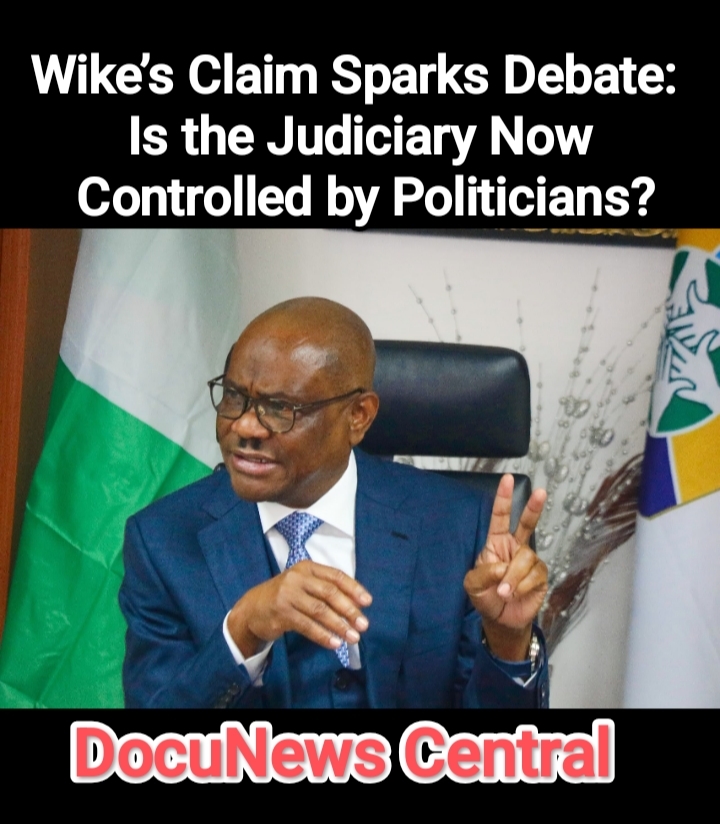
On Wednesday, January 7, 2026, at approximately 11:40 a.m., a statement delivered at a political gathering in Abuja, Nigeria’s Federal Capital Territory, triggered a wave of reactions that quickly moved beyond party rivalry. The remark, credited to Nyesom Wike, referenced the long-running dispute over Osun State local government allocations, an issue that has remained unresolved for months.
Within hours, the statement dominated conversations across broadcast stations, digital platforms, and civic forums. Although political speeches often attract momentary attention, this particular moment lingered because it touched on institutional balance rather than electoral strategy. As a result, observers shifted focus from partisan advantage to democratic integrity.
By the end of the day, analysts described the situation as more than political posturing. Instead, they viewed it as a reflection of a deeper national anxiety concerning power, influence, and public accountability.
The Osun Local Government Funds Dispute Explained
The controversy surrounding Osun local government allocations began in June 2025, when disagreements emerged over the release and administration of statutory funds meant for grassroots councils. These funds, drawn from the Federation Account, support essential services including primary healthcare, rural roads, sanitation, and education support programmes.
Tensions escalated after Osun officials accused federal agencies of actions that limited access to allocations during the third quarter of 2025. By August 2025, legal representatives acting on behalf of concerned stakeholders sought judicial clarification on revenue distribution mechanisms.
As the case progressed, public attention grew. Civil society groups, financial analysts, and local leaders highlighted how funding delays often translate into stalled development projects. For many residents, the issue represented more than a legal dispute; it symbolised long-standing challenges within Nigeria’s fiscal structure.
Readers seeking a technical breakdown of allocation processes can consult BudgIT’s fiscal transparency analysis here: https://yourbudgit.com
Wike’s Claim Sparks Debate Beyond Party Politics
During the Abuja event, attended by party loyalists and senior figures, the speaker reflected on recent political developments while addressing inter-party dynamics. In doing so, he referenced the Osun dispute in a way that many listeners interpreted as an admission of political leverage influencing legal outcomes.
By 12:15 p.m., journalists present at the venue had circulated excerpts through verified media channels. Social media users soon amplified the message, framing it as evidence of institutional vulnerability.
While supporters downplayed the significance, critics argued that the timing and tone required clarification. Several senior lawyers interviewed later that evening stressed that public confidence depends heavily on how leaders discuss unresolved legal matters.
How Public Discourse Quickly Expanded Nationwide
By Thursday morning, January 8, radio programmes in Lagos, Ibadan, Port Harcourt, Enugu, and Akure had placed the issue at the centre of their discussions. Phone-in segments recorded unusually high participation, indicating widespread interest.
Online platforms followed a similar pattern. Opinion writers, governance researchers, and civic educators published explainers that connected the remark to broader institutional concerns. Rather than focusing on Osun alone, discussions explored how democratic systems function when political influence appears excessive.
For comparative context, The Cable previously analysed similar controversies involving governance institutions: https://www.thecable.ng
Public Trust and Democratic Expectations
At the heart of the conversation lies trust. In democratic societies, citizens expect institutions to operate independently and transparently. Any suggestion of interference often triggers unease, particularly in countries with complex political histories.
According to Dr Akin Olatunji, a constitutional law lecturer based in Ile-Ife, remarks made by senior officials can shape perception regardless of intent. Speaking at 6:30 p.m. on January 8, he explained that democratic confidence relies not only on outcomes but also on how leaders communicate processes.
Youth organisations echoed similar concerns. Representatives from civic engagement groups argued that younger Nigerians already feel detached from governance structures. As such, statements implying dominance risk deepening disengagement.
Reactions From Osun and Other States
In Osogbo, the Osun State capital, reactions varied. Market leaders interviewed on January 9 at 9:00 a.m. expressed frustration that political controversies often overshadow economic realities. Some residents emphasised that funding stability matters more than political arguments.
In contrast, reactions in Rivers State leaned defensive. Supporters described the remark as rhetorical rather than literal, insisting that opponents exaggerated its meaning for political gain.
Independent digital researchers later reported that more than 60 percent of online responses expressed concern about institutional perception rather than party advantage.
Language, Power, and Political Responsibility
Political communication specialists often warn that language carries consequences. When senior figures speak publicly, their words shape narratives that extend far beyond the event itself.
During a televised panel on January 9 at 8:00 p.m., governance analyst Professor Halima Musa explained that leaders must separate celebration from implication. According to her, even casual remarks can reinforce fears if they appear to undermine established boundaries.
Institutions and the Balance of Governance
Nigeria’s constitutional framework emphasises separation of powers to prevent concentration of authority. Courts exist to interpret laws independently, while elected officials operate within defined mandates.
Historical experiences, including election petition disputes and high-profile corruption trials, have already tested public confidence. Consequently, statements that appear to diminish institutional autonomy often revive lingering anxieties.
Readers interested in constitutional provisions governing separation of powers may consult the National Assembly portal: https://nass.gov.ng
Civil Society Calls for Accountability
By January 10, advocacy organisations intensified calls for responsible leadership communication. Groups such as the Socio-Economic Rights and Accountability Project issued public statements emphasising democratic norms.
A release published at 2:20 p.m. urged leaders to reinforce public confidence through conduct and clarity.
Historical Perspective on Influence Allegations
Nigeria’s democratic evolution includes periods marked by allegations of undue influence. From military rule legacies to early Fourth Republic transitions, the nation has repeatedly grappled with institutional credibility.
Reforms introduced over the past two decades aimed to strengthen accountability. Analysts argue that sustained progress requires consistency, especially during sensitive moments.
Media Responsibility and Public Understanding
Media organisations played a crucial role in shaping public understanding of the controversy. Responsible reporting, experts note, requires context and balance.
For further reading on governance accountability, see our related feature: Democratic Institutions in Nigeria: An Analysis
What Happens Next
As of Sunday, January 11, 2026, no formal clarification had been issued. However, political insiders suggested that party leaders might address the matter privately to reduce tension.
Why This Conversation Matters
Democratic systems rely on restraint, clarity, and mutual respect between institutions. When influential voices speak, their words influence public confidence regardless of intention.
Conclusion
The controversy surrounding the Abuja remark transcended party politics. It reopened conversations about responsibility, perception, and leadership conduct within a democratic framework.
As citizens continue to debate the issue, many hope the outcome strengthens commitment to transparency rather than deepens doubt. Ultimately, democratic stability depends on trust, and trust grows when leaders choose words carefully.