
Breaking news
“Release Him Now” Jewish Leader Tells FG. After Seeing Kanu

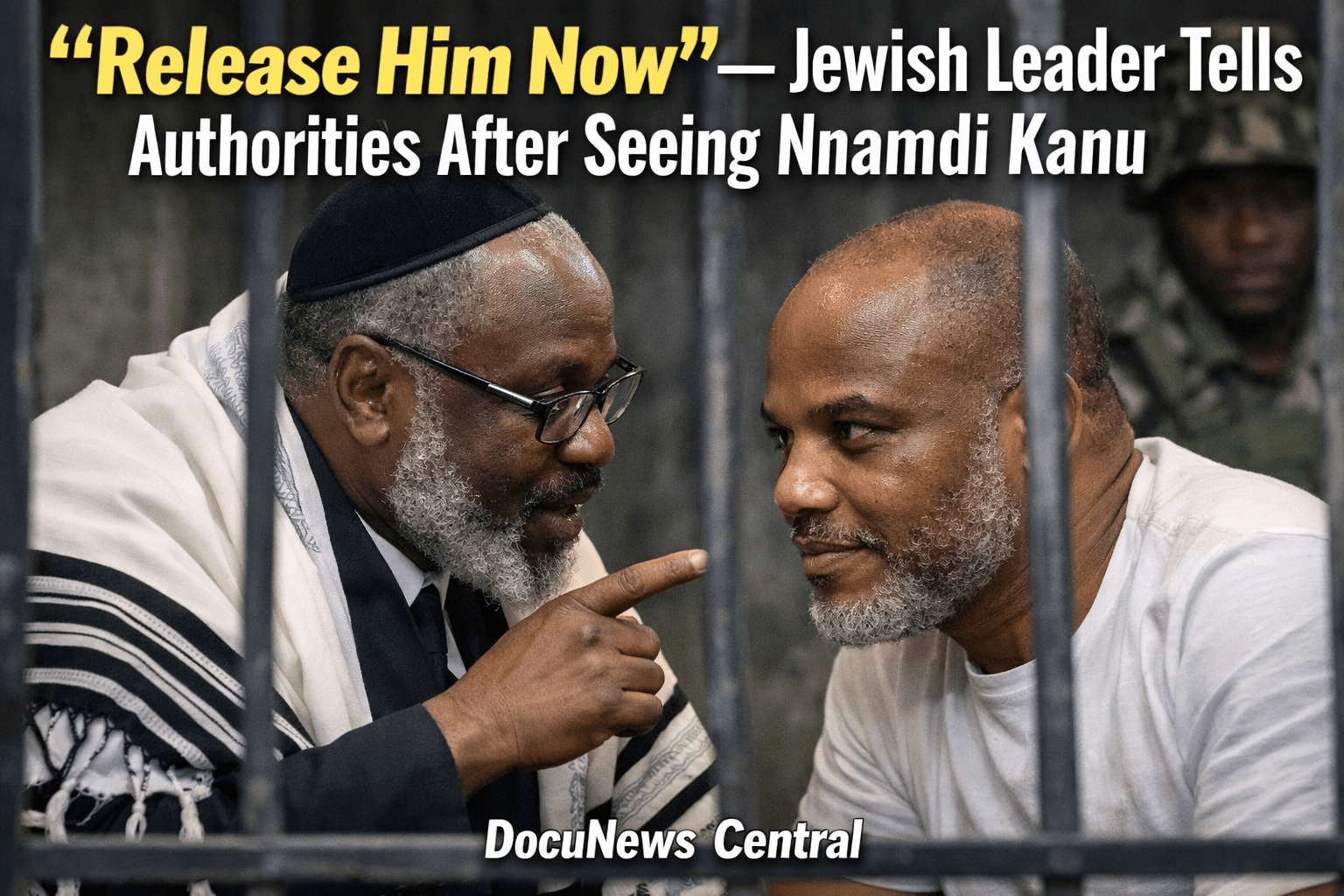
A fresh development emerged from northern Nigeria on Wednesday, January 7, 2026 (10:45 AM) when a prominent Nigerian Jewish leader paid a rare visit to the high-security correctional facility in Sokoto where Nnamdi Kanu is currently held. The visit, which lasted over an hour, has triggered renewed public attention, political debate, and legal scrutiny across the country.
The religious leader arrived at the Sokoto Custodial Centre under tight security shortly before 10:00 AM. Prison officials confirmed that the meeting was formally approved and monitored in line with existing correctional regulations. Shortly after the visit, the cleric addressed journalists and civil society observers, making a firm appeal to authorities regarding the detainee’s continued incarceration.
The prison facility, located along the Sokoto–Gusau highway, remains one of the most closely guarded detention centers in the region. Security personnel restricted movement throughout the visit, while local police units controlled access to the surrounding area. Residents in the vicinity reported unusual activity as official vehicles entered and exited the compound.
This visit adds a new layer to the ongoing national conversation surrounding the prolonged detention of the Indigenous People of Biafra leader. Over the past months, the case has continued to attract attention from religious groups, legal professionals, human rights advocates, and political stakeholders both within and outside Nigeria.
“Release Him Now”: Prison Visit That Reignited National Debate
During a brief interaction with reporters outside the facility, the Jewish leader described his visit as “deeply emotional and necessary.” He explained that the purpose of the meeting was not political alignment, but a moral intervention rooted in faith, justice, and the rule of law.
According to him, the condition of the detainee raised serious concerns that should compel urgent reflection by those in authority. He stressed that dialogue, legal clarity, and national healing remain more effective tools than prolonged detention in resolving internal disagreements.
Eyewitnesses present at the scene said the cleric spoke calmly but firmly. His remarks immediately circulated on social media platforms, sparking discussions across religious, ethnic, and civic lines. Within hours, hashtags related to the visit began trending among Nigerian users.
Legal observers note that such high-profile visits often influence public perception rather than judicial processes. However, they also acknowledge that sustained public interest can accelerate legal transparency and accountability.
For background on similar interventions, readers can explore our earlier coverage on high-profile prison visits in Nigeria: Nigeria Justice Reports.
Sokoto Meeting Highlights Calls to “Release Him Now”
The timing of the visit has drawn particular attention. It comes amid renewed calls from several quarters urging the Federal Government to reassess ongoing detentions linked to separatist movements. Analysts believe the Sokoto meeting could increase pressure on policymakers to address unresolved legal concerns surrounding the case.
The Jewish leader emphasized that Nigeria’s strength lies in its ability to uphold justice without prejudice. He argued that prolonged incarceration without clear resolution risks deepening mistrust among communities and undermining national unity.
Human rights lawyers observing the situation point out that Nigeria remains a signatory to multiple international conventions that emphasize fair trial standards and humane detention conditions. Several of these conventions are outlined on the official website of Amnesty International: Amnesty International.
They also reference judicial precedents where dialogue and legal settlements helped ease regional tensions. In their view, moral voices from diverse religious backgrounds can play a stabilizing role during sensitive national moments.
Security, Secrecy, and the Sokoto Facility
The Sokoto correctional facility has long operated under strict security protocols. Sources within the prison administration revealed that preparations for the visit began days earlier. Officials conducted security sweeps, verified visitor credentials, and coordinated with federal authorities.
The meeting itself reportedly took place in a controlled visitation room, with correctional officers observing from a distance. No electronic devices were allowed, and the discussion remained confidential.
Residents living near the prison said the visit disrupted normal movement for several hours. Commercial drivers rerouted their journeys, while traders paused operations until security restrictions eased.
Such measures, according to prison authorities, are standard for visits involving nationally sensitive detainees.
Religious Leaders and National Mediation
Religious intervention in political and legal matters is not new in Nigeria. Over the years, clerics from different faiths have acted as mediators during crises, elections, and communal disputes.
The Jewish community, though small, has increasingly participated in interfaith dialogue and peace-building initiatives. Observers say this visit reflects a broader effort by minority faith groups to contribute to national stability.
Political analysts believe that when religious leaders speak on justice issues, their influence often extends beyond traditional power structures. Their moral authority can resonate across ethnic and regional divides.
For a broader understanding of interfaith mediation in Nigeria, see: BBC Africa.
Public Reactions Across Nigeria
Reactions to the Sokoto visit have varied widely. Supporters of the detainee welcomed the intervention, describing it as a sign that the case remains relevant on the national stage.
Others urged caution, warning against politicizing religious visits. They argued that legal processes should proceed without external pressure, even when public sympathy runs high.
On social media platforms, users debated the implications of the visit well into the evening. Some praised the courage of the cleric, while others questioned whether such actions could influence ongoing legal proceedings.
Despite differing opinions, most commentators agreed on one point: the visit has reopened a conversation that many believed had grown quiet.
Legal Path Ahead
Legal experts maintain that the next steps will depend on court actions and government responses rather than public statements. However, they acknowledge that sustained national interest often accelerates decision-making.
They also stress the importance of transparency. Clear communication from authorities, they say, would help reduce speculation and restore public confidence.
As Nigeria continues to navigate complex security and unity challenges, moments like this highlight the delicate balance between law enforcement, justice, and reconciliation.
For ongoing updates on security and national affairs, visit our dedicated section: Nigeria Security Desk.
Why This Visit Matters
Beyond headlines and reactions, the Sokoto prison visit represents a symbolic moment. It underscores how unresolved national issues continue to attract attention from unexpected quarters.
Whether this intervention leads to tangible outcomes remains uncertain. What is clear, however, is that the case has once again entered public discourse, demanding attention, reflection, and responsible leadership.
Related Stories
- Breaking news Nnamdi Kanu reject Roches okorocha in sokoto prison
- Christmas Solidarity: Kanu Thanks Supporters from Prison
- #Stop Kanu’s Prosecution Now” — Lawmaker Writes Tinubu