
Security
Katsina Frees 70 Bandits Amid Criticism Over Killings and Rape Allegations

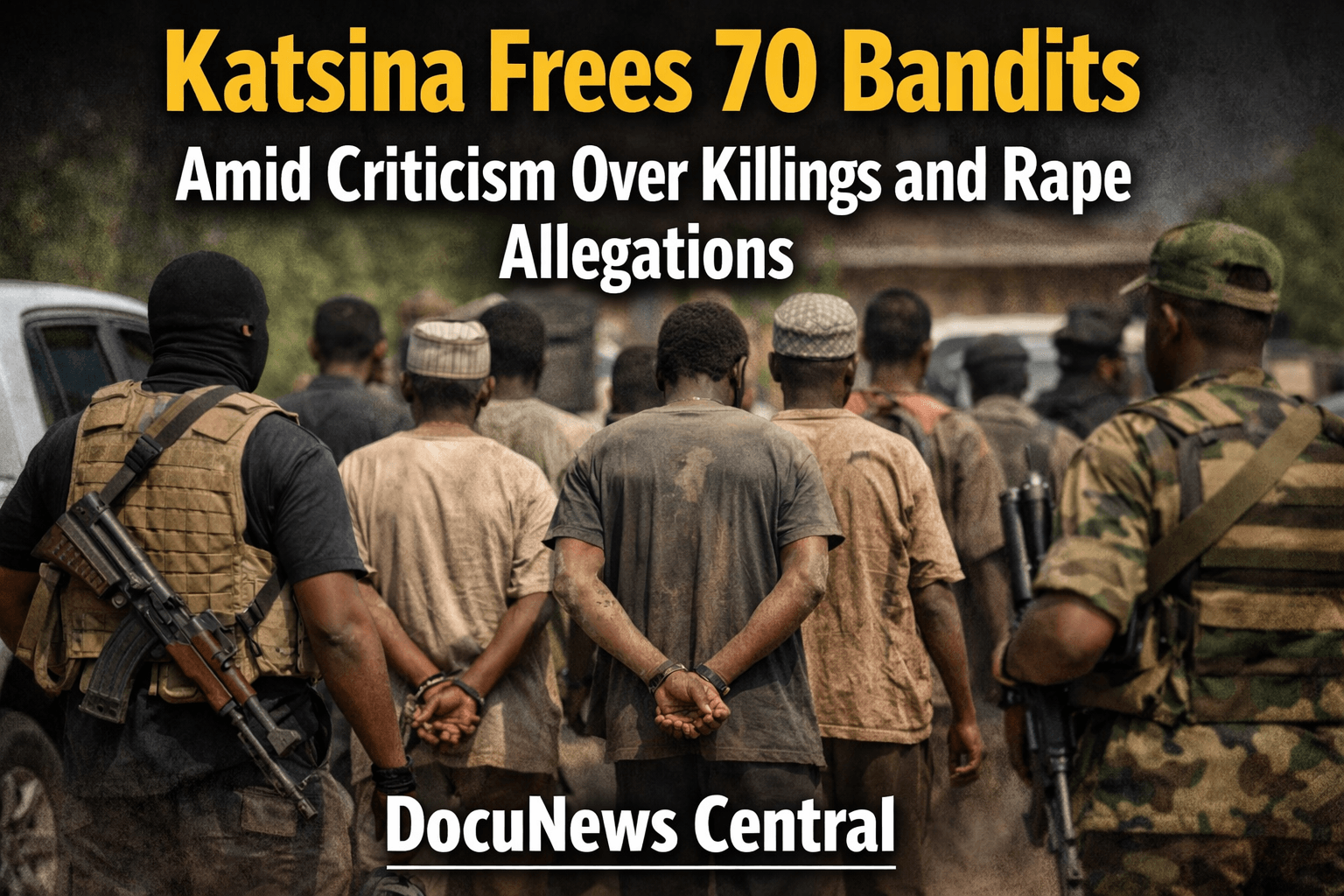
Fear, hope, and public anger collided across Nigeria’s North-West after a controversial security decision reignited national debate.
On Wednesday, January 14, 2026, at about 11:30 a.m. in Katsina State, North-West Nigeria, the Katsina State Government confirmed the release of 70 suspected bandits from custody. Officials said the move formed part of a broader peace-building and hostage-exchange initiative aimed at restoring calm in conflict-hit communities.
Almost immediately, the announcement triggered strong reactions nationwide. While government officials defended the action as strategic and community-driven, many Nigerians questioned the wisdom of freeing suspects linked to killings, rape, and large-scale destruction. Consequently, the decision reopened difficult conversations around justice, accountability, and security.
Background to the Katsina Security Crisis
For years, Katsina State has remained one of the epicentres of armed banditry in Nigeria. Repeated attacks on rural settlements displaced thousands of families, disrupted farming, and forced schools to close. As a result, many residents in frontline local government areas lived in constant fear.
In response, the state experimented with several strategies. Authorities intensified military operations at different periods. Community vigilante groups also emerged. Meanwhile, dialogue initiatives gained attention as violence persisted.
According to the State Commissioner for Information, Salisu Bala, the release followed appeals from traditional rulers and community leaders who participated directly in peace talks with armed groups described as repentant. These leaders argued that reconciliation offered a faster route to restoring daily life.
In addition, officials explained that the detainees formed part of an agreed hostage-swap arrangement that reportedly secured the release of abducted civilians. Therefore, the government described the move as humanitarian and security-focused. Read latest news from Sokoto Bello Turji’s Terrorists Strike Again, Over 20 Adopted in Sokoto
Katsina Frees 70 Bandits as Public Criticism Grows
Despite official explanations, public reaction remained largely critical. Civil society groups, security analysts, and ordinary citizens voiced concerns shortly after reports circulated.
Many Nigerians asked what message the decision sent to victims. Families who lost relatives to attacks expressed pain and disbelief. Survivors of sexual violence felt ignored. Farmers whose livelihoods collapsed described the move as unfair.
Furthermore, an earlier official letter suggesting that courts were directed to approve the release intensified public backlash. Legal experts warned that such a process risked undermining judicial independence. Consequently, critics accused the government of prioritising short-term calm over long-term justice.
However, supporters countered these claims. They argued that endless arrests failed to end violence in the past. Therefore, they insisted negotiated peace deserved a chance, especially with backing from local leaders.
How the Peace Talks Developed
Sources within Katsina revealed that the peace talks developed gradually. Discussions reportedly lasted several months. Community representatives acted as intermediaries between state officials and armed groups operating in forested areas.
Traditional rulers from affected zones played a central role. Because of their cultural authority, they gained access where security forces struggled. Through continuous dialogue, negotiators demanded the release of abductees and an end to attacks.
In return, negotiators offered amnesty-style concessions, including the release of detainees who pledged to renounce violence. The government stated that each individual signed commitments to abandon criminal activity.
However, authorities have yet to publish full details of the agreement. As a result, uncertainty continues to fuel suspicion.
Security Experts React to the Decision
Security analysts remain divided. Some acknowledge that military solutions alone often fail in asymmetric conflicts. They cite examples where dialogue temporarily reduced violence.
However, other experts warn that negotiated releases without strict monitoring create dangerous incentives. Armed groups, they argue, may increase abductions to gain future concessions. Therefore, without enforcement, peace deals may collapse.
Additionally, analysts stress the importance of victim-centred justice. According to them, reconciliation must include acknowledgment of harm, reparations, and guarantees of non-recurrence.
Legal and Moral Concerns
The release also raises serious legal and moral questions. Nigeria’s constitution guarantees the right to justice. Therefore, many citizens believe suspects accused of grave crimes should face open trials.
Human rights organisations echoed similar concerns. Groups such as Amnesty International warned against blanket amnesties, arguing that they weaken accountability and embolden criminal networks.
Meanwhile, legal practitioners caution against emotional policymaking. They insist that governments must balance public sentiment with pragmatic security strategies.
Voices From Affected Communities
Across frontline local government areas, reactions remain mixed. Some residents expressed cautious optimism. They hope the decision will reduce attacks and allow farming to resume.
Others remain sceptical. A trader from Batsari described the move as painful but familiar, noting that previous deals collapsed after brief calm periods. Similarly, a teacher from Safana worried that children might remain unsafe.
Women’s groups also spoke out. They emphasised the trauma suffered by survivors of sexual violence and called for stronger support systems.
Government Assurances and Monitoring Plans
In response to criticism, the Katsina State Government promised close monitoring of the released individuals. Officials said security agencies would track compliance.
Moreover, the government pledged continued collaboration with the military, police, and community vigilantes. According to authorities, dialogue complements force rather than replaces it.
State officials also appealed for patience. They urged Nigerians to judge the initiative by results rather than assumptions.
For deeper insight into the region’s security challenges, read our related analysis at Security updates Nigeria
National Implications of the Decision
The controversy has extended beyond Katsina. Across Nigeria, commentators linked the development to broader debates about governance, accountability, and security coordination.
Some critics accused state governments of acting independently without unified policy. Others blamed weak prosecution systems that leave suspects in prolonged detention.
Meanwhile, supporters argued that states must innovate within constitutional limits, especially when federal responses appear slow.
Impact on Victims and Public Trust
Trust remains a central issue. When victims feel ignored, confidence in public institutions erodes. Many families affected by attacks said they received little support.
Psychologists warn that unresolved trauma destabilises communities long after violence ends. Therefore, peace initiatives must include counselling, compensation, and public acknowledgment.
Media, Misinformation, and Public Fear
Social media amplified the controversy. Within hours, rumours and exaggerated claims spread rapidly. Some posts alleged secret payments, while others predicted new attacks.
Security agencies urged calm, warning that misinformation could trigger panic. Media analysts stressed the responsibility of journalists to verify claims.
Learn more about responsible reporting here: ABOUT US- DOCUNEWS CENTRAL
Conclusion
The release placed Katsina State at the centre of a difficult national conversation. Security, justice, and reconciliation rarely align neatly in conflict zones.
While the government argues that dialogue offers a path toward stability, many Nigerians demand accountability for grave crimes. Ultimately, peace without trust cannot endure.
Whether this decision delivers lasting calm or deepens public anger depends on actions taken beyond the headlines.
Further reading: Nigeria Police Force
