
Security updates Nigeria
Ten Days On, 166 Worshippers Still Missing After Kaduna Church Abduction

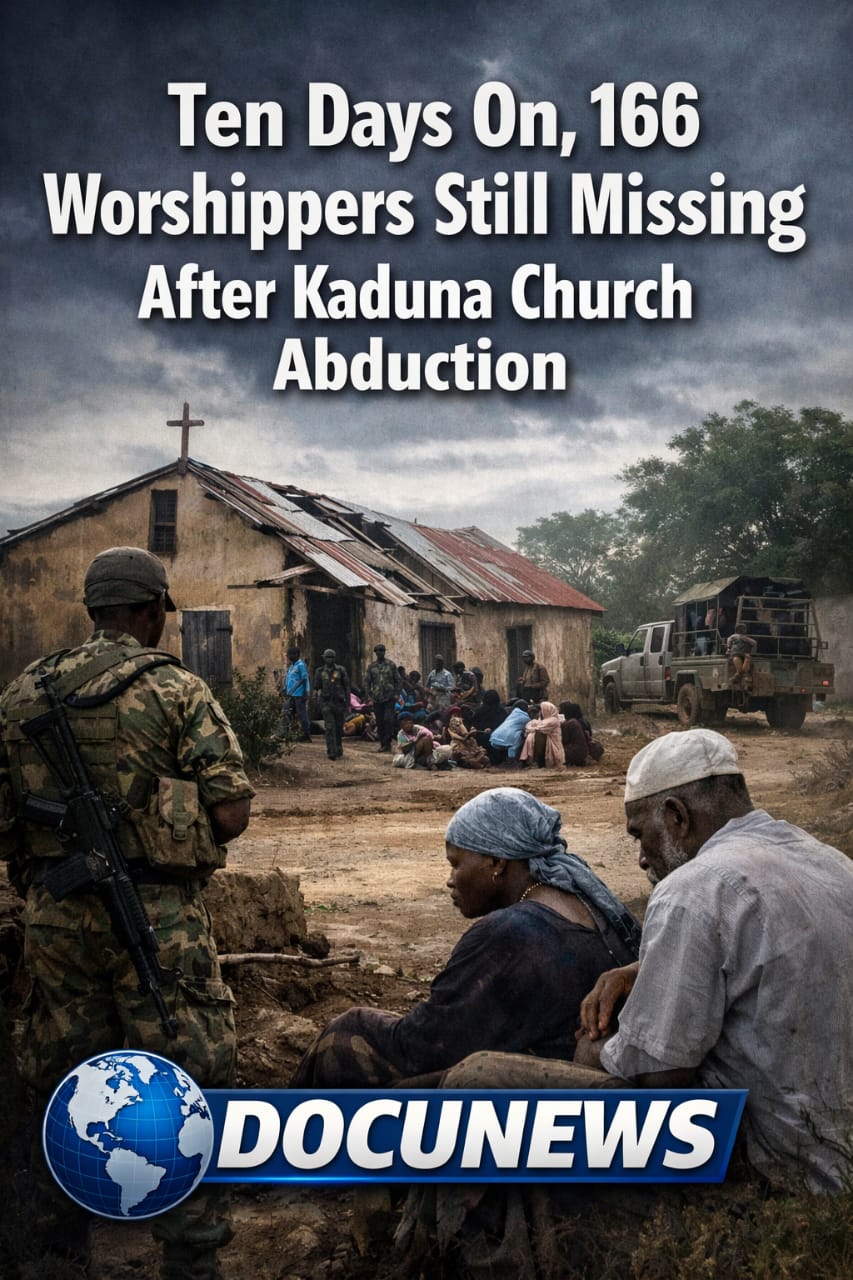
Ten Days On, 166 Worshippers Still Missing After Kaduna Church Abduction
Kurmin Wali is silent, but fear speaks louder than words. Ten days after coordinated attacks on three churches in southern Kaduna, 166 worshippers remain missing, their families left in despair. The incident has stirred national concern as community leaders, the Christian Association of Nigeria (CAN), and the Arewa Consultative Forum (ACF) demand answers and decisive government action. This ongoing crisis, rooted in the violent abduction of churchgoers during Sunday services, highlights Nigeria’s deepening security challenges and the emotional toll on families still waiting for their loved ones to return.
On Sunday, January 18, 2026, in Kurmin Wali village, Kajuru Local Government Area of Kaduna State, armed gunmen struck churches during worship and abducted dozens of Christian faithful. What began as a day of prayer quickly turned into terror. Residents of this once‑quiet community now live each day in fear, wondering if their loved ones will ever be found.
Photo Credit VisitDisclaimers: Use Of AI Images In Our Newsletters
Understanding the Church Abductions in Kaduna
The attack unfolded in the morning hours when worshippers were gathered for services at three churches — including the Evangelical Church Winning All (ECWA) and two Cherubim and Seraphim congregations. Suddenly, armed men on motorcycles surrounded the premises, firing shots into the air and forcing terrified worshippers at gunpoint into the bush. 1
Eyewitnesses later recounted how the gunmen moved swiftly and with precision. The assailants blocked exits, separated groups, and marched captives into nearby forests. Transportation was minimal, but the fear was vast. Those who tried to flee were threatened at gunpoint. 2
Reports varied on the exact number initially taken, but community sources later confirmed that roughly 177 individuals were abducted, of whom 11 managed to escape and make their way back. That left an estimated 166 still in captivity ten days later.
Read also Terrorists Strike Adamawa Gov’s Hometown, Abduct Six Family Members
The Initial Government Response: Deny, Then Confirm
In the hours after the abduction, official sources attempted to downplay or dismiss the reports. The Kaduna State Police Command and local government initially rejected claims of a major abduction, calling them misinformation. Police Commissioner Muhammad Rabiu even challenged critics to present victim lists and details.
However, as independent reporting and community sources continued to surface names, church lists, and witness testimony, authorities *reversed course* and acknowledged that worshippers were kidnapped. A senior police spokesman clarified that the initial statements were meant to avoid “unnecessary panic” until the facts could be verified.
This back‑and‑forth created confusion and eroded trust. Many families say they lost precious hours before security agencies took definitive action.
People are reacting to this U.S. Backs Nigeria with Targeted Military Support, Rules Out Permanent Bases
Where Are the 166 Worshippers Now?
Ten days since the attack, the whereabouts of the 166 still missing remain unclear. Security officials have hinted that the captives may be held in forest hideouts deep within Kaduna’s rough terrain — areas with poor road access and thick vegetation that provide cover for armed groups.
Local community leaders claim to have seen or received reports of bandits trekking with captives through bush paths. One such statement came from the village head, Mr. Ishaku Dan’azumi, indicating that the abducted worshippers are being moved within dense forest zones while negotiations continue.
Security agencies have responded with patrols and targeted operations, but no confirmed rescue has yet been reported. Some residents have criticized military actions as insufficient, with reports suggesting rescue attempts were aborted or failed to reach deeper forest positions held by captors.
Bandits’ Ransom Conditions and Motorcycle Demand
In a remarkable twist, kidnappers have issued what they call “prequel conditions” before discussing ransom for the worshippers’ release. They have demanded large sums of money and transportation equipment — specifically, payment to cover motorcycles the group claims it lost during prior military operations.
Initial reports said the captors asked for about ₦29 million as compensation for 17 lost motorcycles. The demand — framed not as ransom for human lives but as reimbursement for damaged equipment — has shocked many observers. Negotiators, elders, and families alike have described the request as bizarre and heartless.
More recent accounts from village leaders suggest even higher demands — as much as ₦250 million and 20 motorcycles — before discussions to free the worshippers can begin. The captors also alleged that community members damaged some of their remaining motorcycles. Such claims have been widely viewed with skepticism.
The Human Toll: Families in Limbo
Behind every figure are real lives. Children remain without parents at home. Siblings pray without seeing reunions. Entire families have become trapped in a cycle of fear and waiting. Each day without news adds psychological stress, loss of income, and community despair.
Church leaders describe sleeping on shared floors at prayer halls, alternating shifts between hope and panic. Night after night, relatives of the missing gather outside security posts, phones in hand, anxious for updates.
Many families have sold land, livestock, and possessions to pay for travel, food, and intermediaries — even as they struggle to meet ransom demands themselves. Such sacrifices deepen economic instability in a region already suffering from insecurity and chronic poverty.
You may have missed this U.S. Backs Nigeria with Targeted Military Support, Rules Out Permanent Bases
Religious Bodies Demand Action
The Christian Association of Nigeria (CAN) has been vocal in calling for immediate and decisive action. Leaders described the attack as “heartbreaking” and “a direct assault on freedom of worship.” CAN has also organized special prayer sessions and partnered with civil society to amplify the call for rescue operations.
Similarly, the Arewa Consultative Forum (ACF) urged the federal and Kaduna State governments to go beyond speeches, insisting that protecting citizens must take precedence over political narratives. These bodies emphasize that continued kidnappings undermine religious tolerance and national unity.
International and Rights Groups Speak Out
Human rights advocates, including Amnesty International Nigeria, condemned both the attack and the slow pace of response. They argued that Nigeria’s security strategy has repeatedly failed rural communities, allowing armed groups to operate with relative impunity.
Amnesty’s officials stressed that kidnappings have become alarmingly common and must be treated as preventable atrocities, not isolated tragedies. They called for more robust intelligence, improved community protection, and swift rescue efforts.
For Security Updates In Nigeria Visit Security updates Nigeria
Security Challenges and Broader Context
The abduction in Kurmin Wali forms part of a larger pattern of violence in northern Nigeria. In recent years, armed groups — locally referred to as “bandits” — have carried out mass kidnappings, attacks on schools, and raids on villages for ransom or leverage.
In neighbouring states, security forces have had mixed success. For example, Nigerian troops recently freed 62 hostages and killed two militants during separate operations in states north of Kaduna, though those rescues were unrelated to the Kurmin Wali captives.
Still, critics argue that military responses remain reactive rather than proactive, and that remote communities without stable security presence are left vulnerable. Rural areas often lack sufficient police personnel, rapid communication networks, and adequate roads, allowing armed groups to exploit gaps.
Debates Over Strategy and Effectiveness
Opinions differ on how best to address these kidnappings. Some analysts push for increased community self‑defense patrols. Others stress stronger federal coordination, better intelligence, and improved civilian‑security force trust. Regardless, many agree that without fundamental changes, attacks like Kurmin Wali may recur.
For religious leaders, the priority remains protecting places of worship. They argue that attacks during worship services — moments meant for peace and reflection — strike not just bodies but the spirit of communities.
What Comes Next?
The next days will be critical. Security agencies reportedly continue efforts to locate and rescue the captives. Families and religious leaders hope these efforts bear fruit soon. Until then, Kurmin Wali remains a community defined by silence, fear, and unwavering hope for reunion.
For Nigeria as a whole, this crisis underscores a familiar but unresolved question: how to protect ordinary citizens from armed violence while preserving civil liberties and community trust. The answer will shape the future of rural security and collective well‑being for years.