
Breaking news
Borno Under Fire: Boko Haram Kills Seven Soldiers, Seizes Army Commander

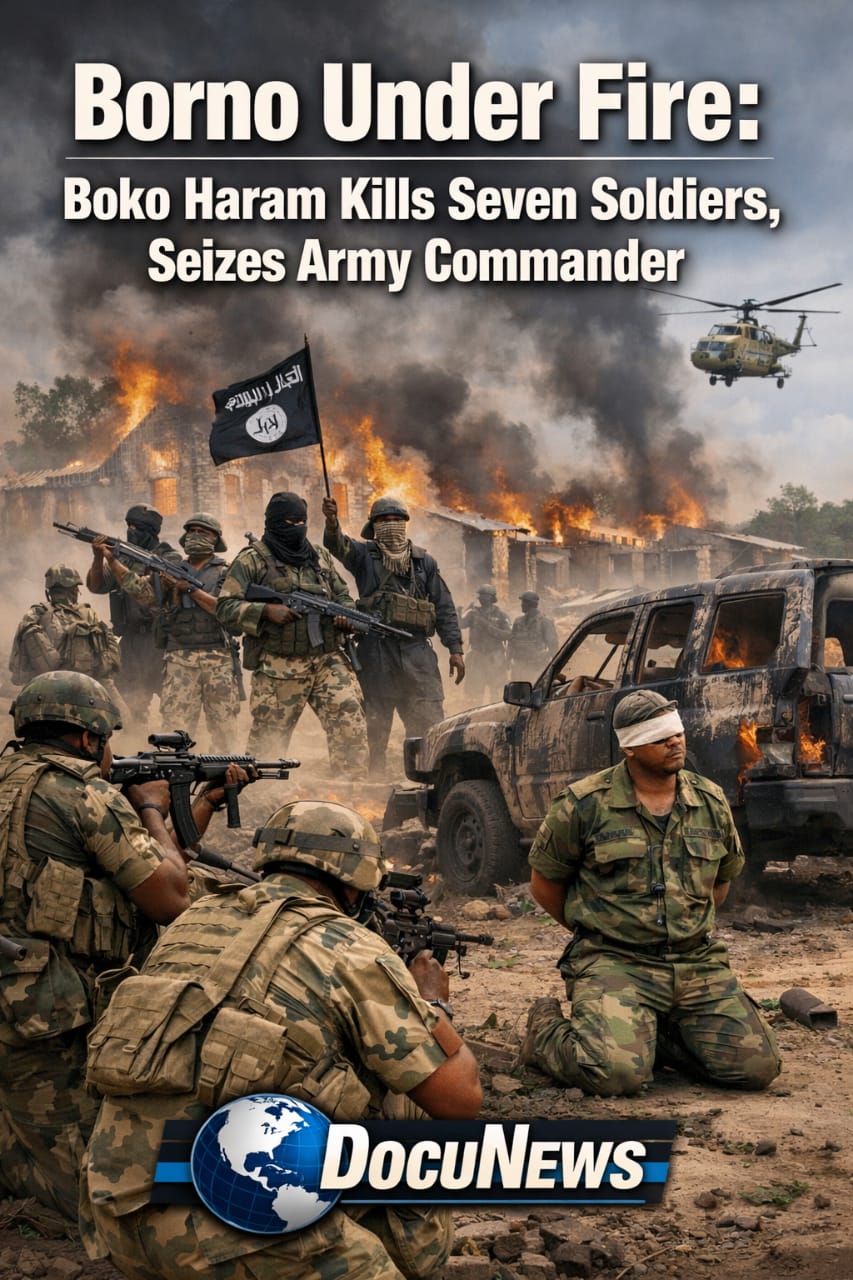
Borno Under Fire: Boko Haram Kills Seven Soldiers, Seizes Army Commander
The sound of gunfire shattered the fragile calm of northeastern Nigeria, once again pulling Borno State into the global spotlight. In a chilling reminder of the region’s long struggle with insurgency, Boko Haram fighters killed seven Nigerian soldiers, captured 13 others, and seized their commanding officer during a deadly ambush. The attack exposed ongoing security gaps, reignited national concern, and underscored the resilience of an insurgent group many hoped was fading. At a time when authorities continue to assure Nigerians of progress, this incident revealed how fragile peace remains in parts of the country.
Conflict rarely arrives without warning in Borno, yet this assault carried an unmistakable message. Boko Haram remains capable of planning, coordination, and execution. The killing of soldiers, the abduction of their colleagues, and the capture of a senior officer combined to create a moment of national reckoning. As details emerged, the weight of the tragedy extended beyond the battlefield, touching families, communities, and policymakers across Nigeria.
On January 26, 2026, in Damasak, Borno State, northeastern Nigeria, the violence unfolded. The town, located near the Niger Republic border, has long served as a strategic flashpoint. Nigerian Army patrol units encountered suspected Boko Haram fighters during routine operations. What began as a patrol quickly escalated into a fierce firefight, leaving seven soldiers dead and others overpowered. According to security sources, the attackers seized weapons and took 13 soldiers captive, including their commanding officer, identified as a major.
Photo Credit Visit Disclaimers: Use Of AI Images In Our Newsletters
Borno Under Fire: How the Deadly Ambush Near Damasak Happened
Damasak lies in a region marked by vast terrain and limited infrastructure. Because of this, patrol missions often stretch supply lines and expose troops to surprise attacks. On the day of the incident, soldiers moved through a known volatile corridor. Suddenly, Boko Haram fighters emerged from concealed positions, opening fire with heavy weapons. The intensity of the ambush left little room for maneuver.
Several soldiers fell during the first exchange of gunfire. Others attempted to regroup and respond. However, the attackers appeared prepared and numerically superior. Within a short time, Boko Haram fighters overwhelmed part of the patrol. Those unable to retreat were taken hostage. Military sources later confirmed that communication with the missing soldiers ended abruptly during the clash.
Reports indicated that when fellow officers attempted to contact the missing personnel by phone, insurgents answered instead. This chilling confirmation left no doubt about the fate of the captured soldiers. The incident quickly spread through military channels and then into public discourse, sparking renewed debate about troop safety and counterinsurgency tactics.
Read Also Ten Days On, 166 Worshippers Still Missing After Kaduna Church Abduction
Seven Soldiers Killed: The Human Cost of the Attack
Behind every military statistic stands a human story. The seven soldiers killed in the Damasak ambush were fathers, sons, brothers, and friends. Their deaths reverberated through barracks and communities far beyond Borno. While the Nigerian Army has not publicly released all names, sources confirmed that the fallen soldiers were part of a regular patrol unit tasked with maintaining security in the border region.
Losses like these affect morale deeply. Soldiers deployed to the northeast already operate under intense psychological pressure. Continuous exposure to danger, harsh terrain, and the unpredictability of insurgent tactics weighs heavily on them. Nevertheless, many continue to serve with determination, driven by duty and commitment to national security.
The military has emphasized that the sacrifice of these soldiers will not be in vain. Officials reiterated their resolve to pursue those responsible and to strengthen operational measures aimed at preventing similar incidents. Still, for families mourning their loved ones, such assurances offer limited comfort.
You need to Get this information Terrorists Strike Adamawa Gov’s Hometown, Abduct Six Family Members
Army Commander Seized: A Serious Security Breach
Perhaps the most alarming aspect of the attack was the capture of a commanding officer. The seizure of a major represents a significant psychological and strategic victory for Boko Haram. Senior officers possess valuable operational knowledge, and their capture raises concerns about intelligence exposure.
According to reports, the commander was leading the patrol when the ambush occurred. Despite resistance, he and other soldiers were overpowered. Boko Haram’s ability to capture a senior officer highlights both their boldness and the risks faced by troops operating in isolated areas.
Military analysts note that such incidents can embolden insurgents while complicating rescue efforts. The Nigerian Army has historically treated the recovery of captured personnel as a top priority. However, rescue operations in hostile terrain present immense challenges and risks.
You may have missed this U.S. Backs Nigeria with Targeted Military Support, Rules Out Permanent Bases
Boko Haram’s Enduring Presence in Borno State
Boko Haram began its insurgency in 2009, seeking to overthrow Nigeria’s secular government and impose a strict interpretation of Islamic law. Over the years, the group has fractured, giving rise to splinter factions such as the Islamic State West Africa Province (ISWAP). Despite internal divisions, these groups continue to launch deadly attacks.
Borno State remains the epicenter of the insurgency. Towns such as Maiduguri, Gwoza, Marte, and Damasak have repeatedly experienced violence. Although military offensives have reclaimed territory, insurgents often retreat into remote areas, regroup, and strike again.
According to regional security assessments, Boko Haram and its affiliates exploit difficult terrain, porous borders, and local grievances. These factors allow them to sustain operations despite sustained pressure from Nigerian and regional forces.
Why Borno Remains Vulnerable
Several structural challenges complicate security efforts in Borno. First, the geography favors insurgents. Vast forests, deserts, and marshlands provide cover and escape routes. Second, limited infrastructure restricts rapid troop deployment and logistical support.
Additionally, cross-border dynamics play a role. The proximity of Niger, Chad, and Cameroon enables fighters to move across borders, complicating pursuit efforts. Although the Multinational Joint Task Force coordinates regional responses, coordination gaps persist.
Socioeconomic factors further exacerbate insecurity. Poverty, unemployment, and displacement create conditions that insurgents can exploit. While many local communities reject Boko Haram’s ideology, years of conflict have eroded trust and stability.
Nigerian Military Response After the Attack
Following the Damasak ambush, Nigerian military authorities confirmed that search-and-rescue operations were underway. Reinforcements were deployed to the area, and aerial surveillance intensified. Officials stated that troops were working to locate the captives and neutralize the attackers.
The Defense Headquarters reiterated its commitment to ending insurgency in the northeast. Recent strategies emphasize intelligence-led operations, collaboration with local vigilante groups, and increased use of air power. However, incidents like this demonstrate that adaptation remains necessary.
Security experts argue that protecting troops requires not only firepower but also improved intelligence gathering and community cooperation. Early warning systems and better communication networks could help reduce the risk of surprise attacks.
Impact on Civilians and Local Communities
The consequences of the attack extend beyond the military. Civilians in and around Damasak reacted with fear and uncertainty. Markets slowed, movement reduced, and families remained indoors as rumors spread. For communities already traumatized by years of violence, each new attack reopens old wounds.
Displacement remains a pressing issue. Borno hosts millions of internally displaced persons living in camps and host communities. Renewed violence threatens fragile humanitarian efforts aimed at rebuilding livelihoods and restoring normalcy.
Local leaders continue to call for enhanced protection and development initiatives. They stress that lasting peace requires addressing both security and socioeconomic needs.
Regional and International Implications
The attack also carries regional significance. Boko Haram’s activities affect not only Nigeria but the entire Lake Chad Basin. Neighboring countries face spillover violence, refugee flows, and economic disruption.
International partners, including humanitarian organizations and foreign governments, closely monitor developments in Borno. Continued instability risks undermining years of investment in counterterrorism and development programs.
Analysts emphasize the importance of sustained regional cooperation. Intelligence sharing, joint patrols, and coordinated development efforts remain critical to weakening insurgent networks.
Learning From the Damasak Incident
Every major incident offers lessons. The Damasak ambush highlights the importance of adaptability in counterinsurgency operations. Static patrol patterns and predictable routes increase vulnerability. Flexible strategies and real-time intelligence can help mitigate risks.
Moreover, troop welfare deserves renewed attention. Adequate equipment, training, and psychological support enhance resilience. Soldiers who feel supported are better prepared to face complex security challenges.
Civil-military relations also matter. Trust between security forces and local communities improves information flow and reduces insurgent influence. Community engagement should remain a core component of security policy.
Conclusion: Borno Under Fire, Yet Hope Endures
The January 26, 2026, attack near Damasak, in which Boko Haram killed seven soldiers, captured 13 others, and seized a commanding officer, stands as a stark reminder of the enduring threat in northeastern Nigeria. Borno remains under fire, tested by violence and uncertainty.
Yet, amid the tragedy, resilience persists. Nigerian soldiers continue to serve with courage. Communities strive to rebuild despite repeated setbacks. Policymakers and partners search for more effective solutions. While the road ahead remains difficult, sustained commitment and comprehensive strategies offer hope that peace can eventually take hold.
Sources and Further Reading
Reuters – Boko Haram kills seven Nigerian soldiers, captures 13
SABC News – Boko Haram ambush in Borno State
Council on Foreign Relations – Violent Extremism in the Sahel