
Breaking news
Deadly ISWAP Attack in Borno Leaves 7 Soldiers Dead, 13 Taken Hostage

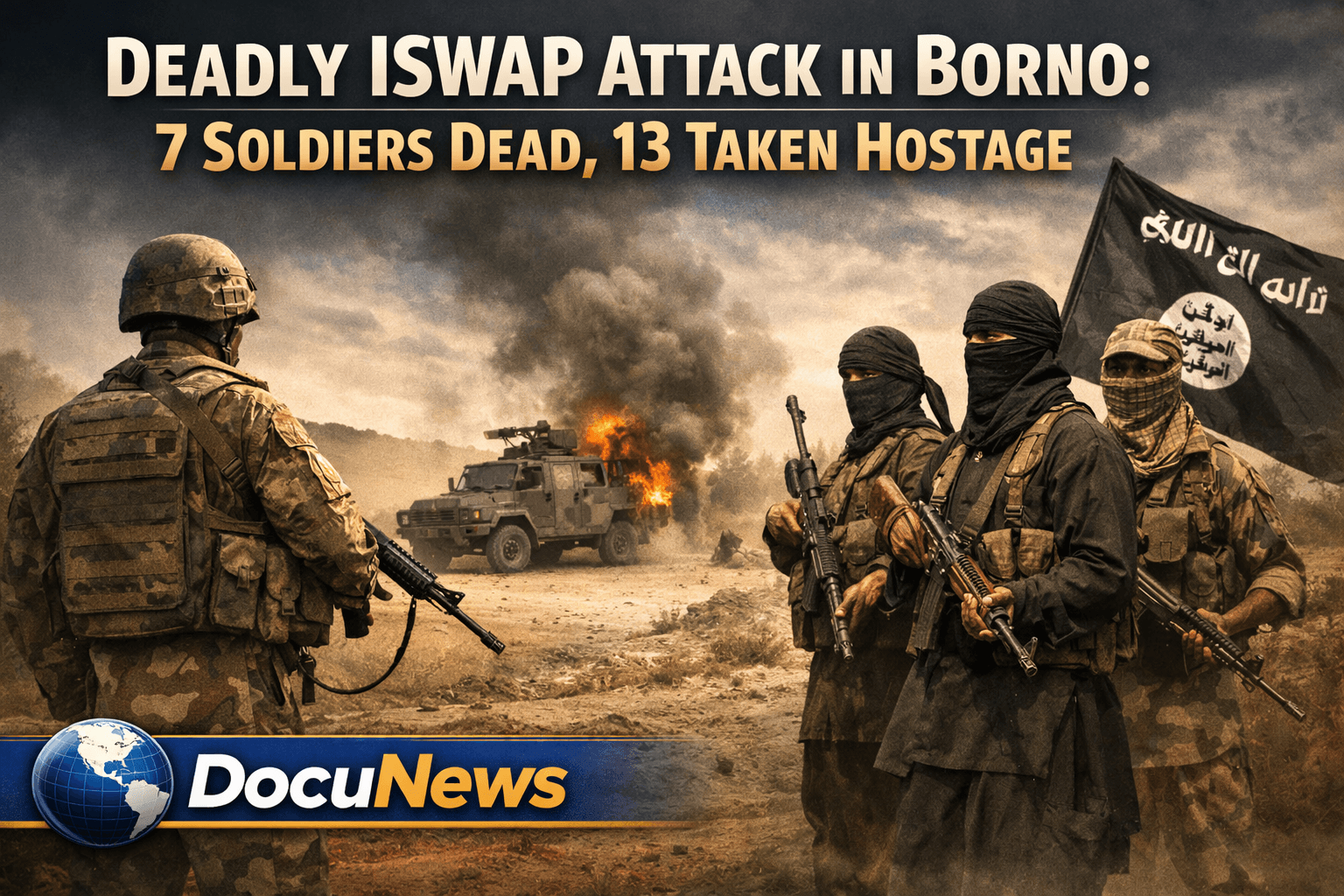
Photo Credit Visit Disclaimers: Use Of AI Images In Our Newsletters
Deadly ISWAP Attack in Borno Leaves 7 Soldiers Dead, 13 Taken Hostage
The silence of northeastern Nigeria’s border communities was shattered when heavily armed fighters struck with precision and speed, killing seven Nigerian soldiers and capturing 13 others, including senior officers, during a deadly ambush in Borno State. The attack, which occurred during a routine military movement, exposed the continuing threat posed by the Islamic State West Africa Province, commonly known as ISWAP. The incident combined three painful realities in one afternoon. Soldiers lost their lives. Fellow troops were taken hostage. A well-planned ambush unfolded in one of Nigeria’s most fragile security corridors.
The shock of the assault spread quickly across military formations and nearby communities. Families of the affected soldiers were thrown into anxiety. Security analysts immediately raised concerns about operational gaps. At the same time, the incident reinforced a familiar truth. Despite years of counterinsurgency operations, ISWAP remains capable of launching lethal attacks against Nigerian forces.
On Monday, January 27, 2026, in Damasak town, Mobbar Local Government Area of Borno State, Nigerian Army troops on patrol were ambushed by suspected ISWAP fighters near the Nigeria–Niger border. The encounter happened during daylight hours, according to security and local sources. Damasak lies in a region long targeted by insurgents because of its strategic position and porous borders.
How the Ambush Unfolded in Damasak
Reports from security sources indicate that the soldiers were moving along a known route when the attackers struck. The fighters emerged suddenly from concealed positions. Gunfire erupted almost immediately. The troops attempted to respond, but the attackers appeared to have the advantage of surprise and terrain familiarity.
According to accounts shared with international media, the exchange of fire lasted several minutes. During that period, seven soldiers were killed. Their deaths occurred at the scene of the ambush. The intensity of the attack made it difficult for the unit to regroup quickly.
As the fighting continued, several soldiers were overwhelmed. Thirteen troops, including their commanding officer, were captured by the attackers. Some members of the patrol managed to escape and later reached safety. They alerted military authorities, prompting emergency response efforts.
The attackers withdrew after the assault, taking the captured soldiers with them. This tactic mirrors previous ISWAP operations, where hostages are used for leverage, propaganda, or intelligence purposes.
Read Also Seven Soldiers Including Lieutenant Colonel, Killed as Boko Haram Attacks Convoy
ISWAP and the Pattern of Targeted Attacks
The Islamic State West Africa Province has steadily refined its tactics over the years. Unlike earlier phases of the insurgency marked by indiscriminate violence, ISWAP often focuses on military targets. Analysts note that this approach helps the group weaken security forces while attempting to gain support or compliance from local populations.
ISWAP emerged as a faction after splitting from Boko Haram in 2015. The group pledged allegiance to the Islamic State and adopted a more structured command system. Since then, it has carried out numerous attacks across Borno State and the wider Lake Chad Basin.
The ambush in Damasak fits a familiar pattern. Fighters exploit intelligence on troop movements. They choose locations with limited escape routes. They strike quickly and retreat before reinforcements arrive. This method has proven deadly in several past incidents involving military convoys and patrols.
Why Damasak Remains a High-Risk Location
Damasak occupies a sensitive position in northeastern Nigeria. The town sits close to the border with Niger, making it a transit point for both civilians and armed groups. The surrounding terrain includes vast stretches of land that are difficult to monitor continuously.
For years, Nigerian security forces have maintained a presence in the area to disrupt insurgent movements. However, the same geography that makes Damasak strategically important also makes it vulnerable. Insurgents can cross borders, blend into rural communities, and launch attacks before slipping away.
Local residents have repeatedly expressed concerns about insecurity. Many have endured displacement, loss of livelihoods, and limited access to basic services. Each new attack deepens these challenges and undermines confidence in long-term stability.
You May have missed this Pregnant Woman Abducted in Ondo as 85-Year-Old Victim Escapes
The Human Cost of the Deadly ISWAP Attack
Behind the headlines are human stories marked by loss and uncertainty. The seven soldiers who lost their lives were serving in a high-risk environment far from home. Their deaths add to a long list of casualties suffered by Nigerian forces during the insurgency.
The captured soldiers face an even more uncertain future. ISWAP has previously released videos or statements involving captured personnel. Such actions are often intended to intimidate security forces and project strength.
Families of the missing soldiers have been left in distress. In many cases, official confirmation of captivity arrives slowly. This delay adds to the emotional burden on loved ones waiting for news.
Military Response and Immediate Aftermath
Following the ambush, military authorities initiated response measures. Reinforcements were deployed to the area. Surveillance efforts were intensified. Search operations were considered, although such missions carry significant risks.
Official statements acknowledged the losses while emphasizing ongoing operations against insurgent groups. Military spokespeople often balance transparency with operational security, which limits the details released to the public.
The Nigerian Army has faced criticism in the past over communication following attacks. In response, officials have stressed their commitment to improving troop safety and operational effectiveness.
Deadly ISWAP Attack in Borno and Intelligence Challenges
The Damasak ambush highlights persistent intelligence challenges in the region. Accurate and timely information is critical for preventing attacks. Yet insurgents continue to exploit gaps.
Factors contributing to these gaps include difficult terrain, limited technological coverage, and the complexity of distinguishing fighters from civilians. Insurgents often rely on local informants or surveillance of troop movements.
Addressing these challenges requires sustained investment in intelligence gathering, community engagement, and inter-agency coordination. Analysts argue that military force alone cannot eliminate the threat.
People are reacting to this headline Bandits Ambush Police Patrol in Katsina, Four Officers Killed
Regional Implications of the Attack
The impact of the ambush extends beyond Nigeria. ISWAP operates across borders, affecting Niger, Chad, and Cameroon. Attacks in one country often have ripple effects across the region.
Regional cooperation has increased through the Multinational Joint Task Force. This coalition aims to coordinate military efforts and share intelligence. However, differences in capacity and resources among member states remain a challenge.
The Damasak incident underscores the need for stronger cross-border collaboration. Insurgents exploit weak points along national boundaries, making unilateral efforts less effective.
Historical Context of Military Losses in Borno
Borno State has been the epicenter of Nigeria’s insurgency for more than a decade. Since 2009, thousands of civilians and security personnel have lost their lives.
Military bases have been overrun. Convoys have been ambushed. Patrols have faced roadside bombs. Each incident reflects the evolving tactics of insurgent groups.
Despite setbacks, the military has also recorded successes. Several high-profile militant leaders have been killed. Territories once controlled by insurgents have been reclaimed. Still, attacks like the one in Damasak show that the conflict is far from over.
Civilian Impact and Humanitarian Concerns
Whenever violence erupts, civilians suffer indirect consequences. Markets close. Movement becomes restricted. Aid delivery is disrupted.
In areas like Damasak, many residents depend on humanitarian assistance. Security incidents complicate the work of aid agencies. They also increase the risk faced by volunteers and local workers.
Long-term instability discourages investment and development. Young people face limited opportunities, which insurgent groups sometimes exploit for recruitment.
Deadly ISWAP Attack in Borno and Public Confidence
Public reaction to the ambush has been mixed. Some Nigerians expressed anger over recurring attacks. Others called for stronger support for the military.
Maintaining public confidence is crucial for counterinsurgency efforts. When communities trust security forces, they are more likely to share information and cooperate.
Conversely, repeated attacks without visible improvement can fuel frustration and fear. Managing this balance remains a challenge for authorities.
International Attention and Support
Nigeria’s fight against ISWAP has drawn international attention. Several countries provide training, equipment, and intelligence support.
International partners emphasize respect for human rights and civilian protection. They also encourage comprehensive approaches that combine security, development, and governance reforms.
The effectiveness of external support depends largely on local implementation. Coordination between Nigerian forces and international partners continues to evolve.
Looking Ahead After the Damasak Ambush
The aftermath of the ambush raises difficult questions. How can troop movements be better protected. What measures can reduce the risk of capture. How can intelligence failures be addressed.
Military analysts suggest increased use of aerial surveillance, improved communication systems, and greater flexibility in patrol planning. They also highlight the importance of morale and welfare for troops deployed in high-risk zones.
For communities in Borno, the hope remains that sustained efforts will eventually bring lasting peace. Each attack delays that goal, but it also renews calls for stronger action.
Conclusion
The deadly ISWAP attack in Borno that left seven soldiers dead and 13 taken hostage stands as a stark reminder of the ongoing security challenges in northeastern Nigeria. The ambush in Damasak exposed vulnerabilities while underscoring the resilience of insurgent groups.
As investigations continue and operations adapt, the incident will likely influence future military planning. For the families of the affected soldiers, the focus remains on accountability, recovery, and the hope of safe returns.
The conflict has endured for years. Its resolution will require persistence, cooperation, and a commitment to addressing both immediate threats and underlying causes.
For background on ISWAP and the wider insurgency, see detailed analysis at The Organization for World Peace and ongoing coverage via AllAfrica.