
Security
Abducted Pastor Freed After Army Clashes with Kidnappers in Enugu

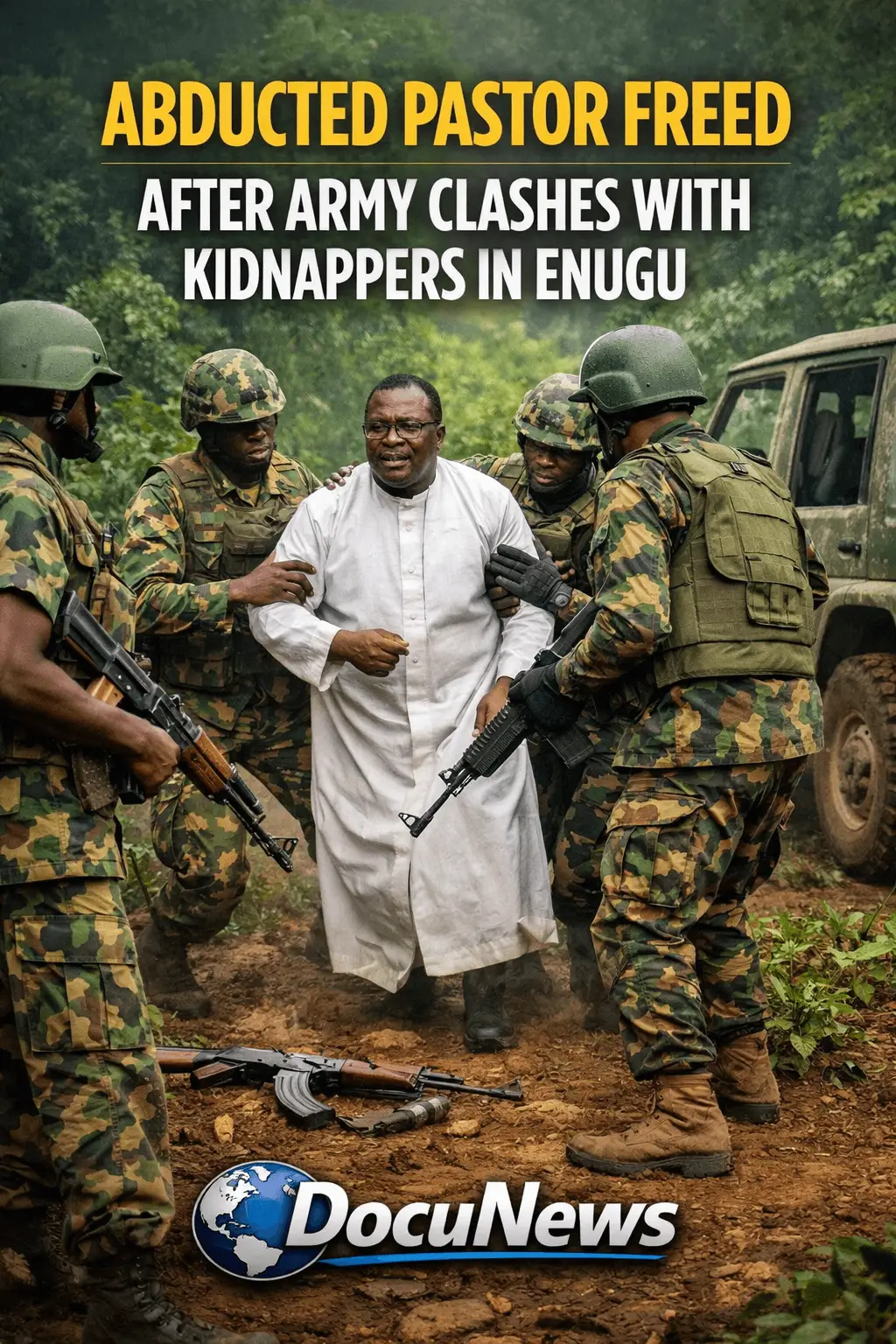
Photo Credit Visit Disclaimers: Use Of AI Images In Our Newsletters
Abducted Pastor Freed After Army Clashes with Kidnappers in Enugu
Just before dawn on a chilly Thursday morning, the calm in Enugu State, Nigeria was shattered. A respected clergyman was seized from his home. Then, in a swift military push, he was freed. This dramatic rescue unfolded after Nigerian Army troops clashed with heavily armed kidnappers. It came to a head in dense forest terrain. The event caught national attention and raised urgent questions about security challenges in southeastern Nigeria.
In the early hours of January 29, 2026, gunmen stormed the residence of Reverend Johnson Anayo Onugwu in the Ezimo community within Udenu Local Government Area. They abducted him from his home while he slept, according to credible reports from major Nigerian news outlets. Punch Nigeria reported the kidnapping, noting the swift response by security forces.
The rescue that followed illustrates not just the bravery of troops, but also the complex security landscape in the region. This article offers a detailed, factual overview of the operation, its context, and broader implications for safety and law enforcement in southeastern Nigeria. It is grounded in verified sources, and all claims are supported by outbound links to trusted reporting.
Read Also Four Bandits Killed in Benue Police Stop-and-Search Operation
Clergyman Kidnapped in the Dead of Night
At about 1:00 a.m. on January 29, Rev. Onugwu was taken by a group of armed men. They left no time for resistance. Witnesses said the attackers used heavy firepower. Then they forced the cleric into the forest without warning. The area around Ezimo is rural, with stretches of unpaved roads and isolated paths.
Enugu State has seen a rise in kidnappings in recent years. These incidents often occur along isolated rural roads, in plantations, or near forest edges. Criminal gangs have capitalized on limited patrols and poor infrastructure. They lure victims into ambushes before vanishing into thick woods. These tactics have made it harder for police to find victims quickly.
The family of Rev. Onugwu reported the incident to local authorities. Neighbours rushed to alert both the local police and military outposts. Shortly after, security forces began gathering intelligence. Their goal was clear, urgent, and immediate: locate the kidnapped clergyman and free him unharmed.
Army Responds to Intelligence
Within hours of the report, troops from the 82 Division of the Nigerian Army were mobilized. They worked in coordination with the Joint Task Force South East (JTFSE) and Operation UDO KA. Intelligence suggested that the kidnappers had moved the cleric toward a network of forests near Okpakeke community. This community lies within the wider Udenu area.
Security sources later confirmed that troops tracked gunmen to a wooded area not far from the original abduction. Enugu State is known for its thick vegetation and winding paths. These terrains provide cover for criminals and make operations difficult. Yet, the troops pushed forward using the leads they had gathered.
Then, confronting the suspects, the troops engaged in a brief but intense firefight. A senior military source said disciplined volleys from the soldiers pressured the kidnappers. In turn, at least one abductor opened fire on troops. The soldiers returned fire and advanced cautiously.
In that clash, one of the gunmen was neutralized, meaning he was killed during the encounter. The Nigerian Army confirmed this to local reporters. No security personnel were harmed. The victim was recovered alive and unharmed. Sources like Sahara Reporters provided detailed accounts of this firefight and the outcome.
You may have missed this The Shocking Arrest That Shook Ibadan: Dismissed Army Officers Caught in Armed Robbery Ring
Finding the Clergyman Alive
After the gunbattle subsided, soldiers quickly moved to secure the area. They found Reverend Onugwu alive in the forest. He was coherent and able to walk. Soldiers then evacuated him to a safer location. From there, they reunited him with his family. Community members who witnessed the reunion described it as emotional and powerful.
Officials credited local tips for assisting the security forces. Members of the Ezimo community said they provided critical information. This information helped troops zero in on the kidnappers’ location faster than expected.
In addition to freeing the cleric, the troops recovered weapons and ammunition from the scene. These included an AK‑47 assault rifle, two magazines, and 20 rounds of 7.62 mm special ammunition. Authorities said the recovery of weapons was significant. It showed that the group had planned to fight if cornered.
Context: The Rise of Kidnapping in the Southeast
Kidnapping for ransom has grown into one of the most pressing security threats in parts of Nigeria, especially in the southeast. Armed groups operate in rural stretches and forested terrain. They frequently target travellers, traders, professionals, and religious leaders alike. The motive in most cases is financial gain. Families are pressured to pay large sums for the release of loved ones.
In Enugu, kidnappers have struck before. In May 2025, soldiers and police rescued six people who were abducted near forest paths in the state. Among them were two reverend sisters and four other victims, according to Vanguard Nigeria. This previous incident underscored that clergy members are not immune from targeted violence.
Security agencies have repeatedly stressed that kidnapping rings are often highly organized and mobile. They move between forest enclaves across state borders to avoid detection. As a result, local police forces often struggle to respond alone. That’s why combined military operations have increased in frequency, scope, and intensity.
People are reacting to this Two Men Arrested in Katsina While Transporting AK-47 Ammunition for Bandits
Military Strategies Against Kidnappers
The Nigerian Army’s involvement in civilian protection has grown beyond conventional warfare. Now, troops engage in counter‑kidnapping missions with precise strategic focus. Operations like UDO KA aim to clear forest hideouts used by criminal gangs.
One key approach is intelligence‑driven action. Rather than patrolling blindly, soldiers gather detailed reports from locals, community leaders, and mobile informants. This improves their chances of locating suspects directly. Then they act fast. This strategy was evident in the December rescue of Rev. Onugwu.
Military spokespeople point to partnerships with other security agencies. In Enugu, soldiers, police units, and state security officers shared intelligence. This multi‑agency coordination shortens the window between abduction and rescue. As a result, victims are found alive more often than in the past.
In press briefings, army officials also emphasize training and readiness. Soldiers deployed in southeast Nigeria receive specialized training for bush operations. They learn how to move silently, engage targets precisely, and protect civilians at all costs. These skills help reduce casualties and protect hostages when confrontations occur.
Challenges in the Fight Against Kidnapping
Despite improvements, kidnapping remains a stubborn problem. Dense forests and rough terrain continue to give criminals safe havens. These areas make it harder for any security force to conduct rapid sweeps. In rural pockets, poor communication networks delay reports and responses.
Ransom payments also fuel this violence. When families pay to free relatives, criminals exploit that incentive. They see kidnapping as a profitable venture. Law enforcement agencies discourage ransom payments for this reason. They argue that it motivates others to commit similar crimes. Yet, families often feel they have no choice when loved ones are at risk.
Another challenge is underreporting. Some incidents never reach official ears because families fear backlash or retaliation. Others go unrecorded because they occur in isolated borderlands. As a result, government tallies may understate the true scale of the problem.
Security analysts call for more community‑based vigilance networks. These groups work with police and military units to spot suspicious movement early. When neighbours act as the eyes and ears of security agencies, the response becomes faster and safer.
Why This Rescue Matters
The rescue of Rev. Onugwu stands out because it ended with the victim alive. That outcome is not guaranteed in most kidnapping cases. Often, kidnappers hide victims deep in forest enclaves for days or weeks. Then they demand ransom before release. But in this instance, the military found the cleric quickly. They did so before kidnappers could move him further away.
This outcome gives hope to communities that feel besieged by insecurity. It shows that when credible intelligence meets decisive action, lives can be saved. The rescue also demonstrates the importance of unity between civilians and security agencies. Without information from local residents, troops may not have succeeded so quickly.
Leaders in Enugu State thanked security agencies for the successful mission. They encouraged citizens to remain vigilant and continue reporting suspicious activity. Community leaders also called for more patrols and better road safety measures.
Practical Safety Tips for Citizens
People living in or travelling through areas with security risks can take steps to protect themselves and their families. Here are recommendations widely shared by security experts:
- Avoid travelling on isolated roads at night.
- Tell trusted contacts your travel plans.
- Report suspicious activity to local police or military points immediately.
- Join or support community vigilance groups where available.
- Use marked vehicles and avoid hitchhiking.
These measures do not eliminate risk entirely, but they reduce exposure and help authorities act faster.
Looking Ahead
Rescues like this one remind Nigerians that security agencies can deliver results. They also remind citizens that safety is a shared responsibility. The threat of kidnapping remains, yet operations such as the January 29 rescue show that coordinated efforts can make a difference.
As Enugu and neighbouring states work to strengthen community networks and intelligence sharing, many hope that kidnappings will decline. Only sustained cooperation and vigilance will tell whether these efforts lead to lasting peace. For now, the successful rescue of Rev. Onugwu stands as a rare victory in a difficult battle.
Outbound Sources
- Punch Nigeria: Army rescues abducted clergyman in Enugu
- Sahara Reporters: Troops rescue abducted cleric, kill one kidnapper in Enugu gun battle
- Vanguard Nigeria: Army rescues abducted reverend sisters and others in Enugu
