
Security
Fact Check: US Confirms Deployment of Military Advisors to Nigeria as Security Challenges Grow

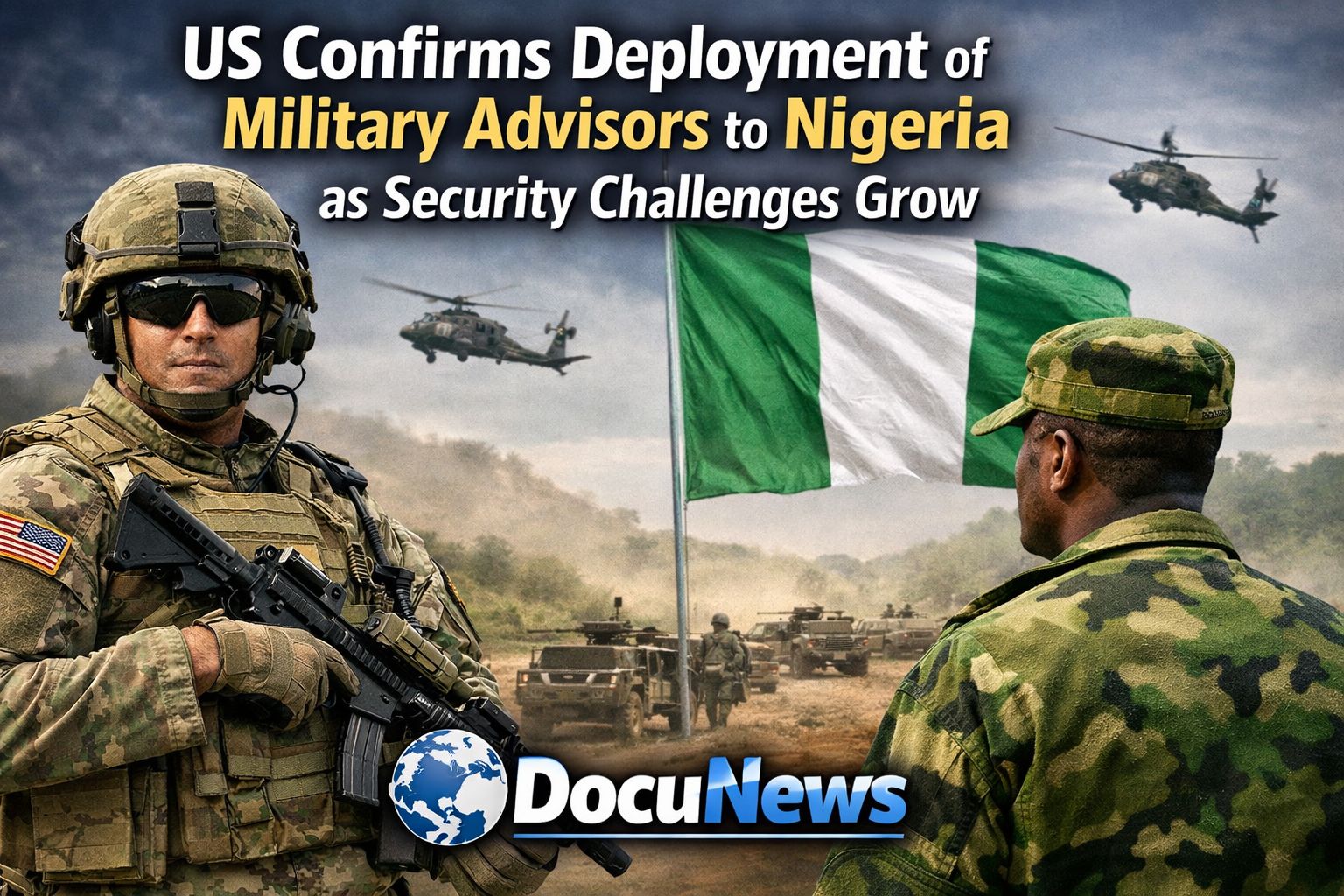
Photo Credit Visit Disclaimers: Use Of AI Images In Our Newsletters
Fact Check: US Confirms Deployment of Military Advisors to Nigeria as Security Challenges Grow has emerged as one of the most discussed headlines in Nigeria’s security space, drawing attention from citizens, analysts, and the international community. As reports circulated online, confusion quickly followed, with some claiming foreign troops had entered Nigerian territory in large numbers. However, verified information now confirms that the United States deployed a small team of military advisors to Nigeria, not combat forces. The development reflects growing concern over insecurity and highlights renewed cooperation between Abuja and Washington.
On February 2, 2026, in Abuja, Nigeria, U.S. defense officials publicly acknowledged the presence of American military advisors working alongside Nigerian security agencies. The confirmation followed renewed attacks by extremist groups and increasing violence across northern and central states. Nigerian authorities also addressed the matter, stressing that the deployment supports local forces rather than replacing them.
This article provides a clear fact check of the situation, explains why the United States stepped in, outlines what Nigerian officials are saying, and explores how this partnership may influence the country’s security outlook.
Understanding the Nature of the US Deployment
To fully understand this development, it is essential to distinguish between military advisors and combat troops. Advisors focus on intelligence sharing, operational planning, and training support. They do not take part in frontline fighting. Combat troops, on the other hand, actively engage enemies. This difference matters because it shapes public perception and legal interpretation.
According to Reuters, the United States confirmed that it dispatched a small advisory team to Nigeria to strengthen counterterrorism cooperation. The full report is available here: https://www.reuters.com/world/africa/us-military-says-some-forces-have-been-dispatched-nigeria-2026-02-03/. Similarly, the Associated Press reported that U.S. officials acknowledged the advisors’ arrival following recent extremist attacks: https://apnews.com/article/b415141ca6ed27978ba52f081ca05405.
These sources make it clear that claims of mass troop deployment remain unsupported. Instead, the mission centers on advisory assistance aimed at improving coordination and response capabilities.
Why Nigeria Requested International Support
Nigeria has battled insecurity for more than a decade. Boko Haram and Islamic State West Africa Province continue to operate in the northeast, while banditry, kidnapping, and armed robberies affect Kaduna, Zamfara, Niger, and Plateau states. Despite ongoing military operations, the scale of violence continues to stretch resources.
As a result, Nigerian authorities sought additional support from international partners. The United States views Nigeria as a strategic ally in West Africa, recognizing that instability in Africa’s most populous nation can ripple across the region. Cooperation therefore serves mutual interests, combining local knowledge with external technical capacity.
Official Statements From Both Governments
US military representatives explained that advisors would assist Nigerian forces through intelligence sharing, surveillance planning, and operational coordination. They emphasized that the mission does not involve direct combat. Nigerian officials echoed this position, confirming that Nigerian commanders retain full authority over security decisions and operational direction.
Government spokespeople also stressed that this partnership aligns with Nigeria’s sovereignty and long-standing defense relationships. While some citizens welcomed the assistance, others expressed caution, reflecting broader concerns about foreign involvement.
Separating Facts From Social Media Rumors
Shortly after the announcement, misinformation spread rapidly online. Viral posts suggested thousands of American soldiers had entered Nigeria or that Washington now controls Nigerian military operations. However, both claims lack evidence. Reuters and AP clearly state that only a limited advisory team arrived and that Nigerian authorities remain in command.
Such rumors highlight the importance of relying on verified sources and professional journalism, especially during sensitive national security developments.
Rising Insecurity and Its Human Impact
Beyond official briefings, ordinary Nigerians continue to bear the consequences of violence. Thousands of families have been displaced, farmlands abandoned, and schools disrupted. Markets operate under fear, while transportation costs rise as drivers avoid dangerous routes.
The United Nations Office for the Coordination of Humanitarian Affairs tracks displacement and humanitarian needs across the Sahel region: https://www.unocha.org/regions/sahel. Meanwhile, the Global Terrorism Index highlights Nigeria as one of the countries most affected by extremist activity: https://www.visionofhumanity.org/maps/global-terrorism-index.
These figures underscore why security cooperation remains urgent, not just for strategic reasons but for everyday survival.
Legal Perspective on Foreign Military Assistance
International law permits sovereign nations to invite foreign military assistance. Nigeria formally approved this advisory mission, placing it within accepted legal frameworks. The United Nations Office of Legal Affairs explains how such agreements operate: https://legal.un.org/ola.
Although legal approval exists, debates continue about transparency and accountability. Civil society groups urge clear communication regarding mission scope and duration.
Regional Security Implications for West Africa
Nigeria’s challenges extend beyond its borders. Armed groups operate across Niger, Chad, Cameroon, and Burkina Faso. Because borders remain porous, instability spreads easily. Nigeria’s size and economic influence make it central to regional peace, explaining why international partners prioritize cooperation with Abuja.
Economic Consequences of Prolonged Insecurity
Insecurity affects Nigeria’s economy deeply. Farmers abandon fertile land, traders avoid highways, and investors hesitate. Food prices rise while unemployment grows. Youth without stable income become vulnerable to criminal recruitment, worsening the cycle of violence.
Experts argue that restoring security remains critical for economic recovery and long-term development.
Community Reactions and Civil Society Concerns
Public opinion varies widely. Some communities welcome foreign support, hoping it will strengthen local defenses. Others remain skeptical, fearing unintended consequences. Community leaders call for transparency, while civil society organizations emphasize respect for human rights during operations.
Lessons From Previous Security Partnerships
Nigeria has partnered with international allies before, receiving training, equipment, and intelligence. Success often depends on clear objectives, strong communication, and respect for local leadership. When these elements align, cooperation produces better outcomes.
The Role of Intelligence Sharing
One major focus of the advisory mission involves intelligence cooperation. Modern security operations rely on surveillance data, satellite imagery, and timely communication. By sharing intelligence, partners improve response speed and operational accuracy, helping prevent attacks before they occur.
Addressing Root Causes of Violence
Military action alone cannot solve Nigeria’s security crisis. Long-term peace requires tackling poverty, unemployment, poor education access, and weak governance. Development programs, job creation, and community investment help reduce the conditions that allow extremism to thrive.
Possible Future Scenarios
Several outcomes remain possible. Cooperation may reduce attacks and restore confidence. Progress may remain slow. Advisory efforts could expand if conditions worsen. Much depends on leadership decisions, operational effectiveness, and sustained political commitment.
Media Responsibility and Accurate Reporting
False claims about foreign troops can inflame tensions. Therefore, fact-based journalism remains essential. Readers should rely on trusted sources and cross-check reports. For continued updates and verified security reporting, follow DocuNews Central.
Conclusion
The headline “Fact Check: US Confirms Deployment of Military Advisors to Nigeria as Security Challenges Grow” accurately reflects verified events. The United States sent a small advisory team to assist Nigerian forces amid worsening insecurity. No evidence supports claims of large-scale troop deployment.
This development highlights Nigeria’s ongoing struggle with violence and the increasing role of international cooperation. Ultimately, lasting peace will depend on effective leadership, community engagement, and sustained investment in social stability.
Sources
- Reuters – https://www.reuters.com/world/africa/us-military-says-some-forces-have-been-dispatched-nigeria-2026-02-03/
- AP News – https://apnews.com/article/b415141ca6ed27978ba52f081ca05405
- UN OCHA – https://www.unocha.org/regions/sahel
- Global Terrorism Index – https://www.visionofhumanity.org/maps/global-terrorism-index
- UN Office of Legal Affairs – https://legal.un.org/ola
For SECURITY UPDATES in Nigeria Visit Security updates Nigeria