
Breaking news
Bandits Ambush Zamfara Market Returnees, Kill Five Others Missing

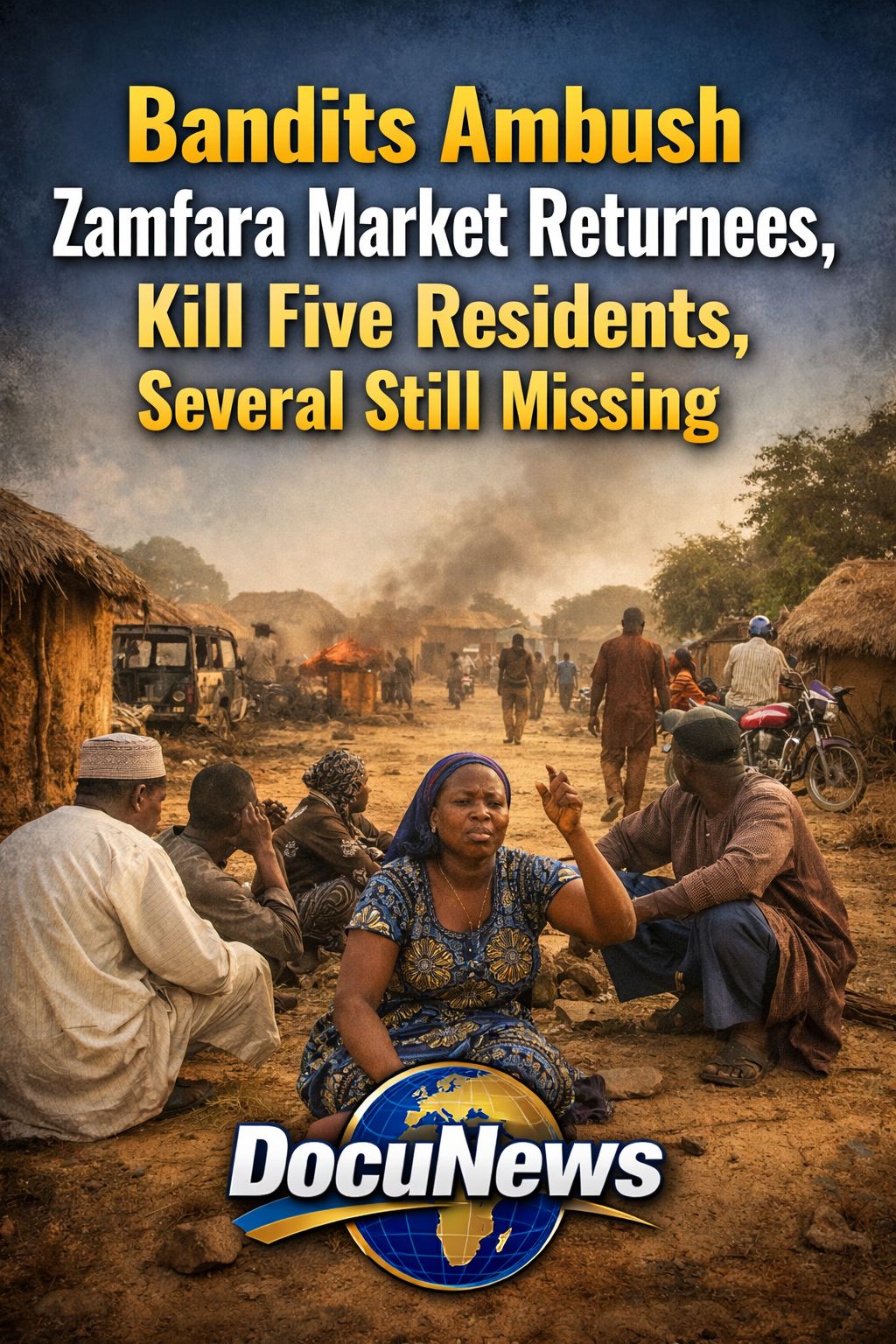
It happened Kyaram community Bandits Ambush Market Returnees, Kill Five Residents, and others are Still Missing. This attack has once again exposed the fragile security situation in Nigeria’s northwest, after armed attackers targeted innocent villagers returning from a local market, killing at least five people and leaving several others missing, according to community leaders and security sources who spoke to DocuNews Central.
The deadly incident occurred on January 28, 2026, in Kyaram community, located in Bukkuyyum Local Government Area of Zamfara State. Residents had concluded their trading activities at Maga Market and were heading home along a familiar rural route when gunmen suddenly emerged from surrounding bushes and opened fire on them.
Security officials later confirmed the fatalities while search operations began immediately to locate those who disappeared during the chaos. Since then it has became a nightmare to families who has remained in distress, gathering daily around community centres and security posts in hope of hearing news about their loved ones.
Photo Credit Visit Disclaimers: Use Of AI Images In Our Newsletters
Attack Unfolds on Busy Market Route
Eyewitnesses said the victims were among dozens of farmers and petty traders who travelled in small groups after closing business at Maga Market. The road linking the market to Kyaram village normally serves as a lifeline for residents, especially on market days when people move agricultural produce, livestock, and household supplies.
However, on that afternoon, bandits reportedly positioned themselves strategically along the road, taking advantage of thick vegetation and limited visibility. As soon as the returning villagers approached, gunshots rang out. Panic spread instantly. People ran in different directions while others dropped to the ground in fear.
Some residents managed to escape into nearby farms, while several others were shot before they could find cover. Survivors said the attackers fired repeatedly for several minutes, then mounted motorcycles and fled toward forested areas known to serve as hideouts for armed groups. This incident has brought tears and pains to the families and relatives.
Local volunteers rushed to the scene after the gunfire stopped, offering first aid to wounded victims and alerting security agencies. Within hours, police and military personnel arrived to secure the area and begin preliminary investigations.
According to DocuNews Central the incident was first reported by Sahara Reporters, which confirmed five deaths and several missing persons. Their detailed account can be read here: Sahara Reporters.
Search and Rescue Efforts Intensify
Following the ambush, joint security teams comprising police officers, soldiers, and local vigilantes launched coordinated search-and-rescue operations across nearby bushes and footpaths. Authorities said they focused on areas believed to be escape routes commonly used by bandit groups operating in the region.
Residents assisted by sharing information about suspicious movements observed before the attack. Some villagers also joined security teams, helping them navigate difficult terrain and identify familiar pathways through farmlands and forests.
Despite these efforts, locating the missing has proven difficult due to dense vegetation and the vastness of the surrounding landscape. As of the time of reporting, no arrests linked directly to the attack had been announced.
Security analysts explained that bandit groups often break into smaller units after operations, allowing them to disappear quickly and complicating tracking efforts. This tactic has remained a major challenge for law enforcement agencies across northwest Nigeria.
For more Security Updates In Nigeria Visit Security updates Nigeria
Families Struggle With Uncertainty
For families of the missing, each passing day brings renewed anxiety. Relatives gather regularly at Kyaram’s central meeting point, exchanging information and hoping for updates from rescue teams.
One resident said his younger brother was among those who fled during the shooting and had not been seen since. Another woman explained that her husband left for the market that morning and never returned, leaving behind young children who continue to ask when their father will come home.
Community elders have urged residents to remain calm while cooperating fully with security agencies. Religious leaders have also organized prayer sessions, offering emotional support to grieving families.
The emotional toll of the attack extends beyond immediate victims, affecting the entire community as fear and uncertainty linger.
Banditry Crisis Deepens in Zamfara
The Kyaram ambush highlights a broader pattern of violence across Zamfara State, which has become one of Nigeria’s most affected regions by armed banditry. For years, criminal gangs have carried out raids on villages, abducted travellers, stolen livestock, and disrupted farming activities.
Analysts trace the origins of the crisis to disputes over land use between farmers and herders, poverty, weak law enforcement presence, and the proliferation of illegal firearms. Over time, loosely organized groups evolved into structured criminal networks engaged in kidnapping for ransom and large-scale violence.
Al Jazeera provides background on the emergence of armed bandits in northwest Nigeria here: Al Jazeera Analysis.
These gangs now operate across multiple states, exploiting porous borders and limited rural security coverage to evade capture.
History of Violence in Bukkuyyum Area
Bukkuyyum Local Government Area, where Kyaram is located, has witnessed repeated attacks over the past several years. Entire communities have been displaced, while many farmers have abandoned fertile land due to persistent insecurity.
In 2022, dozens of villagers were killed during a brutal assault on Ganar Kiyawa, another community within the same local council. Details of that incident are documented here: Ganar Kiyawa Massacre.
Residents say such tragedies have become distressingly familiar, with attacks often occurring during market days or farming seasons when people are most vulnerable.
Economic Consequences for Rural Communities
Markets like Maga serve as economic lifelines for rural Zamfara. Farmers depend on them to sell crops, while traders rely on daily transactions to sustain their families. When violence disrupts these activities, the impact spreads quickly through local economies.
Following attacks, many villagers avoid travelling, leading to reduced trade, rising food prices, and shortages of essential goods. Transport operators also withdraw services from high-risk areas, further isolating affected communities.
Parents increasingly keep children at home instead of sending them to school, fearing attacks along roads. Over time, this disrupts education and limits opportunities for young people.
The cumulative effect is deepening poverty, which experts warn could fuel further instability if left unaddressed.
Government and Security Sector Response
Nigerian authorities have launched several military operations aimed at dismantling bandit camps across Zamfara and neighbouring states. Security agencies have reported the arrest of suspected collaborators and recovery of stolen livestock during recent raids.
One such operation was reported by PRNigeria here: PRNigeria Report.
While these efforts have produced occasional successes, attacks continue to occur, raising questions about the sustainability of current strategies.
Security experts argue that military action alone cannot resolve the crisis without complementary measures such as community engagement, intelligence sharing, and socioeconomic development.
Experts Advocate Integrated Solutions
Analysts recommend a comprehensive approach combining security operations with education, job creation, and infrastructure development. They also emphasize the importance of rebuilding trust between communities and law enforcement agencies.
Regional cooperation remains critical, as bandits often cross state and international borders to escape pursuit. Without coordinated action, enforcement efforts risk remaining fragmented.
National Implications of Persistent Insecurity
The Zamfara ambush reflects Nigeria’s wider security challenges. Armed violence has claimed thousands of lives across various regions over the past decade, straining military resources and undermining public confidence.
Premium Times reported that hundreds of Nigerian soldiers have died in ambushes between 2019 and 2025, highlighting the scale of the crisis: Premium Times.
Beyond casualties, insecurity discourages investment, disrupts agriculture, and deepens inequality, creating long-term development challenges.
Community Resilience Amid Hardship
Despite ongoing threats, Zamfara communities continue to demonstrate resilience. Volunteers support security operations, neighbours share food with grieving families, and faith leaders provide counselling and encouragement.
Such solidarity offers a measure of hope, even as residents grapple with fear and uncertainty.
Role of Independent Media
Platforms such as DocuNews Central play an important role by documenting rural insecurity and amplifying voices from affected communities. Their reporting ensures that tragedies outside major cities receive national and international attention.
Accurate documentation also helps policymakers understand realities on the ground and design more informed responses.
What Lies Ahead?
As search operations continue, families in Kyaram and surrounding villages hope missing relatives will be found alive. Authorities have promised increased patrols along market routes and improved surveillance in high-risk areas.
Community leaders are calling for permanent security posts, better road monitoring, and faster emergency response systems.
Residents also urge government to address underlying economic challenges that make young people vulnerable to recruitment by criminal groups.
Conclusion
The ambush on Zamfara market returnees stands as another painful reminder of Nigeria’s ongoing struggle with insecurity. Five lives were lost, several families remain in anguish, and an entire community has been shaken.
Yet amid grief, calls for lasting solutions grow louder. Until structural issues such as poverty, weak rural policing, and unchecked arms flows are addressed, communities like Kyaram will remain exposed.
For Zamfara residents, healing will take time. For Nigeria, restoring safety remains an urgent national priority.
Donald Tohonnie
February 9, 2026 at 11:30 am
It is perfect time to make some plans for the future and it’s time to be happy. I’ve read this post and if I could I wish to suggest you few interesting things or suggestions. Perhaps you could write next articles referring to this article. I desire to read more things about it!