
Breaking news
How To Protect your Children From Abuse, Pornography

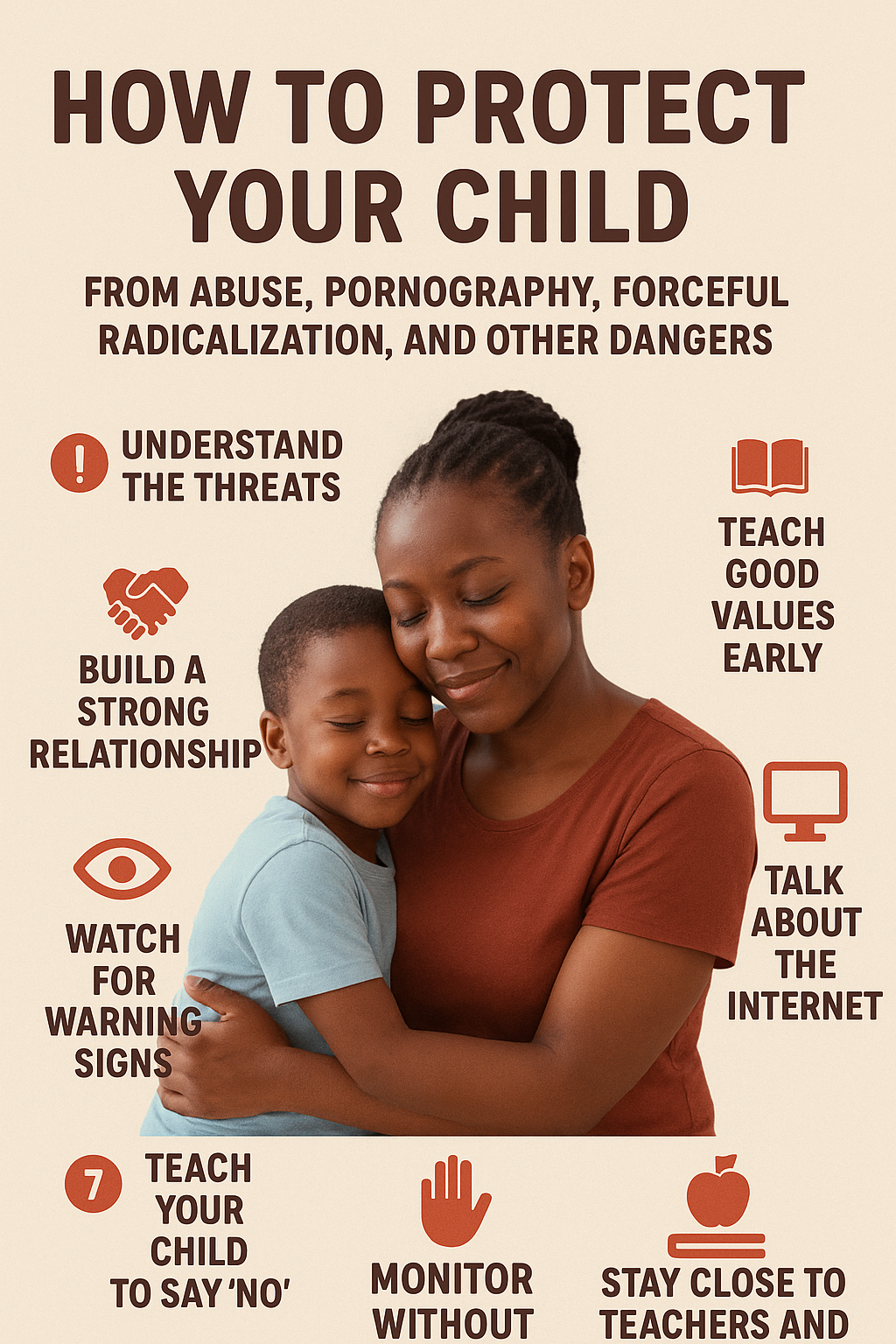
How to Protect Your Child from Abuse, Pornography, Forceful Radicalization, and Other Dangers
Children face many dangers today.
Some are hidden and hard to see.
As a parent or guardian, you must stay alert.
You can guide your child to stay safe and strong.
This guide will help you.
It uses simple steps you can follow every day.
- Understand the Threats
The first step is to know the dangers.
If you understand them, you can act fast.
Abuse
Abuse can be physical or emotional.
It can happen in school, at home, or online.
Abusers often look friendly.
They may be people you trust.
Pornography
The internet has many harmful images.
Children can find them by mistake.
These images can hurt their mind and heart.
It can lead to addiction and bad habits.
Forceful Radicalization
Some groups try to pull children into hate or violence.
They use lies and fear.
They may come as friends online.
Other Negative Influences
Peer pressure can lead to drugs, stealing, or bullying.
Some TV shows, games, or music also spread bad values.
Knowing these dangers is the first shield.
- Build a Strong Relationship
Your child will trust you if you listen.
A strong bond is the best defense.
Spend time together every day.
Ask about school, friends, and hobbies.
Show love through kind words and hugs.
Never judge too quickly.
When your child feels safe with you,
they will tell you their fears.
- Teach Good Values Early
Good morals start at home.
Teach your child about honesty and kindness.
Explain why lying hurts people.
Show how to share and forgive.
Praise good behavior.
Correct bad habits with calm words.
Values learned young last for life.
- Talk About the Internet
The internet can be a good tool.
But it can also be dangerous.
Teach your child never to share personal details.
Set clear rules on screen time.
Check the websites and apps they use.
Use child-friendly browsers.
Tell them that not all people online are real friends.
- Watch for Warning Signs
Children often give clues when they face danger.
Learn to notice these signs:
Sudden silence or fear.
Changes in eating or sleeping.
New friends you do not know.
Secretive behavior with phones or computers.
Do not ignore these changes.
Ask gentle questions.
Show you care and want to help.
- Teach Your Child to Say “No”
Give your child the power to say no.
This protects them from abuse and bad influence.
Role-play simple scenes.
Teach them to walk away from strangers.
Show how to shout for help if needed.
Tell them it is okay to refuse even an adult.
Confidence helps a child stay safe.
- Monitor Without Spying
Children need privacy.
But you must still guide them.
Place computers in shared spaces.
Check phone use but explain why.
Use parental controls on apps and games.
Make clear rules for social media.
Balance trust with protection.
- Stay Close to Teachers and Caregivers
Your child spends time with others.
Know the people who care for them.
Meet their teachers often.
Visit their school events.
Know their babysitter or coach.
Ask about school policies on bullying and abuse.
A strong network keeps your child safer.
- Teach Respect for Body and Privacy
Help your child understand their own body.
Use correct names for body parts.
Teach that no one should touch them without consent.
Explain that secrets about their body are wrong.
Encourage them to speak up if they feel unsafe.
This builds self-respect and courage.
- Guide Them in Choosing Friends
Friends shape a child’s habits.
Help your child choose friends wisely.
Invite their friends home so you can meet them.
Talk about what makes a good friend.
Warn them about peer pressure.
Praise them when they keep good company.
Good friends protect, bad friends mislead.
- Share Stories and Lessons
Stories help children learn.
Use real or simple stories to teach.
Tell stories of people who made wise choices.
Share how you faced challenges as a child.
Read books that show good morals.
Lessons stay longer when told as stories.
- Teach Critical Thinking
Help your child question what they hear.
Ask what they think about news or shows.
Help them check facts before believing.
Teach them to ask, “Is this true? Is this kind?”
Critical thinking guards against radicalization and lies.
- Strengthen Their Faith or Beliefs
Strong beliefs give moral direction.
It helps children stand firm.
Share your faith with them.
Pray or read scripture together if you wish.
Talk about love, forgiveness, and respect.
Faith can give courage in tough times.
- Set Clear Rules and Boundaries
Children need clear limits.
Rules guide them and give safety.
Set fixed times for homework and play.
Agree on when to use the internet.
Explain what happens if rules are broken.
Consistency builds trust and discipline.
- Be a Good Example
Children copy what they see.
Your actions speak louder than words.
Show honesty and kindness.
Avoid bad language or habits.
Treat others with respect.
When you live the values you teach,
your child will follow.
- Stay Informed as a Parent
Dangers keep changing.
You must keep learning.
Read about child safety and technology.
Attend school or community meetings.
Join parenting groups for support.
Knowledge helps you act quickly.
- Work With Other Parents
Community support protects children.
Share ideas with other parents.
Create a watch group in your area.
Support school programs on safety.
Together, you can reduce risk.
- Encourage Open Talk About Feelings
Children need to express their feelings.
Ask how they feel after school.
Listen without anger or blame.
Praise them when they speak honestly.
Open talk builds trust and emotional strength.
- Seek Help When Needed
Do not be afraid to ask for help.
If you suspect abuse, call local child protection services.
Seek counseling if your child is hurt or scared.
Talk to teachers, doctors, or trusted elders.
Getting help early can save a life.
- Keep Hope Alive
The world has dangers, but there is hope.
Many children grow up safe and strong.
With care and guidance, your child can too.
Stay patient and loving.
Keep showing the right example.
Never give up even when it is hard.
Your steady love is the best shield.
Final Thoughts
Protecting a child is a daily work.
It takes love, time, and wisdom.
But the reward is great.
Your child will grow with good morals.
They will avoid abuse, pornography, and radical ideas.
They will become strong adults with clean hearts.
Start today.
Small steps every day make a big change.
binance
February 7, 2026 at 1:34 am
Thanks for sharing. I read many of your blog posts, cool, your blog is very good.