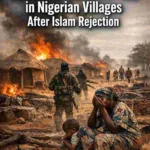

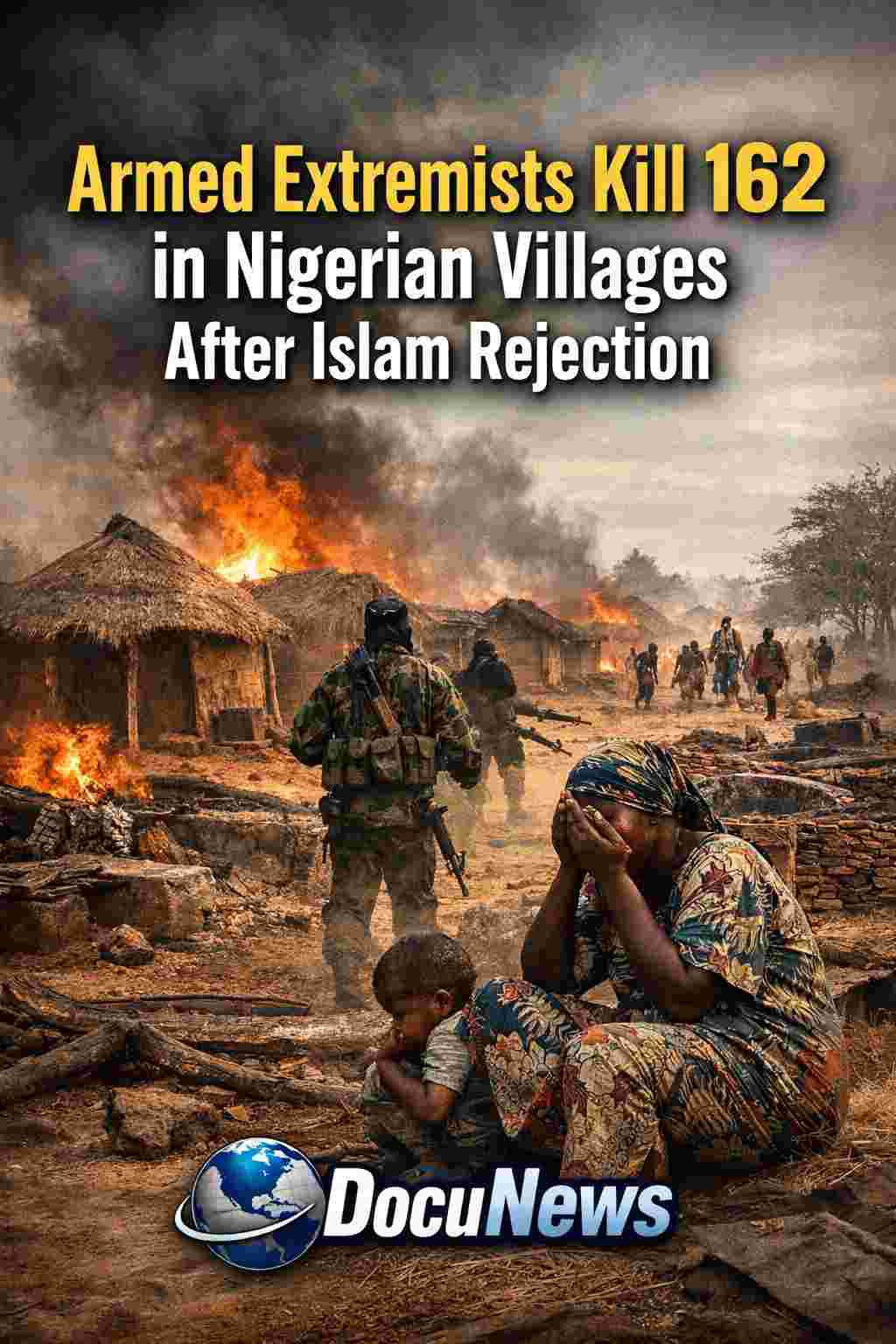
Armed Extremists Kill 162 in Nigerian Villages After Islam Rejection has become one of the most disturbing headlines to emerge from Nigeria this year. In a coordinated wave of terror, heavily armed attackers stormed two rural communities, executed civilians, burned homes, and abducted survivors simply because residents refused to accept radical religious demands.
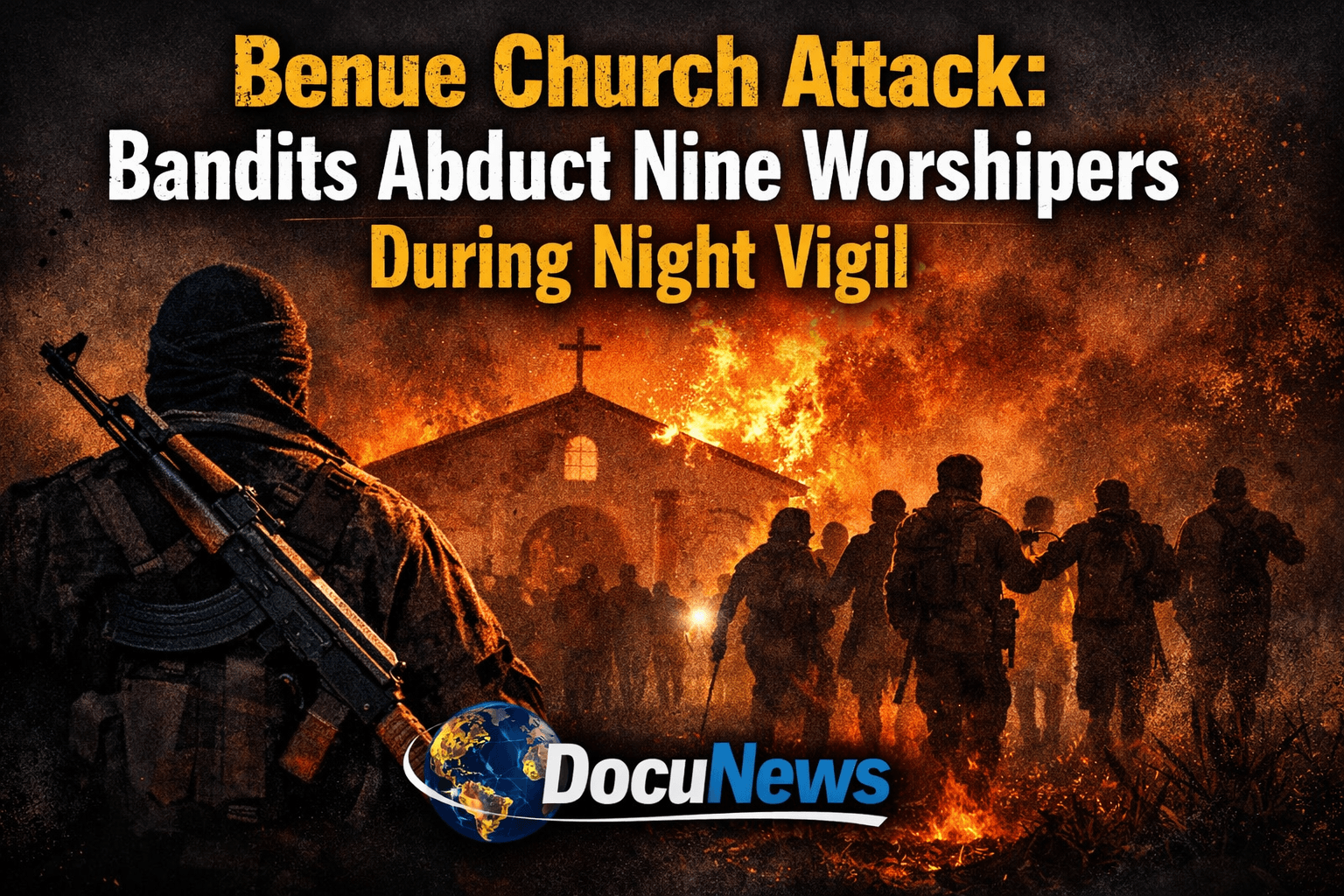
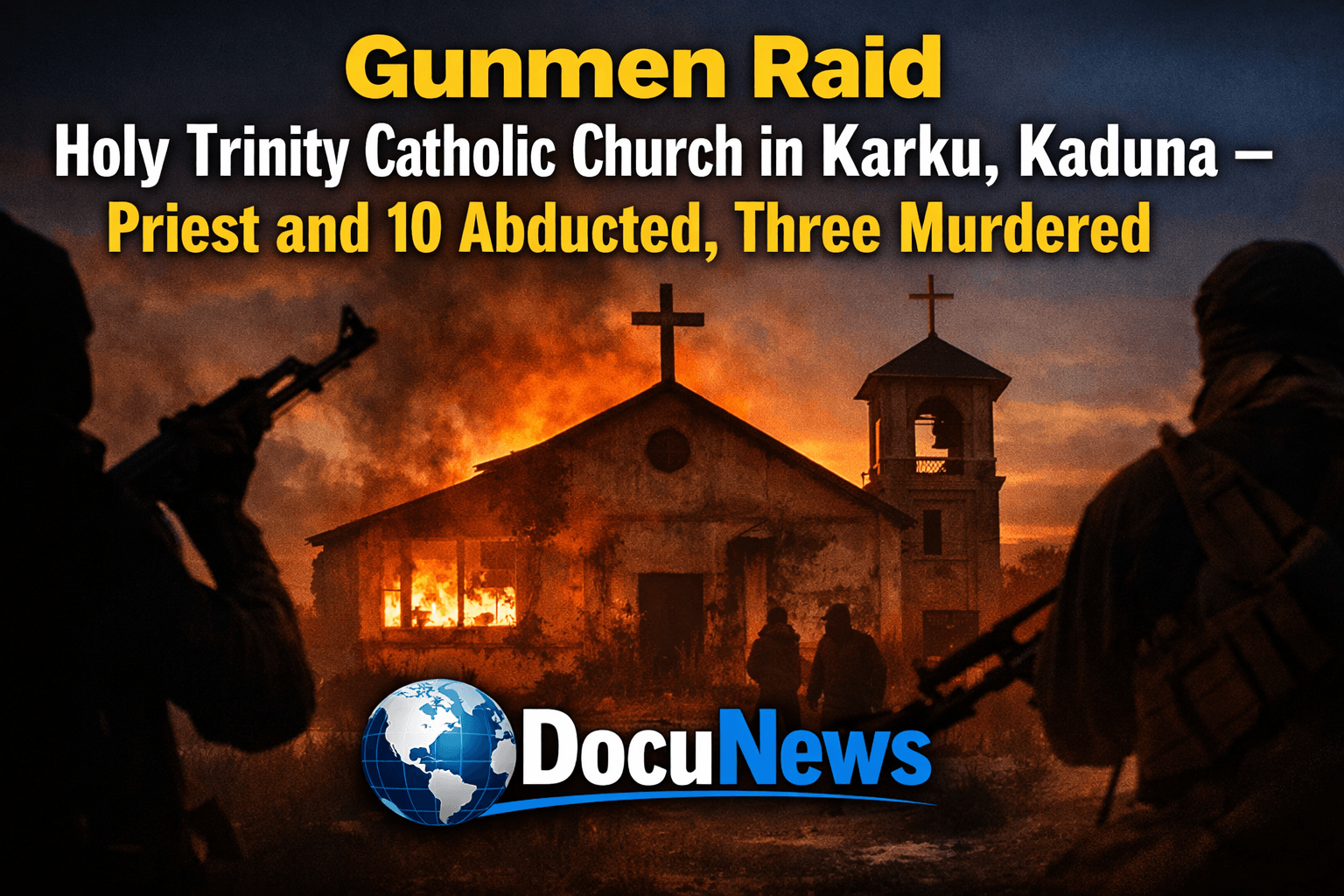
Photo Credit Visit Disclaimers: Use Of AI Images In Our Newsletters
The massacre occurred between February 3 and February 4, 2026, in Woro and Nuku villages, located in Kaiama Local Government Area of Kwara State, western Nigeria. Survivors say the gunmen arrived on motorcycles shortly before sunset and continued killing until dawn, leaving entire neighborhoods in ruins.
According to local authorities and eyewitnesses, at least 162 people lost their lives. Many victims were tied up before being shot. Others were burned inside their homes. Several families vanished overnight.
How the Attack Unfolded
First, the extremists sealed off both villages. Then they moved from house to house. Meanwhile, residents who attempted to flee were intercepted. As panic spread, gunshots echoed through the night.
Several survivors told reporters that the attackers gathered villagers under the pretense of dialogue. Instead, they opened fire. Shops, food stores, and motorcycles were destroyed. Places of worship were vandalized.
Furthermore, witnesses confirmed that the attackers abducted dozens of women and children. Many remain missing.
Health workers in nearby towns struggled to treat the wounded. Clinics ran out of supplies. Volunteers transported victims on wheelbarrows and motorcycles.
For All Security Updates In Nigeria Visit Security updates Nigeria
Rejection of Extremist Ideology Sparked the Violence
Community leaders revealed that militants had issued warning letters weeks earlier, demanding that residents accept strict religious rules. However, villagers rejected the ultimatum.
As a result, extremists returned with deadly force.
This pattern mirrors similar attacks across Nigeria, where armed groups attempt to impose control through fear. Analysts believe factions linked to Boko Haram or Islamic State affiliates may be involved.
You can find ongoing coverage of insurgency trends on BBC News: https://www.bbc.com/news/world-africa
Government Response and Military Deployment
President Bola Ahmed Tinubu condemned the killings and ordered immediate troop deployment to Kwara State. Soldiers now patrol surrounding communities while intelligence teams hunt the perpetrators.
In addition, the Nigerian military announced plans for a broader counterterrorism operation across vulnerable regions.
Despite these measures, residents remain fearful. Many have fled to neighboring towns.
Human rights organizations, including Amnesty International, urged the government to strengthen civilian protection and hold attackers accountable: https://www.amnesty.org
Survivors Describe a Night of Horror
Survivors recount scenes of chaos and despair. One farmer said gunmen executed his wife and two sons in front of him. Another woman described hiding beneath bodies to survive.
Children wandered through ashes searching for parents. Elderly residents collapsed from shock.
Moreover, entire compounds were reduced to rubble. Food supplies vanished. Livestock were slaughtered.
These firsthand accounts expose the true cost of extremist violence.
For continued updates on this tragedy and other security developments, visit DocuNews Central.
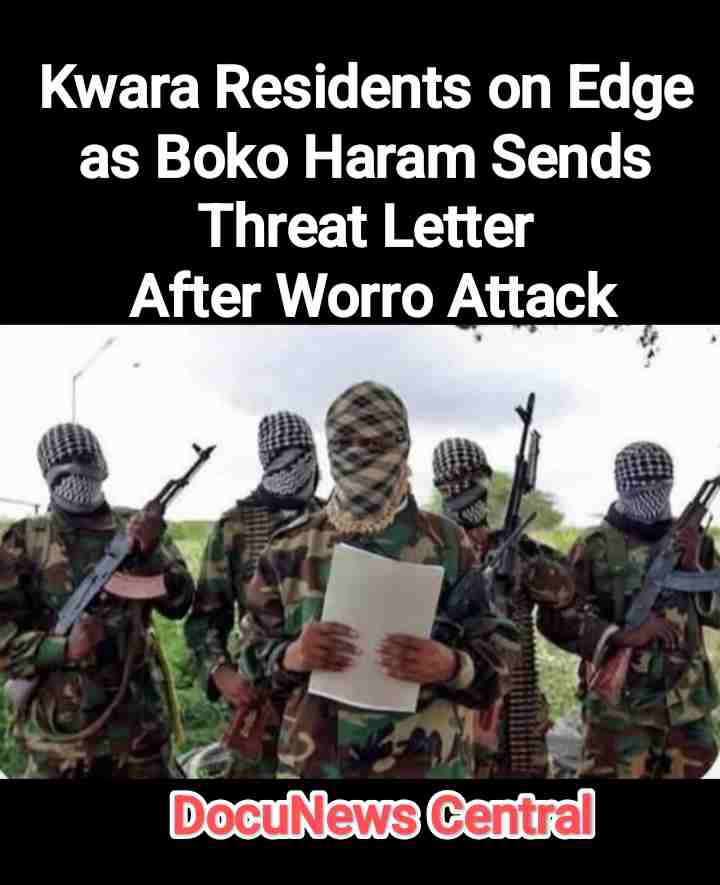
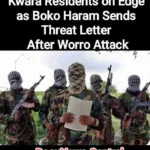
Read Also Kwara Residents on Edge as Boko Haram Sends Threat Letter
Why Central Nigeria Remains Vulnerable
Although Nigeria has battled insurgency for over a decade, violence continues to spread beyond the northeast. Banditry, jihadist expansion, and weak rural policing have created dangerous gaps.
Meanwhile, poverty and unemployment fuel recruitment into armed groups. Without opportunity, young men become easy targets for extremist propaganda.
Experts from the International Crisis Group warn that insecurity will worsen unless structural reforms occur: https://www.crisisgroup.org
International Reaction and Calls for Action
Global leaders expressed concern following the Kwara massacre. Religious organizations condemned the killings. Diplomatic missions urged Nigeria to strengthen intelligence sharing.
The United Nations Security Council also highlighted the need for regional cooperation to combat terrorism: https://www.un.org/securitycouncil/
However, critics argue that statements alone will not stop future attacks.
Humanitarian Crisis in the Aftermath
Thousands now face displacement. Children remain out of school. Farmers lost crops. Markets stand empty.
Relief groups struggle to provide shelter, food, and medical aid. Trauma counseling is scarce.
Unless sustained assistance arrives, survivors risk long-term hardship.
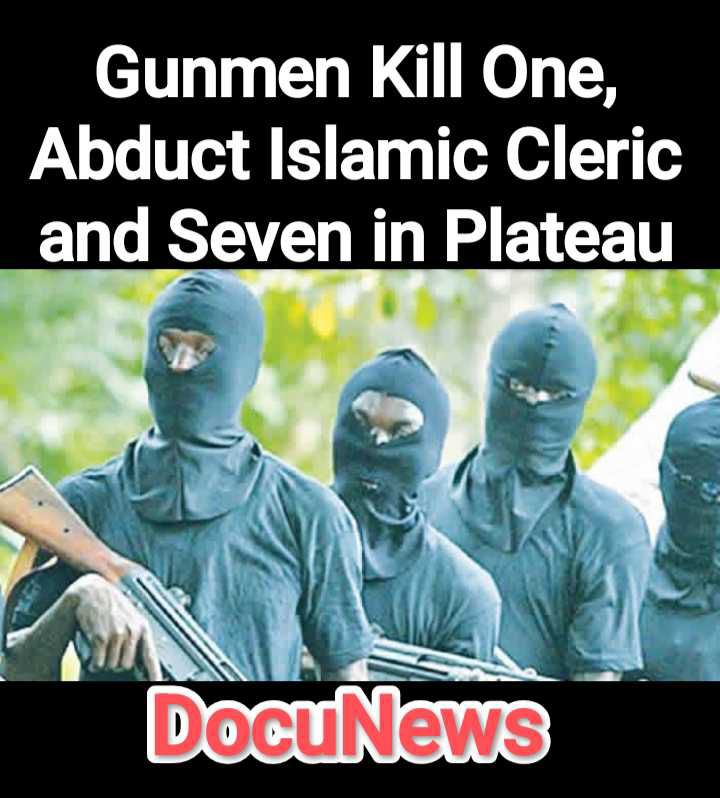
You may have missed this Gunmen Kill One, Abduct Islamic Cleric and Seven in Plateau
Why the World Must Not Look Away
This massacre represents more than a local tragedy. It reflects a growing global extremist threat. When violence goes unanswered, perpetrators gain confidence.
Therefore, international partners must support Nigeria through training, funding, and intelligence cooperation.
At the same time, community-based peacebuilding programs can reduce radicalization at the grassroots.
What Needs to Change
- Stronger rural security presence
- Early-warning systems for threatened communities
- Economic empowerment for youth
- Justice for victims
- Rehabilitation for abducted survivors
These steps require commitment, transparency, and sustained political will.
Conclusion
The killing of 162 villagers in Kwara State stands as a brutal reminder of Nigeria’s fragile security landscape. Armed extremists punished civilians for rejecting radical beliefs. Families were erased. Villages burned.
Yet even in grief, survivors demand justice.
The world must listen. Governments must act. Silence only invites more bloodshed.
Follow DocuNews Central for verified reports, community voices, and continued coverage of Nigeria’s security crisis.
If we fail to respond today, tomorrow may bring another headline—another massacre.
For All Security Updates Visit Security updates Nigeria