




Army Captures Sambisa, Plans Strike on Lake Chad Region
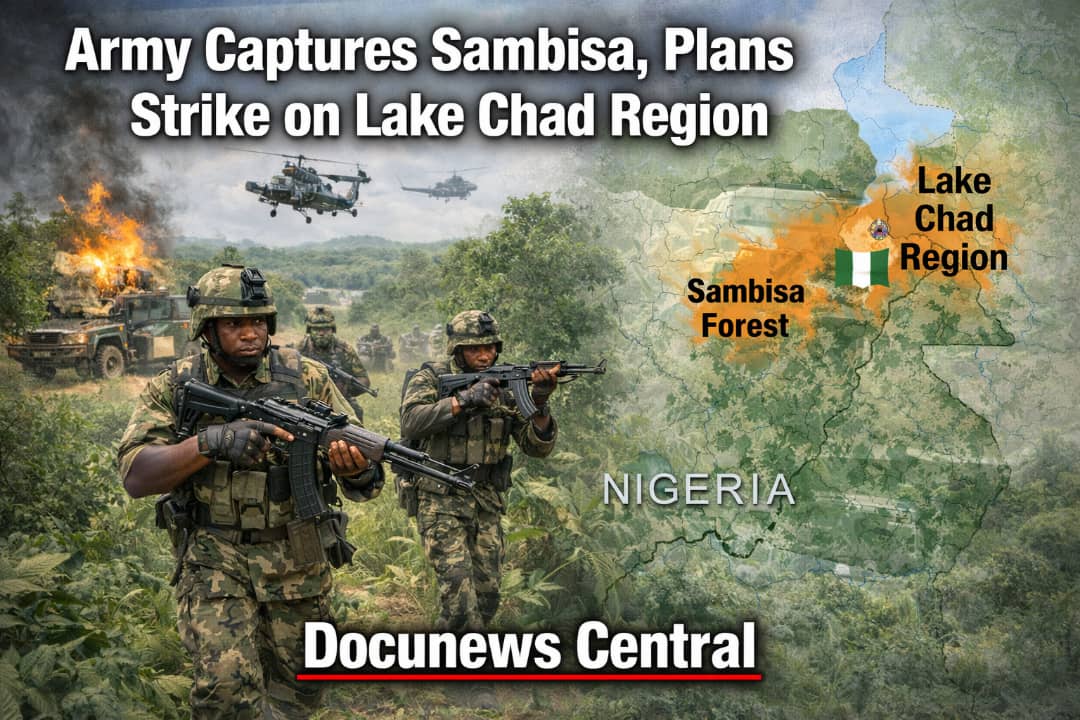
In a decisive move that has drawn nationwide attention, the Nigerian Army successfully secured the Sambisa Forest, signaling a major shift in the ongoing fight against insurgency. On Monday, 13 January 2026, troops advanced into the dense forest region in Borno State, demonstrating strategic precision and operational readiness. With Sambisa now under control, military focus is shifting toward the Lake Chad region, a critical area for both security and humanitarian operations.
The capture of Sambisa Forest is more than a tactical victory; it represents a symbolic turning point. Residents of surrounding communities have long lived under the shadow of insurgent activities, including abductions, raids, and destruction of property. The Army’s recent operations have not only disrupted these threats but also created opportunities for safer resettlement and renewed economic activity. Furthermore, the planned strike on the Lake Chad area aims to extend this security, cutting off key insurgent routes and establishing a stronger governmental presence in the region.
Strategic Importance of Sambisa Forest
Sambisa Forest, located in the northeastern part of Nigeria, has historically served as a stronghold for insurgent groups. Its dense vegetation, complex terrain, and proximity to border areas have made it a challenging operational environment. For years, the forest allowed insurgents to launch raids, evade capture, and hide illicit activities. The Army’s success in securing Sambisa demonstrates improved intelligence capabilities, coordination between units, and the use of advanced surveillance technology.
The operation combined ground assaults, aerial surveillance, and logistical support. Troops cleared multiple camps and apprehended several insurgents. Local communities, who have endured years of fear, expressed relief and cautious optimism. Security experts note that holding Sambisa Forest will be crucial in stabilizing Borno State, as it prevents insurgent regrouping and protects major transport routes leading toward Maiduguri and other key towns.
Next Mission: Lake Chad Region
With Sambisa under control, the Nigerian Army is preparing for a strategic offensive in the Lake Chad region. Lake Chad spans four countries—Nigeria, Chad, Niger, and Cameroon—and serves as a hub for trade, fishing, and agriculture. Unfortunately, it has also been a corridor for insurgent movements, smuggling, and cross-border attacks. By planning operations in this area, the Army aims to cut off insurgent supply lines and reduce attacks on local populations.
The military strategy involves coordinated patrols, fortified bases, and partnerships with regional forces. Local fishermen and traders, who rely on safe access to the lake, are expected to benefit directly from enhanced security. Additionally, the operation includes humanitarian support, ensuring that displaced communities can return safely and rebuild their lives. Analysts emphasize that the success of this operation will depend not only on military might but also on sustainable engagement with local populations and neighboring countries.
Community Response and Local Impact
The capture of Sambisa Forest and the planned strike on Lake Chad have sparked strong reactions among residents. Survivors of past attacks praised the Army’s decisive action, highlighting the relief of reduced insurgent activity. Community leaders have also emphasized the need for long-term security measures, including continuous patrols, intelligence sharing, and economic initiatives to prevent insurgents from regaining influence.
In addition to improved safety, local businesses are expected to experience gradual growth. Farmers can access fields previously threatened by raids, traders can resume operations without fear, and schools may reopen in safer conditions. These developments indicate that military victories, when paired with civil engagement, can lead to tangible improvements in the daily lives of residents.
Regional and International Implications
Securing Sambisa Forest and targeting the Lake Chad region carry significance beyond Nigeria’s borders. The region has long been a hotspot for transnational security concerns, affecting Chad, Niger, and Cameroon. By proactively addressing insurgent threats, Nigeria contributes to regional stability and strengthens cross-border cooperation. International partners, including the United Nations and various NGOs, have expressed support for coordinated efforts to stabilize the area while delivering humanitarian aid.
Security analysts note that a successful Lake Chad operation could serve as a model for tackling insurgency in other parts of West Africa. Effective intelligence, community engagement, and inter-agency collaboration are seen as key factors in sustaining long-term peace and security.
Military Coordination and Operational Excellence
The Nigerian Army’s success in Sambisa highlights the importance of coordination across multiple military branches. Ground troops, aviation units, and intelligence services worked together seamlessly to achieve objectives while minimizing civilian risks. Modern surveillance tools, including drones and satellite imagery, played a vital role in identifying insurgent positions and planning precise strikes. This level of operational excellence demonstrates the Army’s evolving capability to respond to complex security challenges effectively.
Furthermore, lessons learned from Sambisa are being applied to upcoming operations in the Lake Chad area. Troop training, logistical planning, and civil-military relations have been enhanced to ensure smooth execution. Military officials have emphasized that patience, strategy, and sustained engagement are essential to long-term success.
Conclusion
The capture of Sambisa Forest on Monday, 13 January 2026, marks a pivotal moment in Nigeria’s fight against insurgency. The planned operation in the Lake Chad region reflects a continued commitment to securing vulnerable areas, protecting communities, and fostering regional stability. While challenges remain, the combination of strategic planning, operational coordination, and community engagement offers hope for a safer and more prosperous northeastern Nigeria.
As the Nigerian Army moves forward, residents and regional partners alike are watching closely. The focus on Lake Chad represents not just a military initiative but a broader effort to restore normalcy and confidence in the region. By sustaining momentum and prioritizing human security alongside tactical objectives, Nigeria aims to solidify its gains and build lasting peace in areas long affected by conflict.
For more updates on Nigerian military operations, visit the official Nigerian Army website and stay informed through United Nations reports on regional security efforts. Local news coverage from Vanguard Nigeria and Premium Times provides real-time insights on ongoing operations.
Related Stories:
- Gunmen Storm Otobi Akpa, Four Killed in Night Attack
- Bandits Attack Katsina Again, Citizens Demand Strong Security
- Army Offensive Forces Terrorists to Flee and Surrender in Borno




One thought on “Army Captures Sambisa, Plans Strike on Lake Chad Region”