




photo credit Visit Disclaimers: Use Of AI Images In Our Newsletters
Benue Market Attack: At Least 16 Killed as Terrorists Loot Shops, Mobile Police Commander Dies has once again exposed the fragile state of security in Nigeria’s Middle Belt, after a violent raid on a busy marketplace claimed multiple lives, shattered livelihoods, and deepened fear across rural Benue communities. The coordinated assault turned an ordinary trading day into a scene of terror, leaving families grieving and residents questioning how such brutality continues to unfold without restraint.
The attack occurred on Tuesday, February 3, 2026, at Abande Market in Mbaikyor Ward, Turan district of Kwande Local Government Area, Benue State. Armed terrorists stormed the market during peak business hours, killing at least 16 people, including a Mobile Police Commander who led officers to respond to distress calls from traders and residents. The gunmen also looted shops, destroyed property, and escaped into nearby bush paths before security reinforcements could fully arrive.
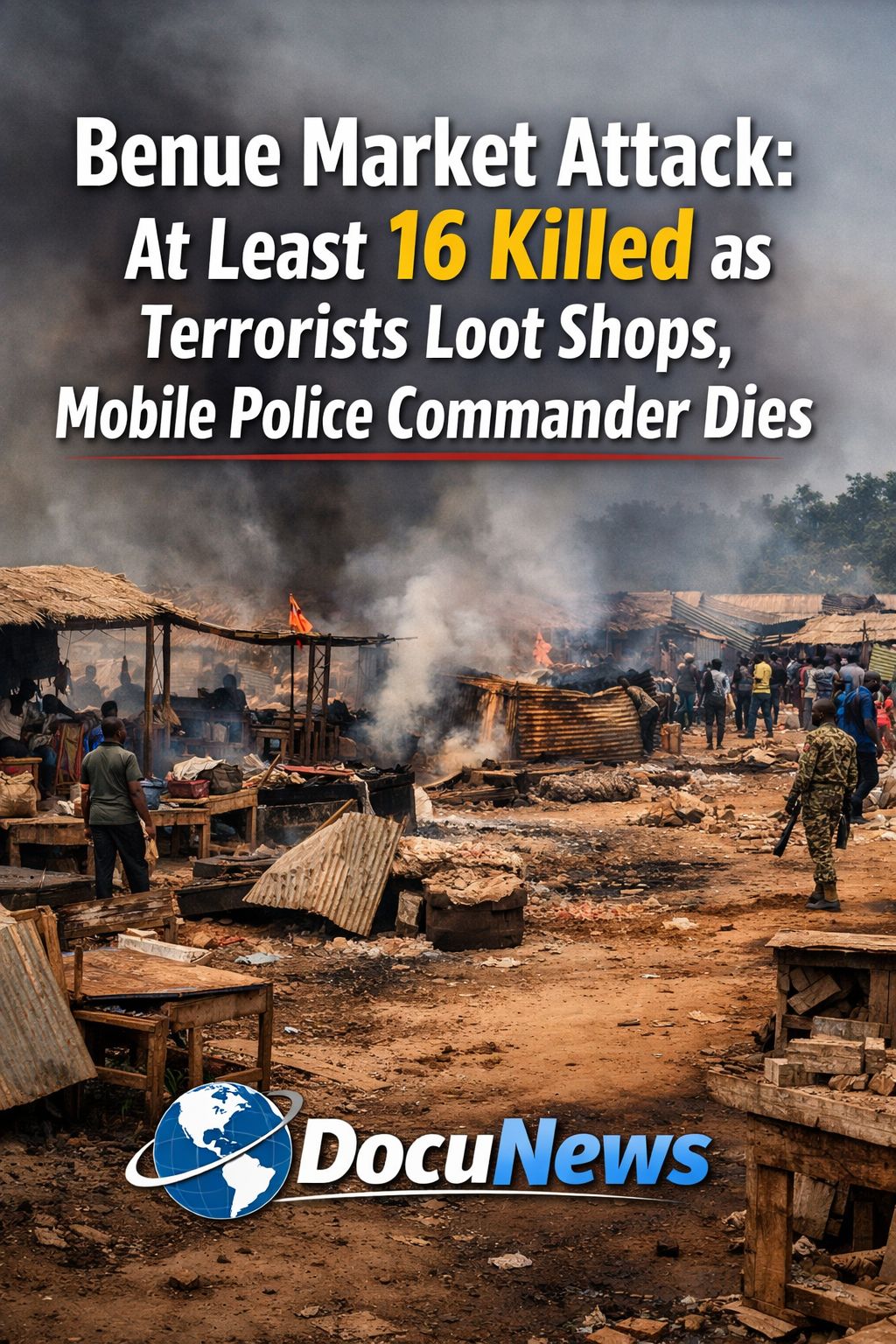
Survivors described moments of chaos as gunfire rang out across the market square. Traders abandoned stalls loaded with food items, clothing, and household goods. Customers ran in different directions, searching for safety. Some collapsed in panic, while others hid behind concrete structures and vehicles. When the shooting stopped, bodies lay scattered across the trading area, smoke rose from burnt stalls, and silence replaced what had been a lively commercial center only minutes earlier.
For All Security Updates In Nigeria Visit Security updates Nigeria
How the Abande Market Attack Unfolded
According to eyewitness accounts, the attackers arrived in groups, riding motorcycles and carrying sophisticated firearms. They moved with confidence, suggesting prior knowledge of the market layout. Without warning, they opened fire on civilians, forcing people to flee while they advanced deeper into the trading zone. Residents said the gunmen showed no mercy, shooting indiscriminately as they pushed forward.
As panic spread, many traders attempted to rescue children and elderly relatives. Others tried to retrieve valuables from their shops but quickly abandoned the effort once the scale of the violence became clear. Within minutes, the attackers began breaking into stores, carting away cash, food supplies, mobile phones, and clothing. Several shop owners later estimated that goods worth more than ₦150 million were either stolen or destroyed during the raid.
After completing the looting, parts of the market were set ablaze. Thick smoke filled the air, further complicating rescue efforts. Local volunteers attempted to assist the wounded, but the intensity of the attack forced many to retreat until security personnel arrived. By the time calm returned, at least 16 people had lost their lives, while several others suffered serious injuries.
Read Also Terror in Kwara: Bandits Storm Kaiama Communities, Kill Over 10 Residents, Burn Homes.
Mobile Police Commander Killed While Responding
Security sources confirmed that a Mobile Police Commander was among the victims. He reportedly led a response team after receiving emergency calls from community members. Upon arrival, his unit encountered the attackers, leading to a brief confrontation. During that encounter, the commander sustained fatal injuries, becoming one of the highest-ranking officers killed in the incident.
His death has drawn widespread sympathy from residents and fellow officers, many of whom described him as dedicated and courageous. Several policemen also suffered injuries and were rushed to nearby medical facilities. Community leaders praised the fallen commander for answering the call of duty, even as they lamented the circumstances that claimed his life.
Families Mourn as Community Counts Its Losses
In the hours following the attack, families gathered at hospitals and mortuaries to identify loved ones. Mothers cried openly. Fathers sat quietly in disbelief. Survivors described the emotional weight of recognizing friends and neighbors among the dead. Many victims were breadwinners whose small businesses sustained entire households.
The economic damage runs deep. Abande Market served as a major trading hub for surrounding villages, connecting farmers with buyers and supplying basic necessities to thousands of residents. With stalls destroyed and traders displaced, local commerce has slowed dramatically. Some families now face food shortages, while others struggle to find temporary shelter after fleeing their homes.
Community elders warned that recovery will take time, especially for traders who invested their savings into goods now reduced to ashes. Several displaced families have relocated to neighboring towns, fearing further attacks.
Security Agencies Launch Search Operations
The Benue State Police Command confirmed the incident and announced the deployment of additional tactical teams to Kwande and nearby communities. Armored patrol vehicles now monitor major access roads, while joint security units continue search operations in surrounding forests.
Authorities stated that intelligence efforts are underway to identify and apprehend the perpetrators. However, residents remain cautious, citing previous attacks where suspects were never brought to justice. Many believe that sustained patrols, rather than temporary deployments, are necessary to restore confidence.
Benue’s Long Struggle With Insecurity
The Abande Market massacre adds to a troubling pattern of violence across Benue State. For years, rural communities have endured attacks linked to armed groups and suspected herders, often rooted in disputes over farmland and grazing routes. These conflicts, once seasonal and localized, have evolved into organized assaults involving automatic weapons.
According to BBC Africa, Benue remains one of Nigeria’s most affected states when it comes to farmer-herder clashes, with hundreds killed over the past decade. Analysts attribute the crisis to population pressure, climate-related resource scarcity, weak enforcement of grazing regulations, and the widespread availability of illegal firearms.
Although the Benue Open Grazing Prohibition Law was introduced to reduce violence, implementation has remained inconsistent. Community leaders argue that without stronger enforcement and alternative grazing arrangements, tensions will persist.
Eyewitnesses Describe Scenes of Horror
Several survivors recounted hiding behind concrete walls and abandoned vehicles while bullets flew overhead. One trader said she watched a neighbor collapse beside her vegetable stall. Another described carrying an injured child for over two kilometers before finding medical assistance.
Volunteer groups later helped recover bodies scattered around the market area. Many of the deceased were transported to Jato-Aka General Hospital mortuary for identification. Religious leaders held prayer sessions, urging residents to remain calm despite overwhelming grief.
Humanitarian Impact and Displacement
The attack has triggered fresh displacement, with dozens of families seeking refuge in safer communities. Market closures have disrupted food distribution chains, raising concerns about shortages in nearby villages. Local aid organizations have begun providing basic support, but resources remain limited.
Human rights groups continue to highlight the vulnerability of rural populations. Human Rights Watch has repeatedly called for stronger civilian protection mechanisms, emphasizing the need for early-warning systems and closer collaboration between security agencies and local communities.
Calls for Justice and Accountability
Civil society organizations are demanding transparent investigations and swift prosecution of those responsible. Community advocates argue that ending impunity remains essential for restoring trust. Without accountability, they warn, attackers will continue to operate with confidence.
The International Crisis Group has also recommended improved intelligence gathering, community policing, and dialogue-based conflict resolution as part of a broader strategy to stabilize Nigeria’s Middle Belt.
Political Leaders React
State officials condemned the killings and pledged to strengthen security presence across vulnerable areas. They appealed for calm while investigations continue. However, many residents insist that statements alone will not prevent future attacks. Several community leaders now advocate for permanent military outposts and improved rural surveillance.
National Security Concerns Grow
The Benue tragedy comes amid rising insecurity across multiple Nigerian states, including Kaduna, Zamfara, Niger, and Plateau. Markets, highways, and farming communities increasingly face threats from armed groups seeking ransom, supplies, or territorial control.
Reports from SaharaReporters indicate that attackers now deliberately target economic centers to weaken local resilience. Analysts warn that unless comprehensive reforms address both security and socio-economic drivers, such violence will continue to spread.
Community Leaders Advocate Unity
Traditional rulers and faith leaders have urged residents to avoid retaliatory actions, emphasizing dialogue and cooperation. Youth organizations have also begun peace meetings aimed at rebuilding trust between neighboring communities.
What Lies Ahead for Abande
Rebuilding Abande Market will require collective effort. Traders must restock goods. Families must bury loved ones. Security agencies must regain community confidence. Residents hope authorities will finally address the root causes of repeated attacks through sustained protection and inclusive policies.
DocuNews Central Continues Coverage
DocuNews Central will continue monitoring developments surrounding the Benue Market attack while providing verified updates on security trends across Nigeria.
Conclusion
The Abande Market massacre stands as another painful reminder of Nigeria’s ongoing struggle with insecurity. Sixteen lives were lost. A Mobile Police Commander paid the ultimate price while serving his country. Families mourn, communities grieve, and livelihoods lie in ruins.
Yet amid sorrow, residents still hold onto hope. They believe that with decisive leadership, stronger protection, and genuine engagement, peace can return to Benue. Until then, Abande waits, carrying both the scars of violence and the determination to rebuild.
To know more about DocuNews Central please visit ABOUT US- DOCUNEWS CENTRAL