






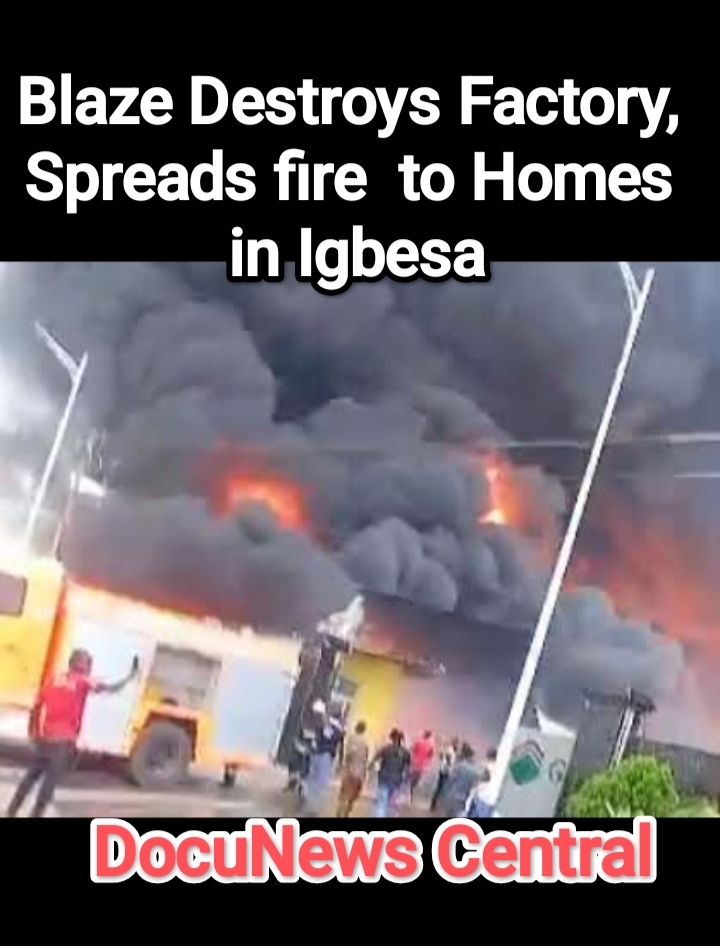
On Sunday, January 11, 2026, at approximately 6:30 a.m., a major fire incident erupted inside the Ogun State Guangdong Free Trade Zone located in Igbesa, Ado-Odo/Ota Local Government Area of Ogun State. Blaze Destroys Factory, Spreads Fire to Homes in Igbesa. The fire began from a factory within the industrial complex and later extended into nearby residential areas, forcing residents to flee their homes and triggering an intense emergency response.
The incident occurred during the early hours of the day, when most households were still indoors. As flames rose rapidly and thick smoke spread across the skyline, panic quickly followed. Residents living close to the industrial zone described moments of confusion and fear as they tried to understand what was happening and how close the danger was.
Within minutes, the scene attracted attention from both local authorities and the wider public. Videos showing thick smoke and raging flames circulated on social media platforms, while emergency phone lines received multiple distress calls from residents and factory workers.
Fire outbreak inside Ogun Free Trade Zone factory
Eyewitnesses present at the scene stated that the fire originated from one of the factories operating inside the Ogun State Guangdong Free Trade Zone. Although officials have not yet released a final technical report, early accounts from residents and workers pointed to a possible gas-related incident inside the facility.
The factory involved reportedly handles industrial materials that can easily ignite when exposed to high temperatures. As a result, once the fire started, it spread rapidly across the structure. Workers within the zone immediately raised alarm bells, while security personnel attempted to secure the area.
Because the industrial zone sits close to residential communities, the fire did not remain confined to the factory premises. Heat and sparks reached nearby buildings, causing visible damage to rooftops, windows, and external walls. Families living in close proximity had little time to react.
Industrial experts have repeatedly warned about the risks associated with factories operating near residential settlements. The events of Sunday morning once again highlighted the urgent need for strict enforcement of safety standards within industrial hubs across Ogun State.
For more background on industrial activities and economic development in Ogun State, readers can refer to reports published by Vanguard Nigeria.
Emergency response as fire spreads to nearby homes
Following the outbreak, firefighters from the Ogun State Fire Service responded swiftly after receiving emergency calls. Fire trucks were dispatched from stations in Ota and Agbara, while additional personnel were mobilised to support containment efforts.
Upon arrival, firefighters faced several challenges. Narrow access roads slowed the movement of heavy equipment, while thick smoke reduced visibility. Nevertheless, the emergency teams focused on preventing further spread into residential streets while working to control the fire at its source.
Security agencies also played a critical role by managing crowds and ensuring residents stayed away from high-risk zones. Their coordination allowed firefighters to work more efficiently without interference.
Residents later commended the emergency teams for their dedication, noting that the response helped limit the extent of destruction. Although the fire burned for several hours, containment efforts prevented a wider disaster.
For continued coverage of security and emergency incidents across the country, visit our internal page: Security updates Nigeria
Residents recount fear-filled evacuation
Many residents living near the free trade zone described the experience as one of the most frightening moments of their lives. Several families woke up to the smell of smoke and intense heat entering their homes.
A mother of three, who resides less than 300 metres from the factory, said she immediately grabbed her children and ran outside after seeing flames rising above nearby rooftops. Neighbours helped one another, carrying infants, elderly residents, and personal belongings to safer locations.
As the fire intensified, some residents sought refuge in nearby open spaces and school compounds. Others stood at a distance, watching helplessly as smoke engulfed their streets.
Although authorities confirmed that no deaths were recorded at the time of reporting, several households suffered losses. Burnt roofing sheets, damaged electrical fittings, and destroyed household items were visible across affected areas.
Impact on homes and personal property
The spread of the fire into residential areas caused varying degrees of damage. While some homes experienced minor external damage, others suffered more severe structural impact.
Residents reported cracked walls, melted window frames, and scorched ceilings. In a few cases, household appliances and furniture were damaged by heat and smoke.
For many families, the emotional toll was just as heavy as the physical damage. Several residents expressed fear about returning to their homes, worrying about hidden structural weaknesses or the possibility of another outbreak.
Community leaders have begun compiling informal lists of affected households as part of efforts to ensure that no family is overlooked during recovery and assessment processes.
Authorities begin assessment and investigation
Officials from relevant Ogun State agencies arrived at the scene later in the day to conduct preliminary assessments. These evaluations aim to determine the extent of damage and identify safety lapses that may have contributed to the incident.
Investigators are expected to inspect the factory involved and review compliance with existing fire safety regulations. Their findings will likely inform recommendations for improved safety measures within the free trade zone.
State officials have also reassured residents that further updates will be provided once investigations progress. Meanwhile, emergency personnel remain on standby to address any residual risks.
For general fire safety standards and prevention guidelines, readers can consult resources provided by the National Fire Protection Association.
Industrial safety concerns resurface
The incident has once again raised questions about industrial safety practices in zones located near residential communities. Safety experts argue that regular inspections and strict enforcement of standards are essential to prevent similar occurrences.
They also stress the importance of emergency preparedness training for factory workers and surrounding communities. Early warning systems and clear evacuation plans can significantly reduce risks during emergencies.
Residents have called on government agencies to conduct regular safety drills and strengthen monitoring within industrial areas. Many believe proactive measures would help protect lives and property.
Community solidarity and recovery efforts
In the aftermath of the fire, community members rallied together to support affected families. Neighbours provided temporary shelter, food, and emotional assistance to those displaced.
Local leaders and religious groups also visited the area, offering words of encouragement and coordinating relief efforts. These actions highlighted the strong sense of unity within the Igbesa community.
While recovery may take time, residents expressed hope that collective efforts and government support would help them rebuild and move forward.
Looking ahead
As the situation stabilises, attention has shifted toward long-term safety improvements and accountability. Authorities are expected to release official findings in the coming days.
Residents have urged both government and factory operators to prioritise safety above all else. They believe that lessons learned from this incident should guide future planning and regulation.
The fire has now been fully contained, with firefighters maintaining a presence in the area to prevent any resurgence. Normal activities are gradually resuming, although the impact of the incident will remain felt for some time.
This event serves as a reminder of the delicate balance between industrial development and community safety. Ensuring that growth does not come at the expense of lives remains a shared responsibility.


