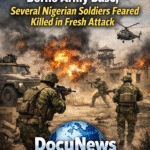
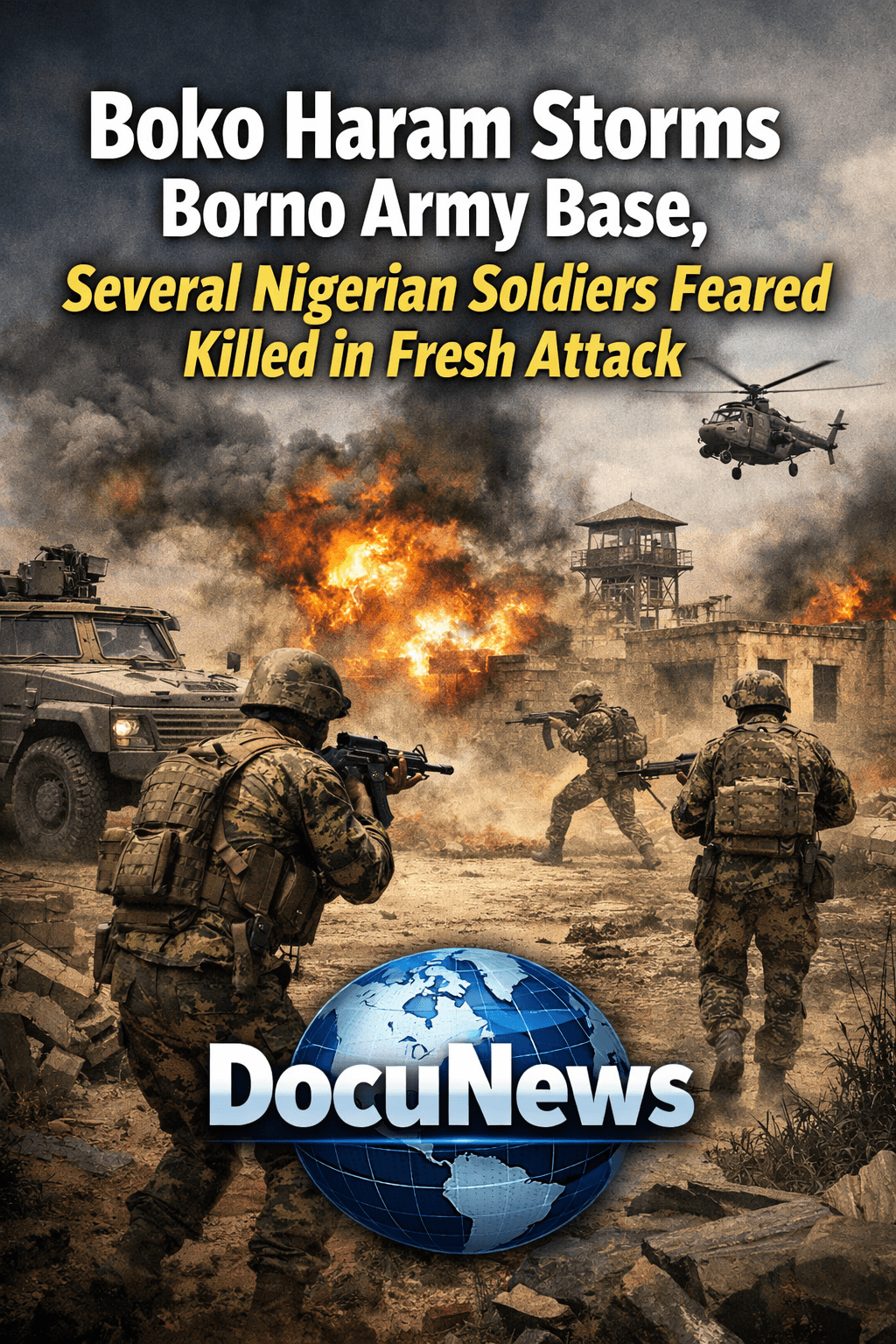
The brutal reality of insurgency struck again in northeastern Nigeria today when Boko Haram militants reportedly stormed an army base in Borno State. Military sources say that several Nigerian soldiers are feared killed in intense fighting that erupted soon after the assault began on the morning of Friday, February 6, 2026. Both civilians and soldiers in the immediate area were jolted awake by heavy gunfire and explosions that echoed across the terrain.
This incident occurred in a part of the country where Boko Haram and its splinter group, Islamic State West Africa Province (ISWAP), have waged an insurgency for over a decade. The group is notorious for violent raids on military installations and communities, and this latest attack appears to mark another deadly chapter in that long conflict. Previous attacks in the region have resulted in multiple military and civilian casualties.
Read more about Security Updates Nigerian Security updates Nigeria
Early Reports and Immediate Aftermath
Military insiders who spoke to SaharaReporters say that attackers arrived in large numbers and unleashed chaos within the base perimeter. Gunfire reportedly pierced the air before fighters detonated explosives, overwhelming the defenders in a matter of minutes. Eyewitnesses claim that the militants outnumbered the stationed troops and that heavy weapons were used in the assault.
At least some soldiers reportedly fled into surrounding bushland while others scrambled to regroup. Yet, official confirmation from the Nigerian Army has been slow. Reports of fatalities have circulated on social media and local news outlets, but the military has yet to issue a comprehensive casualty statement. Given the fast pace and chaotic nature of the incident, families await clear word on the fate of their loved ones.
Soldiers and analysts who follow the conflict warn that such attacks exploit gaps in defense and intelligence systems. Even when reinforcements are called in, the remote location of many bases complicates swift response.
Photo Credit Visit Disclaimers: Use Of AI Images In Our Newsletters
Historical Context of Boko Haram in Borno State
Borno State has been at the heart of the Boko Haram insurgency since it began in 2009, and both the group and ISWAP have inflicted staggering losses on security forces and civilians alike. Over the years, dozens of military formations in the state have been targeted, including a mass killing of soldiers in a separate base attack just weeks earlier.
For example, on January 29, 2026, militants attacked another army installation in Sabon Gari, resulting in the deaths of several soldiers after a brutal pre-dawn assault. The attackers reportedly used heavy weapons and possibly drones.
The persistence of these attacks shows that the threat remains potent despite concerted military operations aimed at weakening insurgent capabilities. Each new offensive, such as this current attack in Borno, underscores the difficulty in containing the group’s reach.
What Happened During the Assault
The assault began early in the morning when militants moved toward the army base in multiple groups. They reportedly fired indiscriminately as they advanced with heavy arms and improvised explosive devices. Many who witnessed the events said the scale and violence of the raid were unlike anything seen in recent weeks.
Soldiers stationed at the base were caught off guard, according to sources. They attempted to mount a defense, but the attackers brought overwhelming numbers and firepower, which made resistance difficult. Heavy machine guns, rocket-propelled grenades, and, in some reports, small drones were deployed by the militants.
The sequence of events began with sniper fire and distant explosions. Then the insurgents breached the perimeter. Explosive blasts rang out, causing chaos and confusion. Soldiers scrambled to reposition. Many lives were put at risk within a matter of minutes.
Officials have not released the exact death toll. However, local sources believe that the number of fatalities could rise as bodies are recovered and soldiers accounted for.
Response From Nigerian Defense Authorities
While the military has not yet released a detailed casualty figure, earlier attacks in Borno have prompted responses from official spokespeople. In a separate incident on January 29, 2026, the Nigerian Army confirmed that Islamist militants backed by armed drones attacked an army base, killing several troops. Read Reuters coverage here.
Defense analysts point out that when attacks occur, the military often focuses on ongoing operations in the area and may delay full disclosure until assessments are complete. Yet, the increasing frequency of these assaults has raised questions about the overall strategy for counter-insurgency in the northeast.
Impact on Local Communities
Communities near the attack site were thrown into panic as gunshots and explosions filled the air. Civilians in the vicinity reported seeking shelter in homes and hiding under vehicles as the chaos unfolded.
The fear of insurgent violence has long affected daily life in Borno. Schools, businesses, and farms have endured repeated closures due to security concerns. Civilians are often caught between militants and security forces, creating a climate of anxiety that permeates the region. Many residents have been displaced repeatedly over the years due to similar attacks.
For ongoing coverage and in-depth reporting, visit DocuNews Central.
Complex Web of Violence in the Northeast
This latest attack adds to a series of violent events linked to Boko Haram and affiliated groups. In late January 2026, extremists carried out separate assaults, killing dozens of civilians at a construction site in Sabon Gari while also targeting a military base. Read more on AP News.
Those incidents reflected a troubling trend where militants coordinate multiple attacks, stretching the response capacity of security forces. Despite concerted operations to weaken insurgent control and logistics, the groups have often managed to strike at strategic targets with devastating effect.
Boko Haram and ISWAP: A Persistent Threat
Boko Haram and its offshoot, ISWAP, continue to pose a strategic challenge. Although organized operations by Nigerian forces have degraded many of the insurgents’ strongholds, both groups retain the ability to mobilize quickly and carry out deadly raids.
Historically, the insurgency has spread beyond Nigeria’s borders, affecting neighboring nations such as Niger, Chad, and Cameroon. This ripple effect has prompted regional cooperation and international involvement, including surveillance support and joint military efforts. Learn more on AP News.
At times, militants have held territory or staged from remote corridors that make pursuit difficult. The complex terrain and dense bushland of northeastern Nigeria provide militants with cover and escape routes, complicating defense measures for conventional forces.
Read Also Bandits Ambush Zamfara Market Returnees, Kill Five Residents, Several Still Missing
International and Regional Military Support
Both regional and international actors have shown interest in curbing the Boko Haram threat. For example, recent operations have included U.S. intelligence flights and airstrikes, which supported Nigerian forces targeting extremist elements. More details here.
At the same time, multinational task forces have been formed to coordinate cross-border action. These efforts reflect the transnational nature of the insurgency and the need for cooperative defense strategies in the broader Lake Chad Basin region.
Broader Security Landscape Across Borno
Security threats in Borno extend beyond isolated attacks. Recent history shows multiple coordinated assaults that have inflicted heavy casualties on troops.
For instance, a Reuters report from late January 2026 documented an attack where Islamist militants, supported by drones, ambushed and killed several soldiers at another army base. Read the full report.
These repeated breaches of military defenses raise critical questions about preparedness and strategic adaptation within the Nigerian Armed Forces.
The Human Cost of the Conflict
The toll on soldiers and civilians alike is profound. Years of insurgency have resulted in tens of thousands of deaths and mass displacement. Each violent event leaves families mourning loved ones and communities struggling to rebuild.
Reports from previous incidents have indicated that soldiers often confront intense firepower while trying to hold strategic positions. The dynamics of these confrontations have evolved over time, with insurgents sometimes employing drones, vehicle-borne attacks, and coordinated multi-point assaults.
Communities affected by these attacks often face weeks or months of trauma recovery. Schools and businesses remain closed, access to basic necessities is limited, and residents are forced to navigate a highly insecure environment.
What This Means for Nigeria’s Security Strategy
Today’s attack in Borno underscores the evolving battlefield scenario. It highlights a need for strategic reassessment, greater intelligence sharing, and reinforced security measures at remote bases. Additional tactical support, faster reaction capabilities, and improved logistics could make a measurable difference in future confrontations.
At the same time, the government must maintain public transparency. Clear updates on military operations and casualties help families cope and ensure national discourse remains grounded in verified information rather than rumor.
For further detailed insight into these dynamics, you can read more on related topics at DocuNews Central, where in-depth analysis and follow-up reporting provide context on this ongoing conflict.
Conclusion: A Conflict Without Easy Solutions
In summary, the Boko Haram attack on a Borno army base on February 6, 2026, represents another tragic moment in Nigeria’s long fight against insurgency. Soldiers have been reported killed, and the full details remain to be confirmed. Security forces are likely assessing the situation as this article goes live.
This attack underscores the persistent challenges facing Nigeria’s northeast and the need for enhanced defense measures. It also highlights the enduring resilience of insurgent groups that have adapted their tactics over time. As the situation develops, credible updates from official channels will shed light on full casualty numbers and the broader implications for security in the region.
For ongoing updates on this story and related developments, don’t forget to visit DocuNews Central for real-time news and expert analysis.
Recommended Outbound Sources
- Reuters coverage of Boko Haram military base assaults
- Historical background on Boko Haram Sabon Gari killings
- AP News coverage of recent attacks in Borno
- AP News coverage of insurgent activity and international response