




FCT Minister Wike: “After Tinubu, I’m the Most Abused Politician in Nigeria”
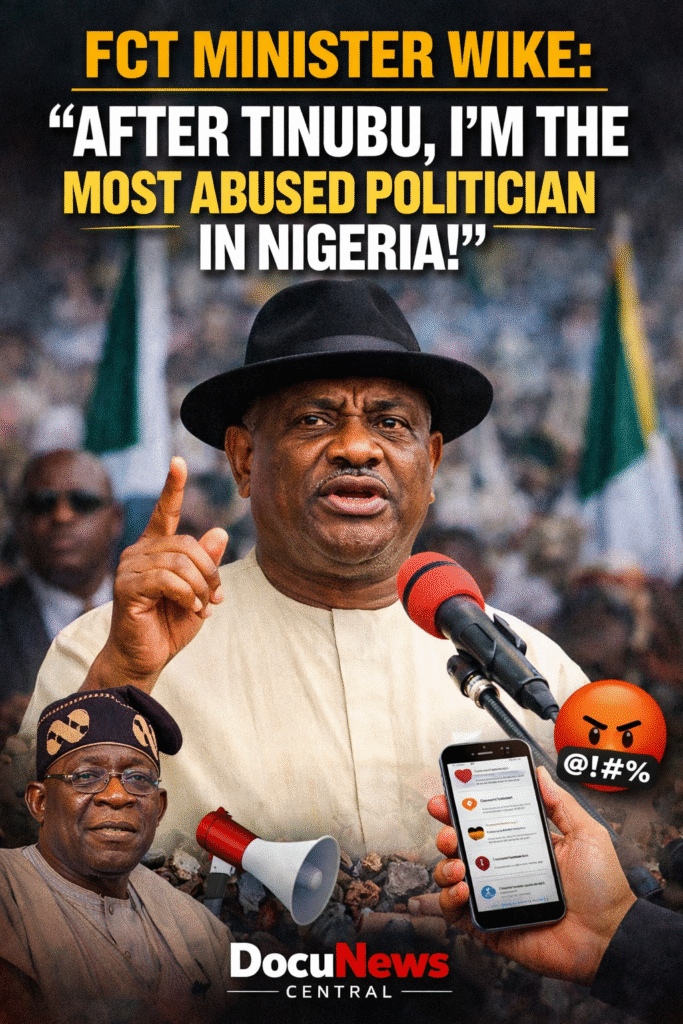
In a striking declaration that has captured national attention, Federal Capital Territory (FCT) Minister Nyesom Wike said he is the “most abused politician in Nigeria today after President Bola Tinubu.” This statement, made during a public thanksgiving event in his hometown of Ahoada East, Rivers State, comes amid rising political tension and controversy surrounding his role in the federal cabinet and his alignment with President Tinubu’s administration. Read more on Punch.
This article explores the many facets of Wike’s declaration, his political journey, reactions from political figures and the public, and the implications for Nigeria’s evolving political discourse.
Who Is Nyesom Wike? A Political Profile
Nyesom Wike is a seasoned politician from Rivers State. He previously served as:
- Governor of Rivers State (2015–2023), wielding strong influence in the South-South geopolitical zone.
- FCT Minister under President Bola Tinubu’s administration since August 2023.
Wike has earned a reputation as a political strategist and a powerful regional figure. His transition from the Peoples Democratic Party (PDP) to working in the ruling All Progressives Congress (APC) government has fueled debates on loyalty and political pragmatism. Source
The Statement That Shocked Many
During a thanksgiving service, Wike said that after President Tinubu, he is the most abused politician in the country. He reiterated strong loyalty to the President despite what he described as relentless criticism from opponents. More details.
Why This Declaration Matters
1. His High-Profile Political Alignment
Though formerly a key PDP figure, Wike has openly supported President Tinubu since 2022. Despite being from an opposition background, he chose to work within Tinubu’s government, claiming his decision was guided by equity, justice, and character judgment. Source
This alignment hasn’t sat well with many in his former party, who accuse him of undermining opposition unity. For example, the PDP Northern Elders Unity Forum said Wike’s actions destabilized opposition efforts. Read more
Controversies Fueling Public Abuses
Clash With a Naval Officer
One widely publicized controversy involved a heated exchange between Wike and a naval officer during a land dispute in Abuja. The encounter sparked debates about respect for authority, rule of law, and ministerial conduct. Details here
Land Allocation and Allegations of Cronyism
Reports allege that Wike allocated prime Abuja lands to family and political allies, causing public outrage. While these remain allegations, they fuel the narrative that justifies criticism of the minister. Source
Support and Endorsements Despite the Abuse
Wike continues to enjoy support from key figures, including President Tinubu and Rivers State Governor Siminalayi Fubara, who praised his contributions on his 58th birthday. Tinubu highlighted Wike’s audacious and results-driven public service, noting that criticism hasn’t deterred him from delivering on his mandate. Read more
Political Criticism from Within and Outside the Government
Critique from APC Figures
Some APC members accuse Wike of autocratic tendencies, arguing his style undermines democratic norms. Senator Ireti Kingibe stated that Wike’s approach ignores proper governance rules. Details
Legal and Civil Society Voices
Legal expert Femi Falana, SAN, urged President Tinubu to compel Wike to apologize for derogatory remarks in the naval officer incident. Civil society organizations have also criticized actions perceived as contrary to procedural norms. Read more
Public Opinion: A Divided Nation
Public reaction is mixed:
- Supporters: Vocal politicians naturally attract criticism.
- Critics: Some argue Wike’s actions justify scrutiny.
Online discussions display a spectrum from staunch defense to outright condemnation. This reflects Nigeria’s broader political climate, where public figures remain highly polarizing. See discussions
What “Abuse” Means in Political Discourse
Political abuse often refers to verbal attacks, negative media portrayal, social media ridicule, and political allegations. It underscores the emotional and reputational pressures public figures face. Distinguishing between legitimate criticism and demeaning language is crucial for civil discourse. Analysis
Wider Implications for Nigerian Politics
The Cost of High-Profile Public Service
Prominent positions mean actions are scrutinized more intensely. Whether criticism is fair or not, it becomes part of the political narrative.
Loyalty versus Independence
Wike’s loyalty to President Tinubu, despite opposition roots, raises debates on political consistency versus national service. Related story
Political Polarisation in Nigeria
Reactions on social media and news commentaries show political polarization extends to personalities, not just parties. Leaders face intense public scrutiny in the digital age.
Other news that many people reacted on.
Can you read about the following news?
- Christmas Solidarity: Kanu Thanks Supporters from Prison
- From Prison: Nnamdi Kanu Vows He Will Never Let You Down
- Turning Against Herdsmen Will Divide Us: Gumi Warns Nigerians
- Bashir Ahmad: Nnamdi Kanu Must Stay in Sokoto Prison
- Trump Reveals US Delayed Nigeria Strike to Make It a “Christmas Gift”
- Sheikh Gumi Warns US: Stop Your Airstrikes in Nigeria Now
Also read from other sources
- Punch Nigeria – Wike Interview
- ThisDay Live – Wike Profile
- TVC News – Wike Controversy
- Gazette NG – Land Allegations
Conclusion: Abuse, Leadership, and the Future
Nyesom Wike’s claim as the most abused politician after President Tinubu reflects broader narratives about Nigerian public life. Leaders operate under intense scrutiny, political actions invite varied interpretations, and public discourse is often emotionally charged. Whether one agrees with Wike or not, his statement reignites debates about resilience, public perception, and leadership in Nigeria. Learn more.