






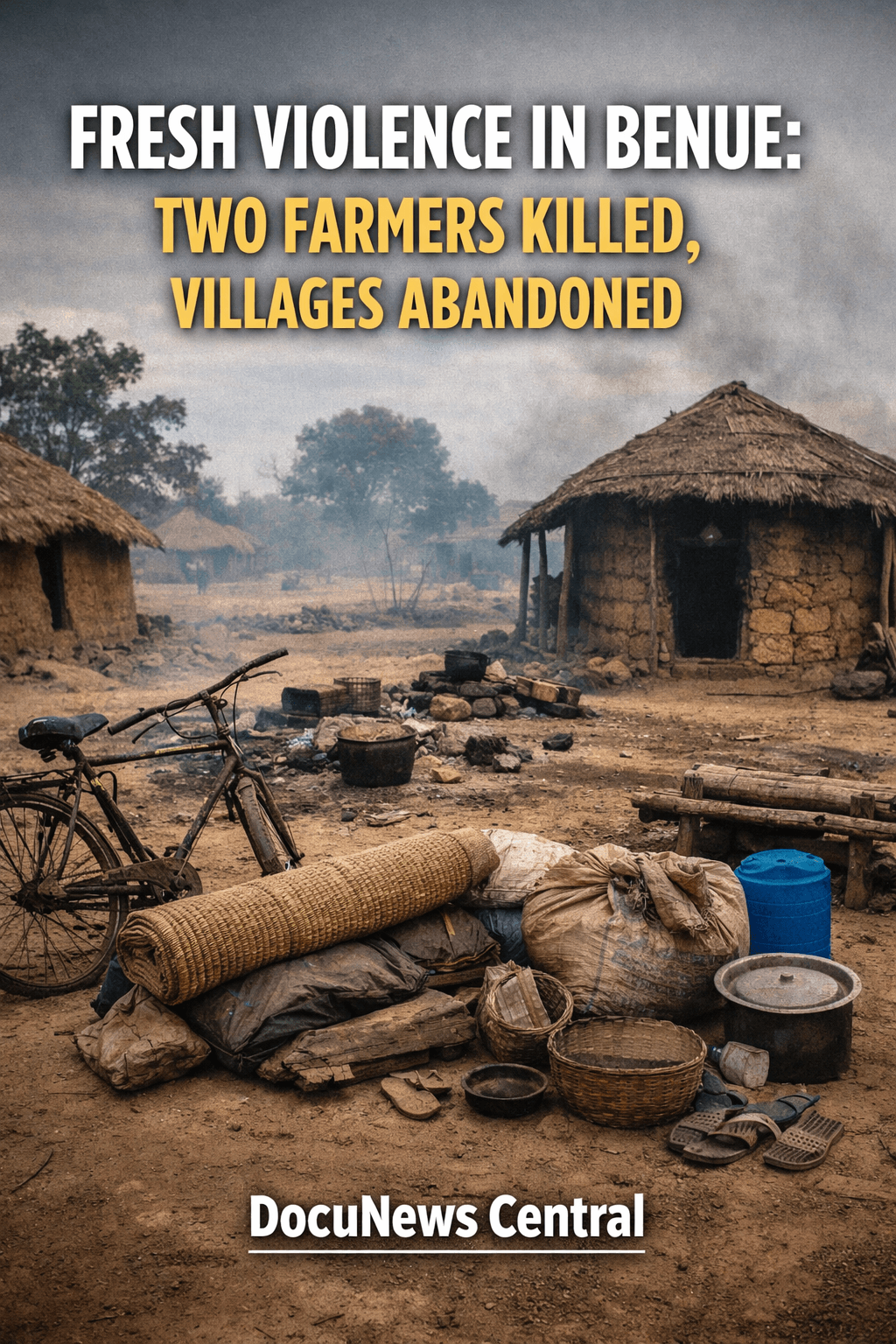
For many rural families in Nigeria’s Middle Belt, fear has slowly replaced routine. Farming, once a source of pride and survival, now comes with constant anxiety. Sadly, that fear returned again to Benue State when another deadly incident shattered the calm in a quiet farming district.
On Wednesday, 14 January 2026, at about 2:30 p.m., suspected armed herders attacked farming communities in Turan District, Kwande Local Government Area of Benue State. The assault claimed the lives of two farmers and forced many residents to flee their homes.
What Happened in Turan District on Wednesday
Earlier that day, residents went about their usual activities. Farmers worked on their land, while others prepared food for the afternoon. Meanwhile, children played near family compounds.
Shortly after midday, gunshots rang out from the edges of the district. As a result, panic spread quickly across nearby farms and footpaths. People ran in different directions, searching for safety.
Witnesses said the attackers moved in groups from surrounding bush paths. They headed straight toward farmlands where villagers worked. Within minutes, the sound of gunfire filled the air.
Two farmers lost their lives during the chaos. Neighbours later identified them as a father and his adult son who were returning from their farm. Their deaths stunned the community.
At the same time, fear pushed families to act fast. Parents grabbed children. Elderly residents leaned on relatives for support. Many left behind food, clothing, and household items.
Fresh Violence in Benue Forces Families to Flee
By late afternoon, several villages stood empty. Doors remained open. Cooking pots sat untouched. Livestock wandered without owners.
As fear spread, residents fled toward safer towns within Kwande Local Government Area. Others crossed into neighbouring communities, hoping to find shelter with relatives.
Women and children suffered the most. Many walked long distances under the sun. Some carried infants on their backs. Others pushed bicycles loaded with basic belongings.
By nightfall, displaced families gathered in open spaces and unfinished buildings. They had little food. Clean water remained scarce. Medical help was limited.
Community leaders said many residents feared returning home too soon. They worried the attackers might strike again. That fear kept entire settlements deserted.
Community Leaders Speak on the Attack
Local leaders described the attack as sudden and brutal. According to them, the district had enjoyed a brief period of calm before the violence returned.
In response, elders held emergency meetings to assess the damage. They confirmed that several households lost access to their farms. Many crops were abandoned.
At the same time, youth leaders helped guide displaced families to safer areas. Volunteers also shared food where possible. However, resources remained limited.
Community representatives warned that continued displacement would worsen hunger. They explained that farming remains the main source of food and income.
Security Response and Ongoing Concerns
Later in the day, security operatives moved into parts of Turan District. Their presence brought brief relief. However, residents said more patrols were needed.
According to locals, similar attacks in the past followed the same pattern. Armed groups struck quickly and retreated into nearby forests. This pattern continues to raise concern.
As a result, many residents now doubt the effectiveness of temporary deployments. They want lasting security measures instead.
Human rights advocates have also raised alarms. They continue to call for better protection of rural communities across the Middle Belt.
Why Rural Communities Keep Emptying
For many families, leaving home felt like the only option. Staying behind during previous attacks often led to injury or death.
However, displacement brings new hardship. Children miss school. Farmers lose income. Families depend on donations to survive.
Meanwhile, food production drops. Markets suffer shortages. Prices rise in nearby towns.
Local volunteers and faith groups have offered support. Still, they admit their efforts cannot replace government action.
The Long History of Insecurity in Benue
Benue State has faced repeated rural attacks over the years. Farming communities often sit near forested areas that criminals exploit.
Despite peace meetings and security promises, violence continues. Each incident deepens mistrust and fear.
Analysts warn that unresolved insecurity threatens food supply across the region. They stress that farming cannot thrive under constant danger.
Experts also point to the need for dialogue, intelligence sharing, and stronger law enforcement. Without these, attacks may persist.
Fresh Violence in Benue Leaves Lasting Pain
The deaths of the two farmers left families in mourning. Relatives described them as hardworking and peaceful.
Burial arrangements took place quietly. Many feared drawing attention during an already tense period.
For residents of Turan District, the pain goes beyond loss. It reflects a deeper fear about the future.
Until lasting solutions emerge, many families say they will remain displaced. They hope peace will one day return to their land.
Related: Two Policemen Killed as Gunmen Storm Enugu Checkpoint
Villages Wiped Out Amid Rising Insecurity in Niger State
Herders Kill Two Farmers, Trigger Mass Flight in Kwande
External reference: Human rights reports on violence in Nigeria