






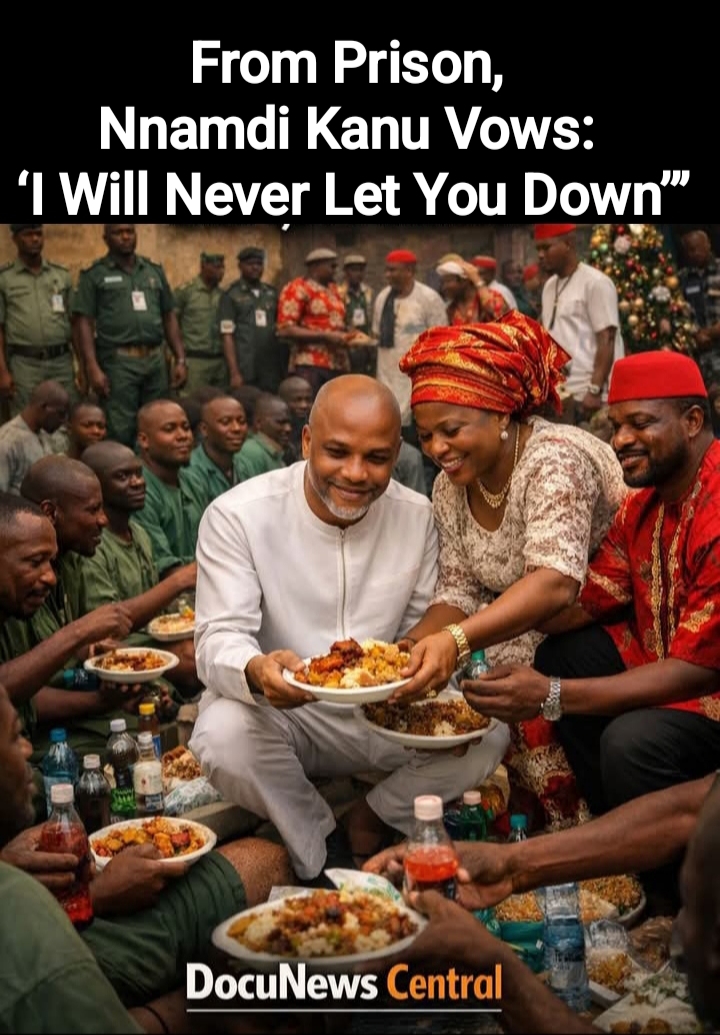
In a powerful and resolute message from within the walls of Sokoto Correctional Centre, Mazi Nnamdi Kanu, the embattled leader of the Indigenous People of Biafra (IPOB), reaffirmed a vow that has captured the attention of millions across Nigeria and the world: “I will never let you down.” This promise, delivered amidst one of the most turbulent phases in Nigeria’s recent political history, stands not only as a personal pledge but as a rallying cry for his supporters, followers, and international observers.
In this detailed article, we walk through the context of his imprisonment, the meaning behind his pledge, and what this vow could mean for Nigeria’s sociopolitical landscape now and ahead. Read also Christmas Solidarity: Kanu Thanks Supporters from Prison
The Context of Kanu’s Imprisonment
To understand the weight of Kanu’s promise, we must first look at how he got to this point. His legal and political journey has been long, complex, and fiercely contested.
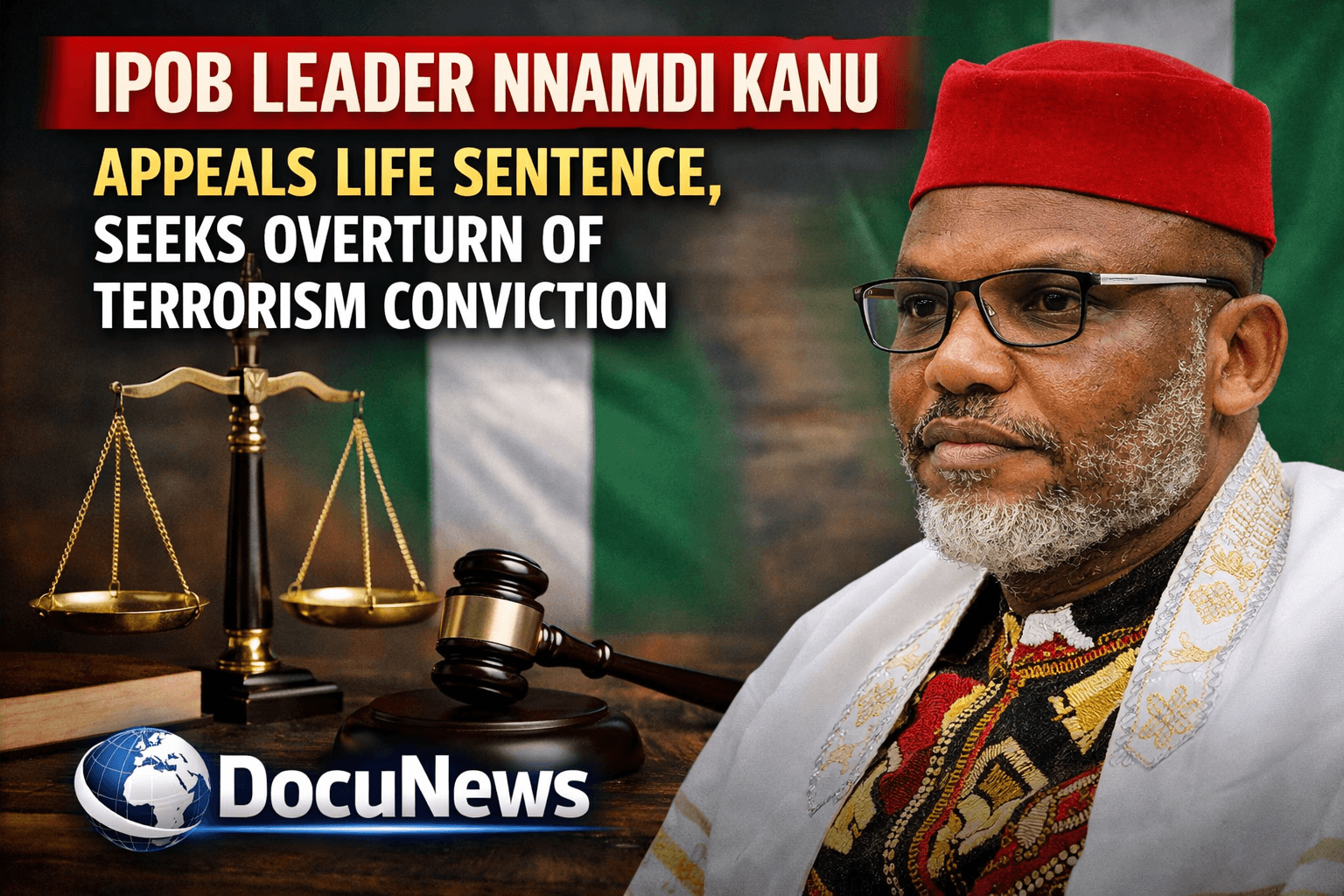
Most recently, on November 20, 2025, the Federal High Court in Abuja convicted Nnamdi Kanu on seven counts of terrorism, sentencing him to life imprisonment on several counts and additional long-term sentences on others. This verdict followed years of legal battles, arrests, bail conditions, and remands that stretched back to 2015. (thecable.ng)
Rather than being held in Department of State Services (DSS) custody in Abuja, Kanu was relocated to Sokoto Correctional Centre after his sentence — a move that alarmed many of his supporters and legal advocates for the distance it places between him and his family, lawyers, and wider support network. (independent.ng)
Because of this relocation, many observers saw his situation as more than just imprisonment — they viewed it as a strategic attempt to isolate him physically and legally. Indeed, there have been subsequent legal motions filed by Kanu himself to challenge his conditions and the handling of his trial. (theeasternupdates.com)
Why His Promise Resonates
The simple phrase, “I will never let you down,” carries deep weight, especially under the conditions of incarceration. That declaration speaks to:
1. Sustained Commitment to Ideals
Kanu’s vow isn’t merely emotional — it reflects his continued commitment to the vision that has defined his political and activist life. Even after his conviction, he insists that his movement and the aspirations of his followers remain undimmed.
While detractors label him a criminal and a terrorist, a broad section of Eastern Nigerian youths and diaspora communities see him as a symbol of resistance against perceived marginalization. His promise from prison reinforces this symbolic position.
2. Reassurance to Followers
Thousands of IPOB supporters, citizens, and sympathizers might feel uncertain in the wake of the life sentence. For many, Kanu’s words act as reassurance. His refusal to yield hope helps keep his base emotionally tethered even in adversity.
Moreover, there are ongoing efforts for his legal appeals and political advocacy. Governors, activists, and diplomatic voices — such as Abia State Governor Alex Otti, who has publicly vowed to work toward Kanu’s eventual release — make clear that efforts continue outside prison walls. (thenigerianvoice.com)
The Broader Legal Dispute
Early Arrest and Bail
Kanu’s first major legal confrontation occurred in 2015 when he was arrested for treasonable felony and terrorism. After a lengthy detention, he was granted bail in April 2017 under strict conditions, including surrender of his passports and limits on public speech. (nigeriainfo.fm)
However, trouble resurfaced when he fled the country during the bail period. Authorities later rearrested him in Kenya in June 2021, after what he and his legal team described as an extraordinary rendition — an arrest and return without legal extradition procedures. (thewhistler.ng)
Contested Trials and Conviction
Kanu’s trial has generated profound controversy, with legal representatives arguing procedural breaches and violations of rights. Despite appeals and motions, the Federal High Court ultimately convicted and sentenced him, rejecting pleas for dismissal and rejecting demands from the federal government for a death sentence on some counts. (channelstv.com)
Yet even after conviction, Kanu has continued legal maneuvers. One such effort includes challenging the very location of his imprisonment, pointing out how remote custody in Sokoto makes legal access and physical presence in court harder. (theeasternupdates.com)
Kanu’s Personal Narrative of Injustice
Nnamdi Kanu’s supporters see his conviction not as an outcome of fair legal process, but as the culmination of systemic violations. In public statements, he described his journey to trial as beginning with his unlawful rendition — an act he argues undermined every subsequent judicial action. (thewhistler.ng)
This narrative of systemic bias strengthens the meaning behind his vow. Rather than recanting or renouncing his beliefs, Kanu continues to position himself as steadfast and principled — a leader unwilling to abandon his cause even when isolated and sentenced. That mindset reinforces his promise to never let his followers down.
What This Promise Means for IPOB and Nigerian Politics
1. Renewed Mobilization
Even behind bars, Kanu’s words can energize his following. A promise like this can spark renewed activism, digital campaigns, and political lobbying both in Nigeria and within international human rights circles.
2. Impact on Public Discourse
The narrative of a leader remaining resolute despite conviction shifts the conversation away from simple criminal categorizations and into questions about constitutional rights, fair trial standards, and how dissent is handled in modern democracies. For more on these issues, see our article on constitutional protections and fair trial standards in Nigeria.
3. Political Negotiation and Advocacy
Governor Otti’s pledge to continue working towards Kanu’s release suggests that the movement has political allies who will keep the issue alive within political discourse — particularly at the state and federal negotiation levels. (thenigerianvoice.com)
Critiques and Controversy Around the Vow
Not everyone sees the vow as positive. Critics argue that Kanu’s activities led to civil unrest and security challenges, fueling disruption in the south-east and beyond. They also point to national security concerns, claiming that his rhetoric has provoked violence and economic disruption.
The court itself found evidence that various security institutions and facilities were affected during the period of IPOB activities, a key basis for the terrorism charges. (media.thisnigeria.com)
For readers who want to understand the security arguments about IPOB and regional stability, check our in-depth exploration of how activism intersects with public safety.
How Supporters Are Reacting Now
Supporters have remained vocal since the sentencing. Reactions ranged from shock and disappointment to sober resolve. Particularly in places like Enugu and across southeast Nigeria, many faithful followers have publicly reacted to the sentence, emphasizing steadfast support despite the legal outcome. (thewhistler.ng)
There are also continuing digital campaigns and petitions, some of which have crossed national borders, urging international pressure and highlighting human rights concerns. (reddit.com)
What Might Happen Next
1. Continued Appeals
Kanu and his legal team could escalate his case further into appellate courts, including potentially reaching higher courts that might question aspects of due process. Some motions have already been filed, particularly around the conditions and jurisdiction of his trial. (theeasternupdates.com)
2. Political Negotiations
Politicians and negotiators may engage in behind-the-scenes talks aimed at either softening his imprisonment conditions or finding legal pathways for release.
3. Public Movements and Advocacy
Public pressure, both domestic and international, could shape how policymakers and judicial authorities consider future actions. His vow to never let his followers down keeps public attention alive on the issue.
Conclusion: The Power of Resolve
When a leader says, “I will never let you down,” from behind prison walls, it signals more than personal determination. It signifies a belief system that refuses to fade despite adversity.
Kanu’s promise reflects his unyielding stance, sustained by a community that still listens and responds. His words from prison carry emotional and political weight, influencing conversations about leadership, justice, and national identity in Nigeria.
For deeper insight into how similar leadership narratives have shaped movements around the world, explore our feature on iconic leaders who inspired movements from confinement to change.
Finally, for readers who want to track how this evolving story continues to unfold, bookmark our Nigeria politics page for updates and analysis.
Sources & Further Reading
- Federal High Court convicts Nnamdi Kanu of terrorism
- Kanu relocated to Sokoto Correctional Centre
- Governor Alex Otti pledges work toward Kanu’s release
- Kanu’s continued legal motions against his detention conditions
- Public reactions from IPOB faithful



One thought on “From Prison, Nnamdi Kanu Vows: “I Will Never Let You Down””