



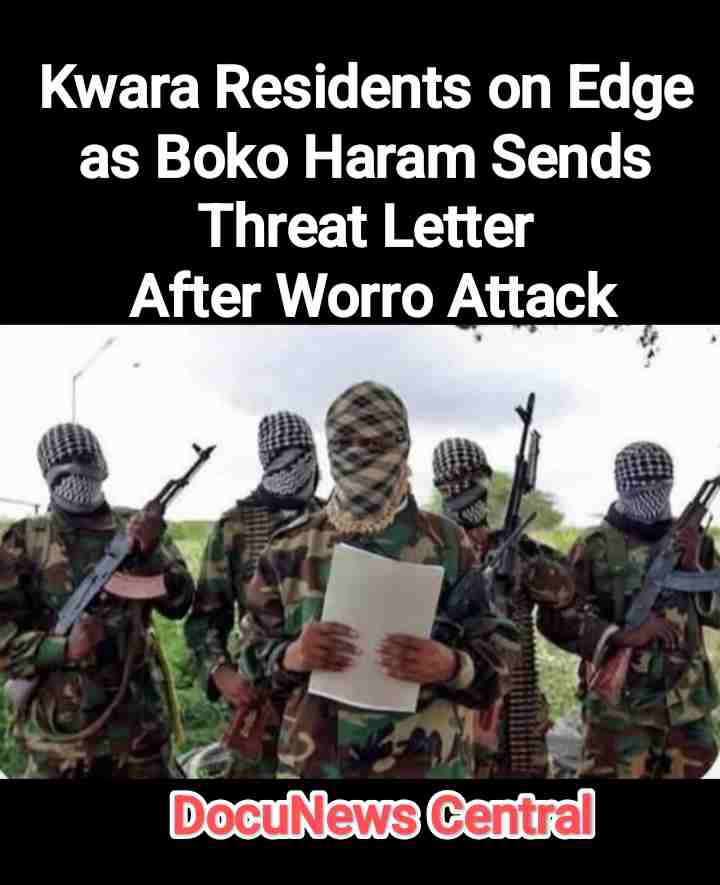
Kwara Residents on Edge as Boko Haram Sends Threat Letter After Worro Attack has become more than a breaking headline. It now represents fear, uncertainty, and growing tension across rural communities in central Nigeria. Families are packing belongings, farmers are abandoning fields, and traders are shutting shops as residents struggle to process the implications of this disturbing development.
On February 9, 2026, in Dunshigogo community, Kaiama Local Government Area of Kwara State, reports emerged that suspected Boko Haram terrorists delivered a written threat warning villagers of imminent violence. This alleged letter surfaced days after the brutal Worro massacre, where scores of civilians lost their lives, leaving survivors traumatized and displaced.
Since then, panic has spread rapidly. Meanwhile, community leaders are pleading for government intervention. At the same time, security agencies are attempting to calm nerves while increasing patrols across vulnerable corridors.
Read Also Gunmen Kill One, Abduct Islamic Cleric and Seven in Plateau
Fear Spreads After Threat Letter Surfaces
First, residents gathered in small groups to confirm the authenticity of the message. Then rumors began circulating. Shortly after, entire households started relocating to neighboring towns. Consequently, markets closed early and schools recorded low attendance.
Although officials have yet to publicly release the full contents of the letter, multiple sources confirmed that it carried warnings similar to those issued before the Worro killings. Therefore, many locals believe the threat is real.
According to community elders, the message demanded submission to extremist ideology and warned of consequences for resistance. As a result, fear now dominates daily conversations.
For background on Boko Haram’s activities across Nigeria, readers can explore this overview from Wikipedia: https://en.wikipedia.org/wiki/Boko_Haram.
Worro Massacre Still Fresh in Memory
The recent Worro attack remains vivid in the minds of Kwara residents. Armed men reportedly stormed Worro and nearby Nuku communities on February 3 and 4, killing villagers and burning homes after locals refused to cooperate.
Survivors described chaotic scenes. Gunshots echoed through the night. Families fled into nearby bushes. Children became separated from parents. Entire compounds were reduced to ashes.
Reuters reported on the incident, highlighting the scale of destruction and the government’s response: https://www.reuters.com/world/least-35-killed-bandits-raid-kwara-state-community-lawmaker-says-2026-02-04/.
Furthermore, humanitarian groups noted that hundreds of villagers fled without food, clothing, or shelter. Consequently, host communities now face additional pressure on limited resources.
You May have missed this Benue Church: Bandits Abduct Nine Worshipers During Night Vigil
Government Deploys Troops to Kwara
Following the massacre, President Bola Tinubu ordered military deployment to Kaiama and surrounding areas. Soldiers and mobile police units arrived within days, establishing checkpoints and conducting patrols.
According to the Voice of Nigeria, the federal government also activated Operation Savanna Shield to strengthen intelligence gathering and deter further attacks: https://von.gov.ng/president-tinubu-orders-military-deployment-to-kwara-state/.
However, despite these efforts, many residents remain unconvinced. They argue that rural settlements still lack permanent security posts. Moreover, forest routes used by militants remain largely unmonitored.
Meanwhile, local vigilante groups have stepped up night patrols. Although they lack heavy equipment, they hope community vigilance will discourage intruders.
Residents Consider Relocation
As anxiety grows, relocation has become a survival strategy. Families are moving to Ilorin, Mokwa, and even neighboring Niger State. Others seek refuge with relatives.
Farmers, in particular, face painful decisions. Leaving farmland during planting season threatens livelihoods. Yet staying could expose them to violence.
Similarly, small business owners complain about declining customers. Transport fares have risen. Fuel prices have climbed. As a result, everyday life feels heavier.
AP News documented similar displacement patterns following the Worro attack: https://apnews.com/article/1cfe0914f838e9387bcf06be4df0b2f5.
Civil Society Calls for Unity
Religious organizations and community associations have urged calm while demanding stronger protection for vulnerable villages. The Muslim Public Affairs Centre condemned the killings and called for immediate humanitarian assistance.
Likewise, traditional rulers appealed for cooperation between residents and security agencies. They stressed that sharing intelligence could prevent future tragedies.
International partners have also offered support. Turkey recently pledged assistance to Nigeria’s counter-terrorism efforts: https://thewhistler.ng/turkiye-pledges-to-support-nigeria-after-kwara-terrorist-attack/.
For continuous updates and investigative reporting on this crisis, readers can follow coverage on DocuNews Central, which remains committed to telling the human stories behind the headlines.
The Psychological Toll on Survivors
Beyond physical destruction, the emotional scars run deep. Children wake up at night crying. Elders sit quietly, replaying memories of gunfire. Mothers worry constantly about their sons.
Although counseling services remain limited, volunteers are trying to offer comfort. Still, trauma lingers. Without structured support, recovery may take years.
Why Threat Letters Matter
Threat letters serve as psychological weapons. They disrupt routines. They weaken morale. They force displacement before any attack begins.
Moreover, such messages often test government response times. If communities feel abandoned, extremists gain influence through fear.
Financial Times recently analyzed how militant groups expand into underserved regions: https://www.ft.com/content/7ab6ff74-b03c-4512-8f0d-19f3c2923b13.
Security Challenges in Rural Nigeria
Kwara’s vast forests create hiding spots for armed groups. Limited road networks slow military movement. Communication gaps delay emergency response.
Additionally, poverty and unemployment make youth vulnerable to recruitment. Therefore, experts argue that security solutions must include economic development.
What Authorities Must Do Next
First, permanent security bases should be established near at-risk communities. Second, intelligence sharing must improve. Third, displaced families need shelter, food, and medical care.
Furthermore, rebuilding trust requires visible government presence. Residents want reassurance, not temporary patrols.
Community Resilience Amid Fear
Despite uncertainty, Kwara residents continue supporting one another. Neighbors share meals. Churches and mosques organize relief drives. Youth groups escort elders during evening hours.
These acts of solidarity highlight human strength during crisis.
The Bigger Picture
The situation in Kwara reflects Nigeria’s broader struggle with insurgency. From the northeast to the north-central region, communities face evolving threats.
Yet, sustained cooperation between government, civil society, and international partners offers hope.
Final Thoughts
Kwara Residents on Edge as Boko Haram Sends Threat Letter After Worro Attack captures a painful moment in Nigeria’s history. However, it also reveals courage, resilience, and the urgent need for action.
As families mourn lost loved ones and prepare for uncertain days ahead, one message remains clear: peace requires commitment, protection, and compassion.
For continued coverage and in-depth analysis, visit DocuNews Central, your trusted source for verified Nigerian news.
For Security Updates Visit Security updates Nigeria