




Military Launches Air and Ground Assault on Terrorist Camps in Kwara
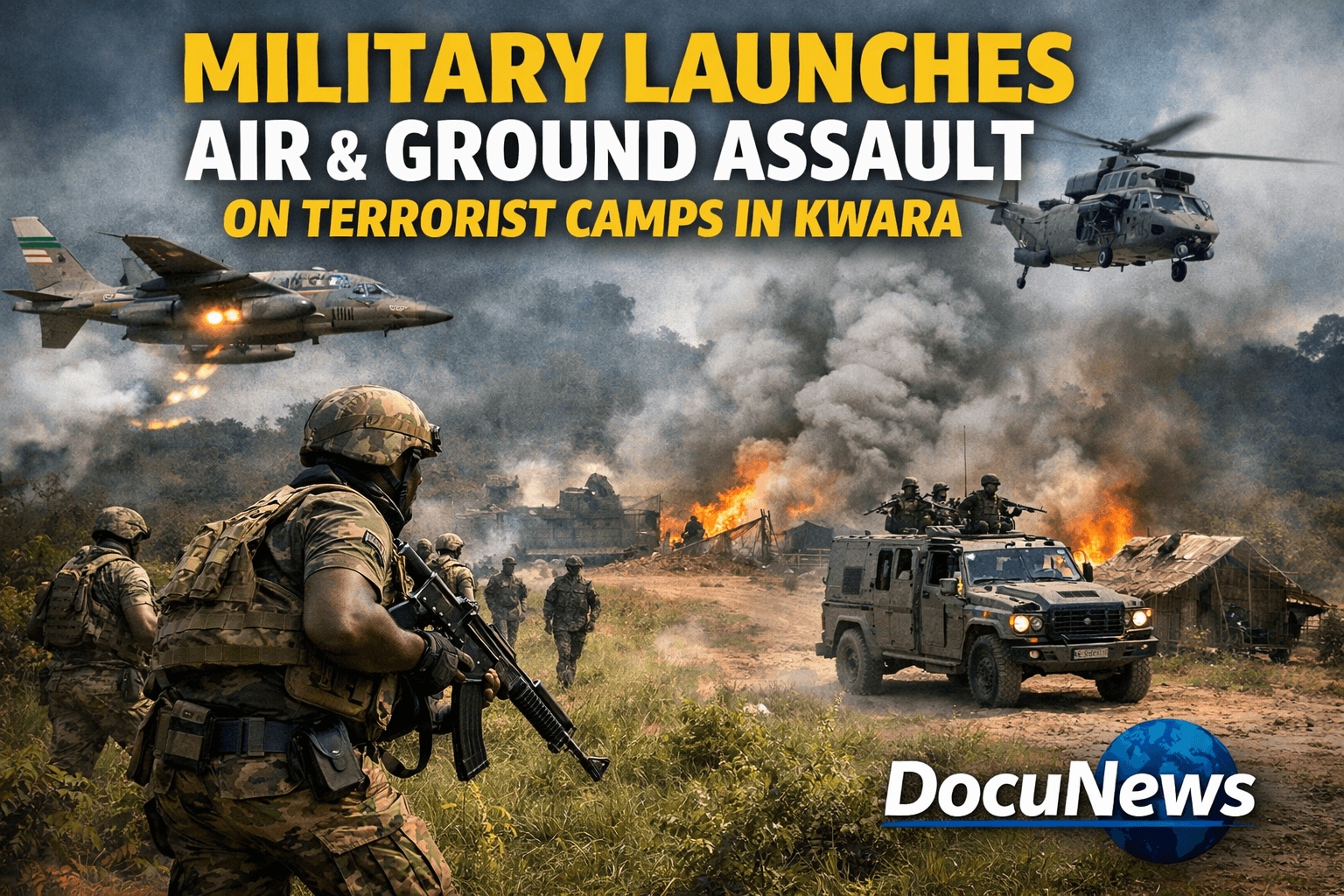
In a dramatic shift toward decisive action, the Nigerian military has launched a full-scale air and ground assault against entrenched terrorist camps in Kwara State. The operation has targeted notorious hideouts at Baba Sango in Ifelodun, Gbugbu forest in Edu, and the Lata community in Patigi, as troops and air assets work together to dismantle terror networks and protect civilians. This combined strategy signals not just a tactical escalation but a serious effort to restore peace and security in a region long plagued by kidnappings, banditry, and terror activity.
These key elements — coordinated air power, ground force maneuvers, and targeted strikes on terror camps — set the tone for what may be a turning point in the fight against insurgency and criminal networks in northern Kwara. Supported by new military directives and increased public cooperation, this offensive reflects a shift toward more integrated security operations that aim to deliver lasting results.
January 24, 2026 — Ilorin, Kwara State, Nigeria. On this date, the Nigerian military commenced intensive air strikes and ground assaults on terrorist camps in three major local government areas: Ifelodun, Edu, and Patigi.
The offensive was confirmed by multiple security outlets, which report that air sorties struck criminal hideouts while army troops advanced through forest terrain to clear remaining elements and secure communities. The coordinated nature of the mission is noteworthy. It goes beyond isolated raids or patrols. Instead, it reflects a deliberate integration of air assets and ground maneuvers designed to overwhelm entrenched terror factions and disrupt their infrastructure. [Sahara Reporters]
For our Images Credit Visit Disclaimers: Use Of AI Images In Our Newsletters
Don’t forget to visit our Official Facebook page www.facebook.com/doconewscentral
Background: How Kwara’s Security Crisis Evolved
To understand today’s offensive, we must trace the roots of insecurity in Kwara. Over the past several years, banditry and terror activity have spread across northern and central areas of the state. These threats began as sporadic kidnappings and violent raids but escalated dramatically as criminals took advantage of the vast forested terrain and weak security presence.
Incidents such as the deadly attack on Oke-Ode and surrounding communities earlier in 2025 prompted greater urgency. In that assault, terrorists targeted local vigilantes and forest guards, killing several and abducting others. This violence triggered military action, including air sorties to repel and dismantle hostile elements. [PR Nigeria]
Moreover, earlier military air strikes eliminated key figures in terror networks, including notorious kingpins believed to have led sophisticated kidnapping gangs operating across Kwara and neighboring terrains. [PR Nigeria]
As violence mounted, the state government even ordered the closure of schools in several local government areas to protect students from kidnappings and infiltration by criminal elements. [The Cable]
By late 2025, insecurity had reached levels that drew national attention and intensified military investment. In response, federal and state leadership directed a more aggressive military strategy, including deploying brigades and air support to flush out bandits and terror cells hidden deep in Kwara’s forests. [PR Nigeria]
Operation India: A New Military Doctrine
The current offensive has been referred to by military sources as “Operation India.” This name is widely referenced in security reports emphasizing combined air and ground tactics, real-time intelligence gathering, and continuous pressure on criminal networks. [Sahara Reporters]
Under Operation India, Nigerian forces have sought to strike terror groups at multiple levels. Air attacks destroy fortified camp infrastructure and disrupt leadership and logistics. Ground maneuvers hunt fleeing combatants and secure areas. Community intelligence gathered from residents, vigilantes, and informants guides tactical movements.
Unlike isolated operations, this offensive reflects a broader doctrine aimed at dismantling nested criminals, not merely driving them from one location to the next. It targets the root of terror camps rather than merely reacting to isolated attacks.
people are reacting to this Troops Arrest 65-Year-Old Woman for Supplying Drugs to Boko Haram in Borno
Targeted Locations of the Assault
The military offensive focused on three main areas where terrorists and kidnappers have been operating effectively for years. Each location has its own strategic significance.
Baba Sango — Ifelodun Local Government Area
Baba Sango has long been identified as a key logistical hub for criminals operating in Kwara’s north. Dense forests and limited road access allow criminals to strike quickly then melt back into the bush. During this recent offensive, air strikes hit Baba Sango early, softening defenses and isolating groups for the follow-up ground push by army units. [Sahara Reporters]
Residents in nearby towns have expressed cautious optimism. Many had previously lived in fear of abductions, extortion, and sudden raids. The new military presence offers a sense of protection unseen in years.
You may have missed this Police Seize Truck Carrying Explosives In Oyo.
Gbugbu Forest — Edu Local Government Area
Gbugbu Forest is notorious for its complexity. Its thick vegetation and hidden paths made it a safe haven for criminals resisting law enforcement. Previous months saw several engagements with criminals in this terrain, including operations where troops neutralized armed bandits and recovered weapons. [Africa Press]
In this operation, the military reportedly used sustained air bombing to flush terror elements out of heavy cover. Ground units exploited the resulting disorientation to secure key routes and block escape paths.
Lata Community — Patigi Local Government Area
Patigi’s Lata community is more remote than other targets. Its position along key transit routes made it both a hideout and launching point for attacks on surrounding settlements. The military offensive here combined air assaults with infantry sweeps, aiming to cut off terrorists from potential re-entry routes deeper into the forests. [Sahara Reporters]
Military Statements and Public Responses
A senior military officer involved in operations spoke to journalists in Ilorin, stressing that the offensive has so far yielded measurable results. He noted significant damage to criminal camp infrastructure but cautioned that community informants leaking troop movements remain a serious challenge. [Arise TV]
“The objective is to dismantle operational networks hiding in those forests,” he said. “We have hit multiple targets and forced many elements into retreat. But we must work with residents. Vigilance from the public is critical if we are to achieve lasting success.”
Local community leaders have echoed this call. They have implored residents to report any suspected collaborators who provide information to criminals. Public cooperation, they argue, can tip the balance in favor of state and federal forces. [Sahara Reporters]
Challenges in the Field
Despite tactical advances, the operation has not been without difficulty. The military continues to grapple with several issues, including informants within communities leaking troop movements, civilian safety and displacement, and difficult terrain that complicates logistics. [Africa Press]
Connecting the Dots: Past National Efforts
This military action in Kwara is part of a larger national framework. While the military has focused on groups like Boko Haram and ISWAP under operations such as Operation Hadin Kai, it has also pursued banditry and terror threats in the northwest and central zones through tailored offensives. [PR Nigeria]
Impact on Schools, Markets, and Daily Life
Months of insecurity forced closures of schools in multiple local government areas, including Ifelodun, Ekiti, Irepodun, Isin, and Oke Ero. Authorities took these drastic steps to protect students while security forces worked to stem violence. [Dawn Herald]
Beyond Kwara: National Security Context
Nationally, Nigeria continues to face terror and bandit threats spanning multiple states. From Borno in the northeast to Zamfara in the northwest and Kwara in the central belt, coordinated military efforts aim to dismantle entrenched criminal networks. [The Nation]
Conclusion: A Pivotal Moment for Kwara
The military’s coordinated air and ground assault on terrorist camps in Kwara represents a pivotal moment in the fight against insecurity. By targeting major camps in Baba Sango, Gbugbu forest, and Lata community, Nigerian forces have struck at the heart of terror networks that once held sway over northern Kwara. [Sahara Reporters]
Despite ongoing challenges — including informants, difficult terrain, and displaced civilians — the operation has already delivered measurable impact. As troops maintain pressure on fleeing elements and expand clearance across forest belts, residents are cautiously hopeful that peace may finally return to these long-troubled areas.
Success of this offensive depends not only on military strength, but also on the courage of civilians to support the state, and on sustained engagement from government and security agencies to secure long-term peace and restore normal life. With continued effort, coordination, and public cooperation, Kwara may yet reclaim its communities from the grip of terror and violence. [Sahara Reporters]


One thought on “Military Launches Air and Ground Assault on Terrorist Camps in Kwara”