




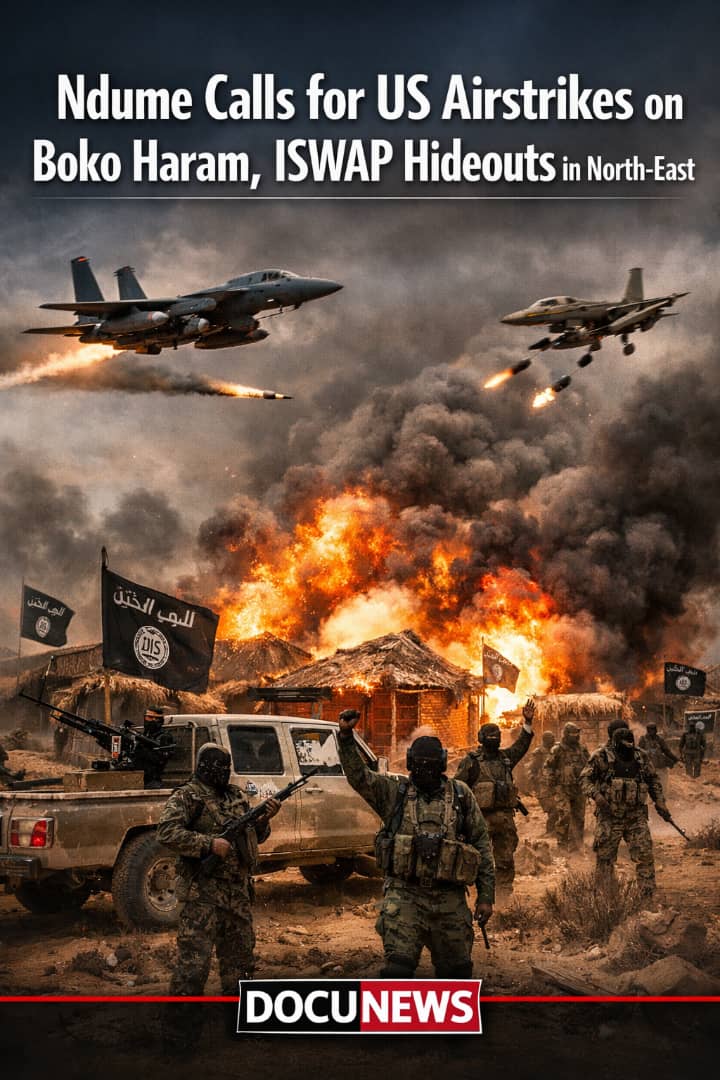
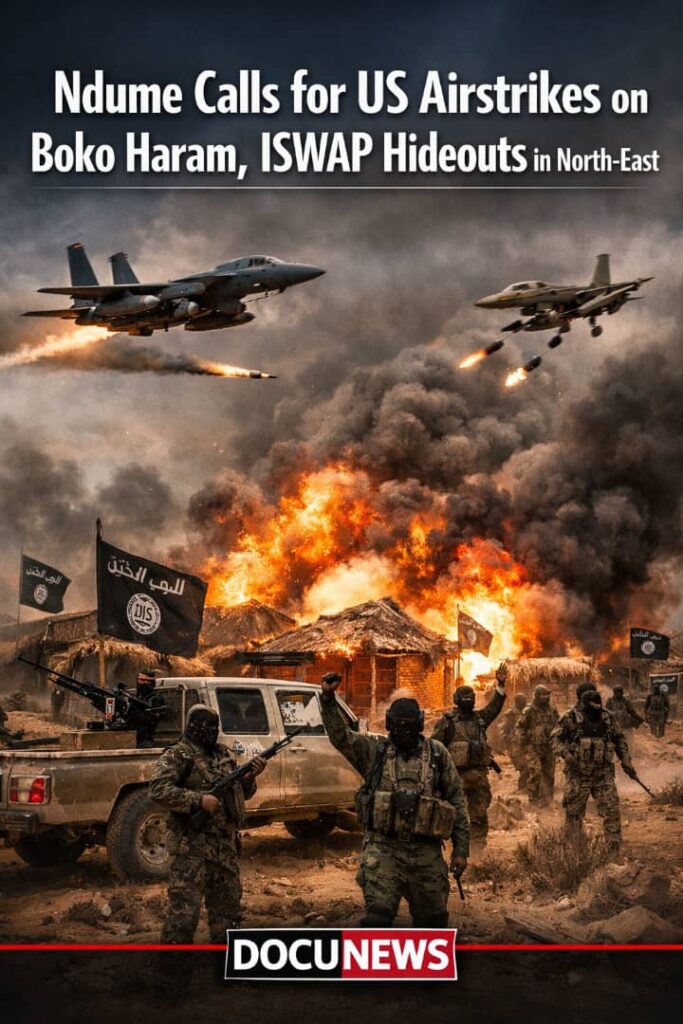
Senator Ali Ndume has renewed national debate after openly calling for United States airstrikes on Boko Haram and Islamic State West Africa Province (ISWAP) hideouts in Nigeria’s North-East. His demand follows years of persistent insurgent violence that has continued to drain military resources, displace communities, and weaken local economies across Borno, Yobe, and Adamawa states. And this made headlines. Ndume Calls for US Airstrikes on Boko Haram, ISWAP Hideouts in North-East.
Although Nigeria has invested heavily in counterinsurgency operations, Ndume argued that the current approach has not fully dismantled terrorist networks. Therefore, he believes external military support, especially precision airstrikes from the US, could shift the balance and accelerate the collapse of insurgent strongholds.
Consequently, his remarks have sparked strong reactions across political, military, and civil society circles. While some see his position as pragmatic, others view it as a sensitive call that touches on sovereignty and regional diplomacy.. this might interest you too Sheikh Gumi warns US. Stop your airstrikes in Nigeria now.
Context Behind Ndume’s Call
For more than a decade, Boko Haram and its ISWAP offshoot have terrorised communities in Nigeria’s North-East. Despite leadership changes within the groups, splintering, and sustained military pressure, the insurgents have adapted their tactics. They now rely on mobile camps, remote islands in Lake Chad, and cross-border movement to evade security forces.
Ndume, who represents Borno South Senatorial District, has consistently spoken about the realities on the ground. As a lawmaker from one of the worst-hit areas, he often draws attention to attacks that receive little national coverage. According to him, repeated raids on military bases and civilian convoys indicate that insurgent capabilities remain intact.
Moreover, he stressed that the North-East terrain gives militants strategic advantages. Dense forests, porous borders, and limited aerial surveillance have allowed insurgents to regroup after major offensives. Because of this, Ndume believes advanced foreign air power could neutralise camps that Nigerian forces struggle to reach. It made my day when I read this From Prison, Nnamdi Kanu Vows: “I Will Never Let You Down”
Why the United States?
Ndume specifically mentioned the United States due to its extensive counterterrorism experience. Over the years, US-led air campaigns have targeted extremist groups in the Middle East, the Horn of Africa, and parts of the Sahel. According to security analysts, these operations often rely on high-level intelligence, surveillance drones, and precision-guided munitions.
Furthermore, Nigeria already maintains security cooperation with Washington. The partnership includes intelligence sharing, military training, and arms procurement. In recent years, Nigeria has acquired platforms such as the A-29 Super Tucano aircraft, partly supported by the US.
Therefore, Ndume argued that direct US involvement would not represent an entirely new relationship. Instead, he framed it as a strategic escalation within an existing alliance. In his view, targeted strikes on known hideouts could weaken insurgent command structures and reduce their operational reach.. I will not forget to share this with you too US Airstrikes in Sokoto Push Terrorists to Flee
Current State of Insurgency in the North-East
Although official reports often highlight military successes, attacks have continued in rural communities. Militants frequently target farmers, fishermen, aid workers, and local traders. As a result, food insecurity has worsened, while humanitarian agencies face increasing risks.
ISWAP, in particular, has expanded its influence around Lake Chad. Unlike Boko Haram’s earlier tactics, ISWAP sometimes attempts to win local support by offering limited protection or economic incentives. This strategy complicates counterinsurgency efforts and blurs the line between coercion and collaboration.
Meanwhile, Boko Haram factions continue to stage sporadic but deadly attacks. Suicide bombings, ambushes, and raids on villages still occur, especially in remote areas where military presence remains thin.
Military Capacity and Limitations
Nigeria’s armed forces have shown resilience despite significant challenges. Troops operate under difficult conditions, often facing supply constraints and vast operational areas. While airstrikes and ground offensives have disrupted insurgent activity, complete eradication has proven elusive.
Additionally, the military must balance multiple security threats nationwide. Banditry in the North-West, separatist tensions in the South-East, and piracy in the Gulf of Guinea all demand attention. Consequently, resources are stretched, and strategic focus becomes divided.
Ndume pointed out that advanced US air capabilities could complement local efforts. According to him, precision strikes could reduce the burden on ground troops and limit prolonged engagements that expose soldiers to ambushes.
Political Reactions Within Nigeria
Reactions to Ndume’s call have varied sharply. Some lawmakers have expressed support, arguing that national security should override political sensitivities. They contend that the safety of citizens remains paramount, regardless of who provides assistance.
On the other hand, critics warn that inviting foreign airstrikes could set a troubling precedent. They argue that Nigeria must strengthen its own institutions rather than depend on external forces. Moreover, concerns about civilian casualties and accountability have featured prominently in the debate.
Nonetheless, Ndume has maintained that his proposal focuses strictly on ungoverned spaces used by terrorists. He insists that any operation should rely on accurate intelligence and coordination with Nigerian authorities.
Regional and Diplomatic Implications
The North-East insurgency extends beyond Nigeria’s borders. Chad, Niger, and Cameroon have all suffered attacks linked to Boko Haram and ISWAP. Because of this, regional cooperation through the Multinational Joint Task Force (MNJTF) remains crucial.
Introducing US airstrikes could reshape this dynamic. While some neighbours might welcome stronger action, others could worry about escalation or unintended spillover effects. Therefore, diplomatic engagement would play a critical role in any such decision.
International law and regional agreements would also influence how operations unfold. Any foreign military action would require clear frameworks to avoid misunderstandings and maintain regional stability.
Humanitarian Considerations
The humanitarian toll of the insurgency remains severe. Millions of people remain displaced across camps in Borno and neighbouring states. Access to education, healthcare, and livelihoods has suffered as insecurity persists.
Although airstrikes aim to weaken militant groups, humanitarian organisations often caution against military-heavy solutions. They stress that long-term peace depends on development, governance, and reconciliation.
Nevertheless, Ndume argued that security forms the foundation for all other interventions. Without neutralising insurgent threats, he believes humanitarian and development efforts will continue to face disruption.
Public Opinion and Civil Society Voices
Public reaction across the North-East has reflected deep frustration. Many residents express fatigue after years of violence and displacement. Some community leaders have openly supported stronger international involvement if it promises lasting relief.
However, civil society groups urge caution. They emphasise transparency, civilian protection, and post-conflict accountability. According to them, any escalation must include mechanisms to prevent abuse and support affected populations.
Social media discussions also reveal divided opinions. While some Nigerians applaud Ndume’s boldness, others question whether foreign strikes would truly end the conflict.
Security Analysts Weigh In
Security experts have offered mixed assessments. Some analysts agree that US intelligence and surveillance capabilities could significantly enhance operations. They point to past successes against extremist groups elsewhere.
Conversely, others warn that airstrikes alone rarely defeat insurgencies. They argue that militants often disperse, blend into civilian populations, or relocate across borders. Therefore, sustained ground presence and local engagement remain essential.
Despite differing views, most analysts agree that Nigeria needs a comprehensive strategy. This approach should combine military pressure, intelligence coordination, economic recovery, and community trust-building.
Historical Precedents
Nigeria has previously received foreign support in security operations, although not at the scale Ndume suggests. Training missions, equipment transfers, and intelligence cooperation have shaped past efforts.
Globally, US-led airstrikes have produced varied outcomes. In some cases, they disrupted terrorist leadership and logistics. In others, they led to prolonged conflicts without decisive resolution.
These precedents highlight the complexity of Ndume’s proposal. While air power can deliver quick results, sustainable peace often requires deeper structural reforms.
What Happens Next?
At present, Ndume’s call remains a proposal rather than policy. Any move toward US airstrikes would involve the executive branch, military leadership, and diplomatic channels.
The federal government has not formally endorsed the idea. However, ongoing discussions about security partnerships suggest that all options remain under consideration.
As insecurity persists, pressure on policymakers continues to mount. Citizens demand tangible improvements, not just assurances.
Conclusion
Ndume’s call for US airstrikes on Boko Haram and ISWAP hideouts has reignited a critical national conversation. His stance reflects frustration with a conflict that has lingered for too long.
While opinions remain divided, the core issue remains clear. Nigeria’s North-East needs lasting security, effective governance, and sustained recovery. Whether foreign airstrikes can contribute to that goal remains a matter of intense debate.
As discussions continue, the voices of affected communities, security professionals, and humanitarian actors will shape the path forward. Ultimately, the success of any strategy will depend on its ability to deliver peace without deepening existing wounds.
Related reading:
Security debates and national unity discussions
External sources:
BBC Africa Security Reports
Al Jazeera Nigeria Coverage
US Counterterrorism Policy