 DocuNews Central
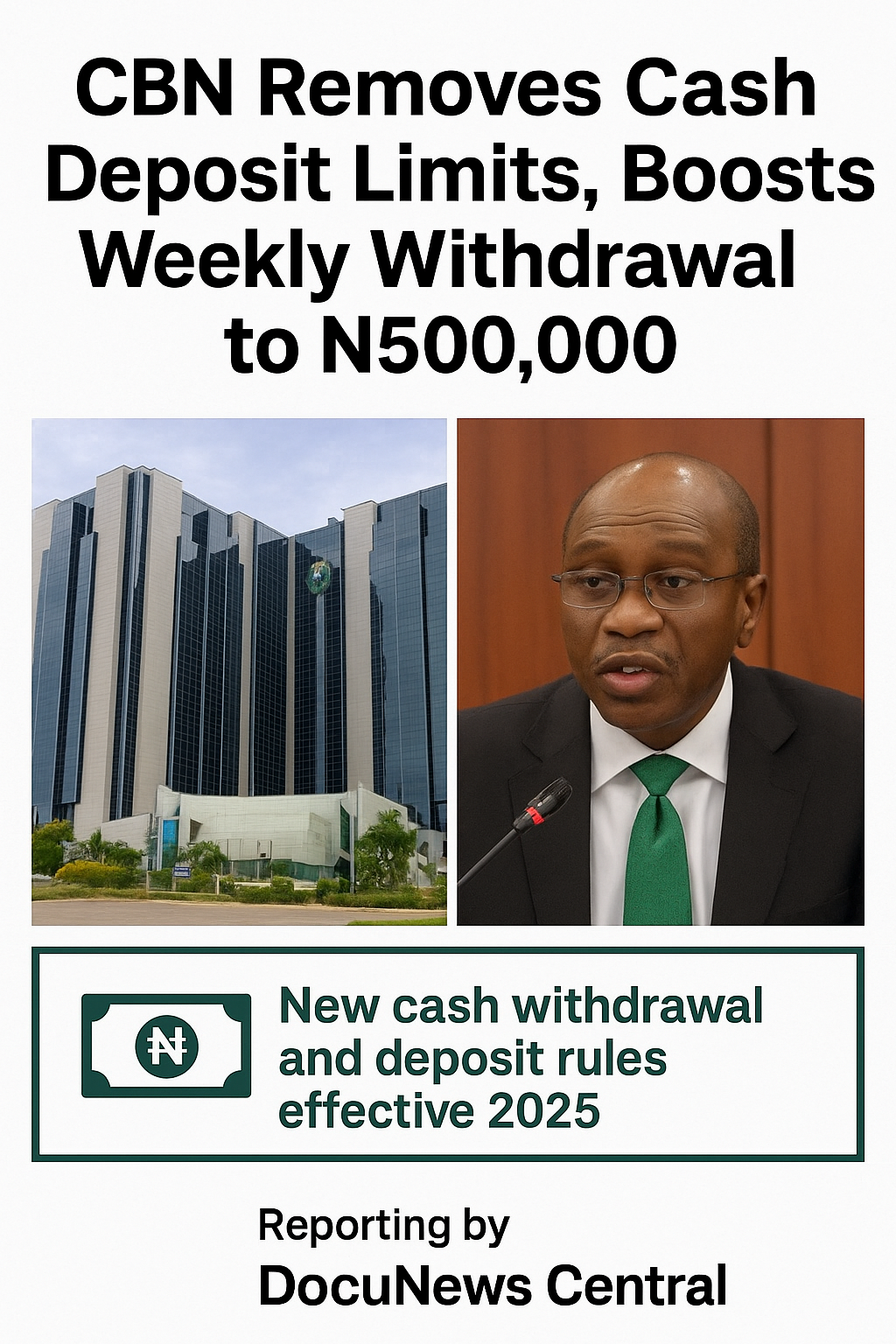
Nigeria Tightens Cash Withdrawal Limits to Curb Money-Laundering. In a major financial move with wide effects, the Central Bank of Nigeria (CBN) has introduced new limits on cash withdrawals. Although many people expected some form of financial reform, the scale of this change has caught banks, traders, companies, and households by surprise. Moreover, the policy comes with tight rules that will alter how Nigerians handle money daily. Because of this, the public has raised many questions. Yet the CBN insists that the new rule will help reduce the heavy use of physical cash, strengthen transparency, and fight the growing threat of money-laundering.
Even though the new rule creates some discomfort, the bank believes the long-term gains outweigh the short-term pressure. Since these steps affect every part of the economy, it is important to understand what the rule means, why the government made this step, and how people can adjust. Therefore, this detailed guide explains every key part of the policy using clear facts. For more background on the Nigerian financial system, you can also check our internal link below:
How Nigeria’s Fiscal Framework Shapes Economic Policy
For global context, you may also read this outbound link from Reuters, which first reported the update:
Nigeria Tightens Cash Withdrawal Limits – Reuters
Understanding the New Cash Withdrawal Limits
The new policy reduces the weekly amount that individuals and companies can withdraw from banks. Though many people depend on cash for business and personal needs, the CBN has introduced tighter caps to push the country toward digital payments and reduce financial crime.
- Individuals can withdraw far less weekly than before.
- Companies also face strict caps on weekly withdrawals.
- Large withdrawals come with heavy fees.
- Banks must report unusual cash movements.
Since Nigeria is a cash-driven society, this decision has sparked intense debate. Even so, the CBN says the reform is necessary to protect the system and support modern banking.
Why the CBN Introduced the New Withdrawal Limits
The bank explained four major reasons for the policy. These reasons appear in government briefings and financial notes from the CBN. Experts believe the limits form part of a broader plan to digitalize Nigeria’s economy.
1. To Reduce Money-Laundering
Because many illegal operations depend on physical cash, the CBN wants to reduce the flow of large cash transactions. Lower limits make it harder for criminals to hide funds.
2. To Support the Cashless Policy
Nigeria started its cashless journey years ago. Yet many sectors still use cash heavily. With new limits, more people will use apps, transfers, and POS systems.
3. To Strengthen the Banking System
Cash handling involves risk, delays, and high cost. Digital payments reduce these issues and help stabilize the banking sector.
4. To Boost Transparency
Digital transactions leave clean records. With fewer cash dealings, government revenue becomes easier to track. This reduces corruption.
For deeper insights on transparency, see our internal link:
Why Transparency Matters in Nigeria’s Public Sector
How the New Limits Affect Individuals
The new limits push people to use digital methods. Apps, bank transfers, and POS tools now play a bigger role. Still, some groups face more challenges.
1. Rural Residents
Many villages struggle with weak networks. This slows digital adoption. Authorities say they will work to boost connectivity.
2. Traders and Market Women
Market traders use cash daily. Yet POS agents now fill most markets across Nigeria. Digital payments are becoming more common.
3. Older Citizens
Some older people find apps difficult. Banks now offer simple apps and customer support to help them adapt.
How Businesses Will Adjust
Companies must redesign how they pay workers, buy goods, and run operations. Though this adjustment takes time, it supports a more modern system.
1. Digital Salary Payments
Most firms already use transfers for payroll. Small firms that rely on cash must change their methods.
2. Supplier Payments
Business owners who pay suppliers in cash must now use transfers. More suppliers are accepting digital methods.
3. Security Improvements
Digital payments reduce the risk of robbery tied to cash transport.
Will Cash Disappear Completely?
No. The CBN has not banned cash. The bank wants both cash and digital tools to function together. Cash will remain, but digital payments will lead.
Challenges Ahead
1. Network Failures
Weak networks cause failed transfers. Telecom improvement is key.
2. Low Digital Literacy
Some people struggle with mobile apps. Banks must teach customers through workshops.
3. Poor Electricity Supply
Digital tools need power. Unstable power supply slows progress.
4. Resistance From Cash-Dependent Sectors
Transport workers, artisans, and traders still prefer cash. Yet digital use grows daily.
Expected Benefits of the Withdrawal Limits
- Reduced criminal activity
- Faster transactions
- Better tax tracking
- Lower banking costs
- Stronger financial inclusion
Public Reactions Across Nigeria
Supporters
Supporters say the rule cuts corruption, boosts digital banking, and reduces theft.
Opponents
Opponents worry about trader stress, network issues, and long banking lines.
What Banks Are Doing to Support Customers
- Upgraded mobile apps
- More customer support
- Digital banking workshops
- More POS agents
- Better transfer security
How to Adapt to the New Withdrawal Limits
- Use mobile banking apps
- Save money digitally
- Use POS agents
- Keep small cash for urgent needs
- Avoid large cash payments
Government Plans to Improve Digital Infrastructure
- Boost telecom networks
- Expand broadband access
- Grow agent banking
- Support fintech firms
- Strengthen cyber security
Conclusion
Nigeria’s new cash withdrawal limits mark a major step toward a more transparent and modern financial future. Though the shift brings challenges, the long-term gains are strong. With better digital tools, reduced crime, faster payments, and improved transparency, Nigeria moves toward a stable future. Even though many citizens still depend on cash, digital tools will dominate the years ahead. The best approach is to learn, adapt, and enjoy the benefits of the new system.
For more related stories, see this internal link:
How Fiscal Reforms Shape Nigeria’s Economic Future
For verified updates, here is an outbound link to Reuters: