
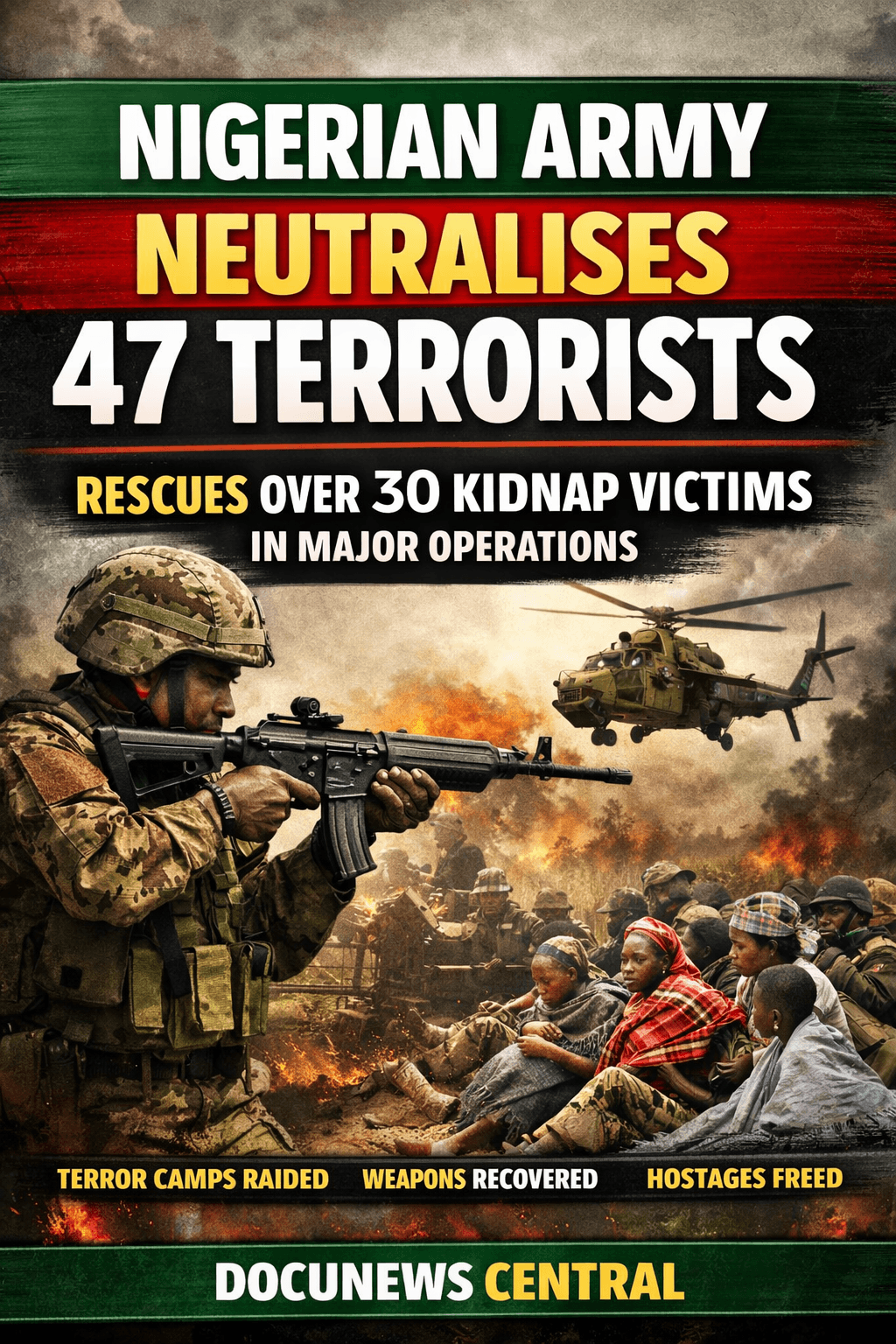
Fresh security operations carried out by the Nigerian Army across several troubled regions have resulted in the neutralisation of 47 terrorists, the arrest of multiple criminal suspects, and the successful rescue of dozens of kidnap victims. The coordinated actions, which involved ground troops, intelligence units, and air support, reflect a renewed push by security forces to regain control of communities affected by insurgency, banditry, and violent crime.
Across the North-East, North-West, and parts of the North-Central zone, troops engaged armed groups that had terrorised rural settlements, blocked highways, and disrupted economic activities. While security challenges persist nationwide, the latest operations have provided measurable relief to affected residents and signaled a stronger operational posture from the military.
This report examines how the operations unfolded, the regions involved, the impact on civilians, and what the renewed offensive means for Nigeria’s broader security landscape. Read also Amotekun Intercepts 39 Suspects Escaping Sokoto After US Strikes
Nigerian Army Neutralises Terrorists During Multi-Region Security Sweep
The Nigerian Army confirmed that troops operating under various field commands carried out simultaneous offensives against terrorist and bandit enclaves. These operations targeted camps used for planning attacks, storing weapons, and holding kidnapped victims.
According to military sources, intelligence-led raids enabled troops to strike with precision. As a result, 47 terrorists were neutralised after armed confrontations in forested and semi-urban locations. Additionally, several others fled with injuries, abandoning weapons and logistical supplies.
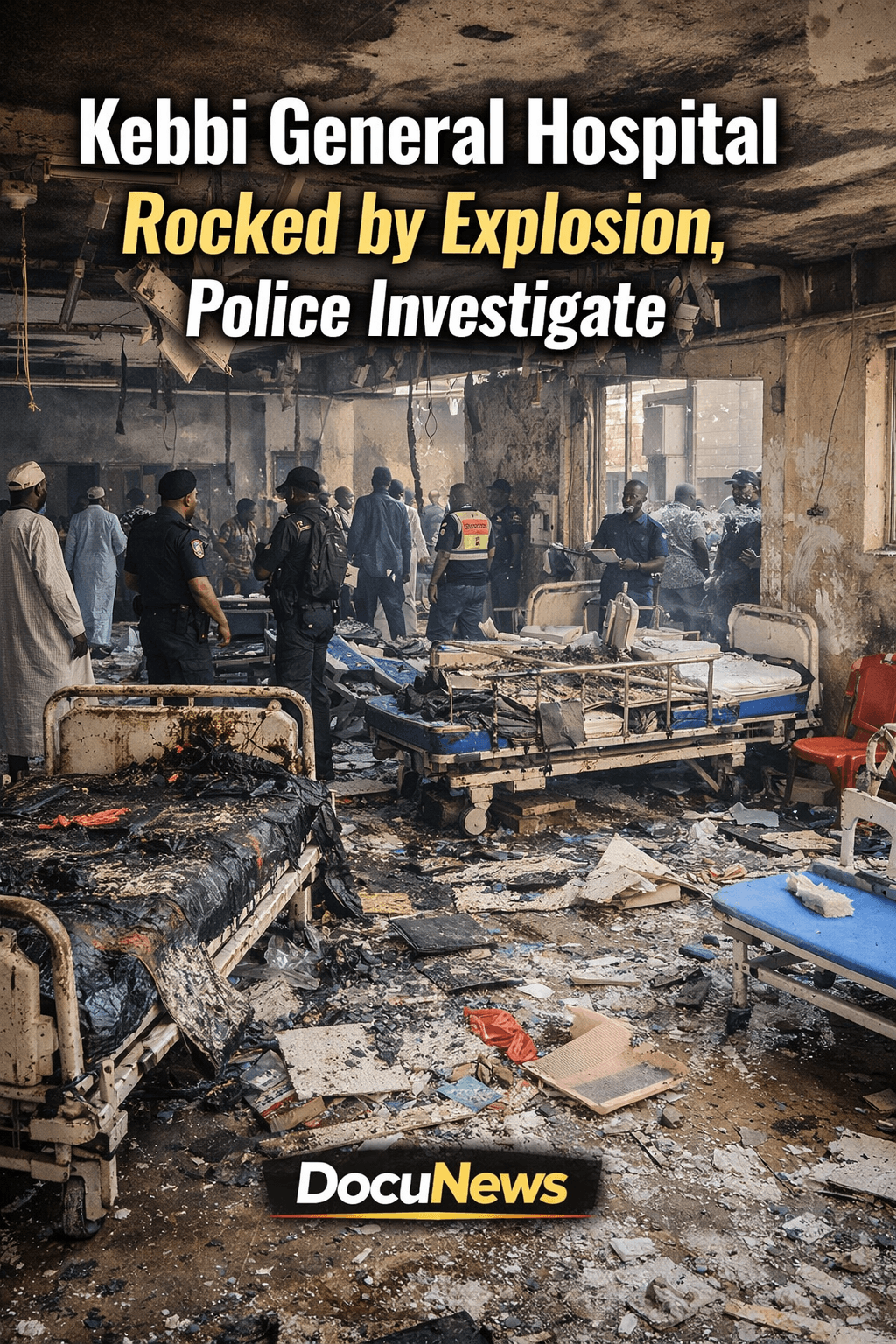
Unlike previous single-location raids, the recent sweep covered multiple states. Therefore, security analysts believe the operation disrupted criminal coordination across regions rather than merely displacing threats from one area to another. You may need this too Kebbi General Hospital Rocked by Explosion, Police Investigate
Nigerian Army Operations Lead to Rescue of Kidnap Victims
Beyond neutralising armed fighters, the rescue of kidnap victims stood out as a central outcome of the security operations. Troops freed over 30 civilians who had been held in remote hideouts under harsh conditions.
Many of the rescued victims included traders, farmers, commuters, and residents abducted from their homes or intercepted along highways. Medical personnel provided immediate care, while security officers gathered intelligence from survivors to track remaining criminal cells.
Importantly, the rescues reduced fear in communities that had endured repeated abductions. In several locations, displaced residents have begun returning, encouraged by the visible presence of soldiers.
How Nigerian Army Intelligence Shaped the Security Offensive
The success of the recent campaign relied heavily on actionable intelligence gathered through multiple channels. Surveillance reports, local informants, and technical monitoring helped identify terrorist movement patterns.
Because intelligence units shared information across commands, troops avoided ambushes and limited civilian exposure to harm. This approach marked a shift from reactive deployments toward pre-emptive disruption.
Furthermore, collaboration between the Army, Air Force, and other security agencies ensured that suspects could not easily escape once contact occurred.
Nigerian Army Air Support Strengthens Ground Operations
Air assets played a strategic role during the operations. Nigerian Air Force platforms provided reconnaissance, deterrence, and close support where necessary.
Through aerial surveillance, commanders tracked fleeing fighters and guided ground units toward exit routes. Consequently, terrorists abandoned motorcycles, weapons, and food supplies while attempting to evade capture.
Military officials noted that air-ground coordination reduced troop casualties and shortened engagement times.
Nigerian Army Arrests Suspects and Recovers Weapons
Alongside neutralised fighters, troops arrested several suspects believed to support terrorist logistics. These individuals allegedly supplied food, fuel, communication devices, and intelligence.
Recovered items included rifles, ammunition, communication equipment, motorcycles, and locally fabricated weapons. Each recovered asset weakened the operational capacity of criminal networks.
Security agencies have since transferred suspects for further investigation, while recovered arms remain under forensic review.
Nigerian Army Operations Restore Confidence in Affected Communities
For residents of affected areas, the operations delivered a rare sense of relief. Markets reopened, transport resumed, and farming activities slowly returned.
Community leaders expressed cautious optimism, noting that sustained security presence remains critical. They emphasized that while the offensive brought improvement, long-term stability requires continued patrols.
In many villages, residents cooperated with soldiers by sharing information, reflecting improved civil-military trust.
Nigerian Army and Police Collaboration Enhances Security Coverage
The Army did not act alone. Police units secured cleared locations, maintained checkpoints, and handled post-operation investigations.
This collaboration prevented criminals from re-entering liberated areas. Additionally, joint patrols reassured residents that security efforts would not end immediately after military withdrawals.
Experts note that such coordination remains vital for preventing criminal resurgence.
Nigerian Army Campaign and the Broader National Security Picture
Despite recent gains, Nigeria’s security challenges remain complex. Armed groups exploit difficult terrain, economic hardship, and weak infrastructure.
However, sustained military pressure disrupts their ability to regroup. Analysts argue that consistent offensives reduce recruitment, funding, and territorial control.
The latest operations therefore represent progress rather than a final solution.
Nigerian Army Operations Align With Federal Security Strategy
The federal government has emphasized decisive action against terrorism and banditry. Recent operations align with directives to protect highways, farming communities, and urban centers.
Authorities have also prioritized protecting economic assets and restoring investor confidence.
Accordingly, the Army’s actions support broader national objectives beyond immediate security concerns.
Nigerian Army Neutralises Terrorists: Reactions From Security Analysts
Security experts have largely welcomed the development. Many believe the scale of the operation reflects improved coordination and intelligence depth.
However, analysts caution that long-term success requires addressing root causes such as unemployment, arms proliferation, and regional instability.
They also emphasize the importance of accountability and transparency to maintain public trust.
Nigerian Army Neutralises Terrorists While Civilian Protection Remains Central
Military officials stressed that civilian safety remained a priority throughout the operations. Troops reportedly avoided populated areas during engagements.
Additionally, rescued victims received humanitarian support, reinforcing the Army’s role beyond combat.
This approach helped limit collateral harm while maintaining operational effectiveness.
Nigerian Army Operations and the Road Ahead
While the neutralisation of 47 terrorists marks a significant milestone, security forces acknowledge that challenges persist. Criminal groups adapt quickly, exploiting gaps when pressure eases.
Therefore, continuous intelligence gathering, regional cooperation, and community engagement remain essential.
If sustained, recent momentum could gradually reduce violence and restore normalcy across affected regions.
Conclusion: Nigerian Army Neutralises Terrorists in Renewed Push for Stability
The latest security operations demonstrate the Nigerian Army’s renewed determination to confront terrorism and kidnapping nationwide. Through intelligence-driven actions, coordinated deployments, and civilian-focused strategies, troops achieved measurable success.
Although insecurity has not disappeared, the operation delivered tangible relief, disrupted criminal networks, and strengthened confidence in national security institutions.
As Nigeria continues its fight against violent groups, sustained effort, institutional reform, and public cooperation will determine whether progress translates into lasting peace.
Related reading:
- Latest Nigerian Security News
- Previous Military Operations in Nigeria
- Security Analysis by Premium Times