




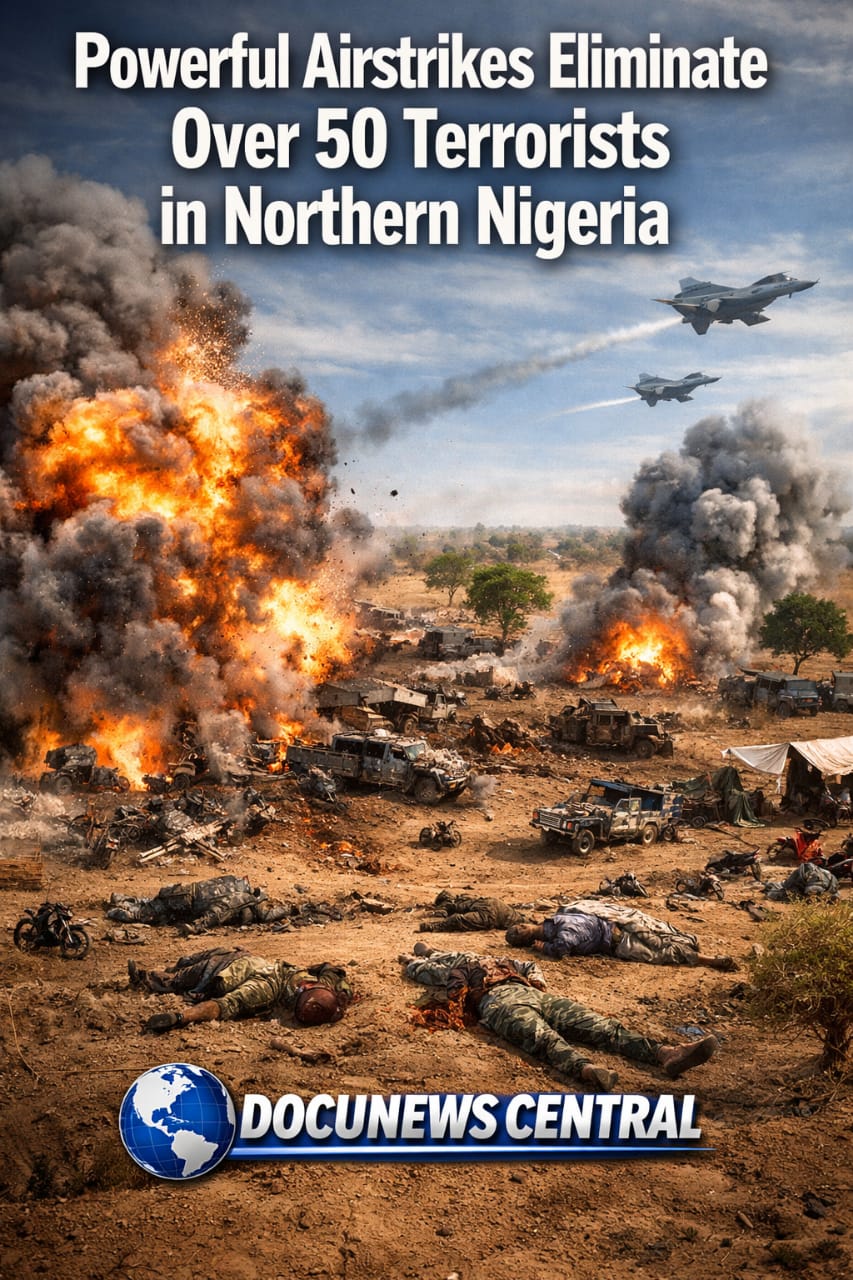
On 20 January 2026, powerful military airstrikes struck multiple locations across Katsina and Kano states in northern Nigeria, killing over 50 terrorists in a coordinated aerial offensive. The Katsina State government confirmed the high-impact operation shortly after it was completed, and local sources corroborated the strike’s significant impact on armed groups operating in the region. Source
The Nigerian Air Force (NAF), working with other security agencies, identified armed men moving across several rural axes. Intelligence indicated that these fighters posed a serious threat to local villages and would soon mount fresh attacks. Acting on this information, air assets were deployed to engage the hostile elements before they reached densely populated communities. Source. Read also Suicide Bomber Hits Military Convoy in Borno — 5 Soldiers Killed
Rapid Response After Credible Intelligence
The offensive began when credible, multi-source intelligence pointed to the presence of an organized group of armed bandits in the border zones between the Matazu and Danmusa Local Government Areas of Katsina State, as well as nearby Tsanyawa in Kano State. Officials said the fighters were moving from suspected hideouts and planning further violence against communities. Source
At first light, military aircraft launched precision strikes on identified targets. Jets circled above the suspected positions, then released a series of ordnance to neutralize the hostile elements. Ground observers reported the strikes in real time as explosions echoed across the dusty farmland. Source
Within hours, more than 50 terrorists were confirmed killed, their weapons and other military equipment recovered by troops later. State authorities assured residents that the operation was carried out with strict adherence to international norms of engagement. Source. You may have missed this information. FINLAND BREAKTHROUGH: Scientists Transmit Electricity Through Air
Local Reaction and Aftermath
Residents in Katsina and Kano expressed relief as news of the airstrike spread. Witnesses said the air attacks seemed methodical and targeted, aiming specifically at armed assailants rather than civilians. After the smoke cleared, locals walked cautiously toward the strike zones. They found destroyed vehicles, scattered weapons, and evidence of firefights. Source
One community leader, speaking on condition of anonymity, said villagers had feared another wave of bandit raids before the attack. He explained that the bandits had been terrorizing farms and small towns for months. The airstrikes, he said, brought some hope that security forces were finally disrupting violent networks. Source
State officials also urged community members to stay calm as clean-up and intelligence gathering continued. They stressed that additional operations would help prevent any retaliatory attacks from surviving armed fighters. Source. Many people are reacting to this headline. Why Is Kanu In Jail While Bello Turji Walks Free – Kano ADC Chairman
Broader Context: Counter-Terrorism in Northern Nigeria
This airstrike is part of a larger military campaign against terrorism and banditry in northern Nigeria. Over the past year, Nigerian forces have intensified aerial and ground operations under initiatives like Operation HADIN KAI and Operation FANSAN YAMMA, aiming to dismantle terror structures in the North-West and North-East regions. Source
In August 2025, the Nigerian Air Force reported that sustained air operations had eliminated hundreds of terrorists and destroyed hundreds of their assets. These efforts have included precision strikes, intelligence-led interdiction, and close air support for ground troops. Source
Still, bandit and extremist groups remain deeply embedded in the region’s forests and remote plains, continuing to mount ambushes, kidnappings, and raids on civilian communities. Violence escalates in pockets of Katsina, Zamfara, Sokoto, and Borno states, with some groups aligning with extremist networks like Boko Haram and the Islamic State West Africa Province (ISWAP). Source
Security and Civilian Protection Challenges
While Nigeria’s military has increased its use of air power, experts have warned about the complexity of distinguishing fighters from civilians in remote areas. Human rights groups have criticized some past strikes that inadvertently harmed innocent people, including remote communities and displaced persons. Source
A well-known example occurred in December 2023, when a drone strike near Tudun Biri in Kaduna State mistakenly hit civilians, leading to significant casualties and widespread condemnation. Source
Such events have underscored the need for precise targeting, robust intelligence, and effective coordination between military units and local authorities. Nigerian leaders have pledged to refine operational safeguards and increase transparency in counter-terrorism actions. Source
Government Statement and Future Plans
In the wake of the latest airstrikes, Katsina State’s Commissioner for Internal Security and Home Affairs described the operations as part of an ongoing offensive built on data, collaboration, and community reporting. He said the government would continue supporting the military to enhance security and protect civilians. Source
Officials also announced plans to bolster rehabilitation and reconstruction efforts in affected areas. These measures include rebuilding damaged infrastructure, restoring access to farmland, and assisting displaced families with shelter and livelihood support. Source
Local leaders welcomed the government’s stance but said much work remains to ensure long-term peace and stability. They pointed to the need for community engagement, economic opportunities, and sustained security presence. Source
Outlook: Continued Military Pressure on Armed Groups
Security analysts believe northern Nigeria will remain a priority for military operations in 2026. Air interdiction missions like this one are likely to continue alongside ground force advances and intelligence sharing with international partners. Source
Such actions aim not only to eliminate immediate threats but also to disrupt the recruitment and logistical networks that allow armed groups to persist across state borders. The Nigerian government has stressed that counter-terrorism efforts must combine force with community resilience and economic development. Source
Whether these strategies will bring lasting peace remains uncertain. For now, residents in Katsina, Kano, and other northern states see this latest airstrike as a significant military achievement and a potential turning point in the fight against terrorism. Source
For More Security updates Visit Security updates Nigeria


One thought on “Powerful Airstrikes Eliminate Over 50 Terrorists in Northern Nigeria”