







Suicide Bomber Kills Five Nigerian Soldiers in Northeast
By DocuNews Central | Updated December 17, 2025
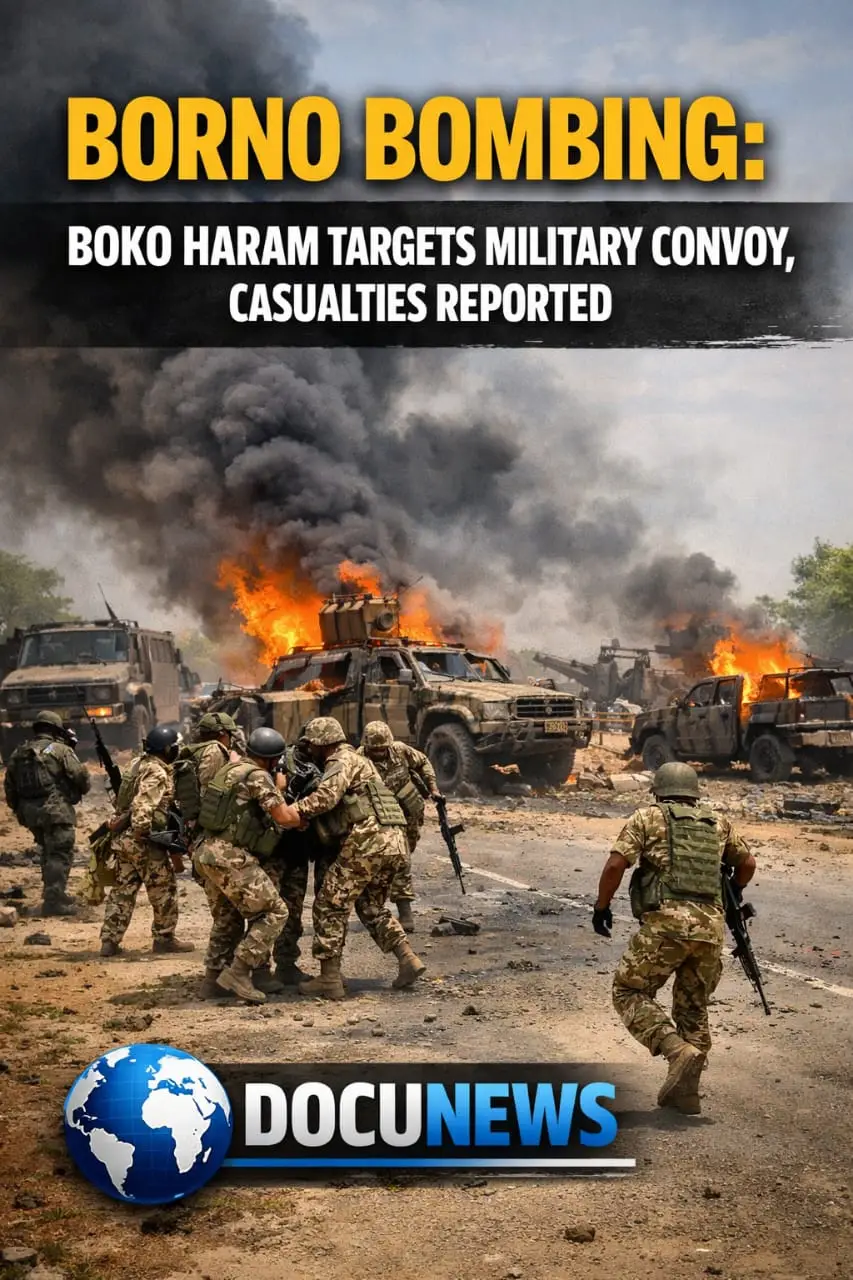
In a tragic escalation of violence in northeastern Nigeria, a suspected suicide bomber struck a Nigerian military position at Firgi, near Pulka in Borno State, resulting in the deaths of at least five soldiers. Security sources and local community defence groups provided details of this latest terror assault that once again underscores the persistent threat of jihadist extremists in the region. 0
🔎 What Happened: The Incident Explained
According to multiple eyewitness accounts and reports by AFP correspondents on the ground, a young attacker detonated explosives strapped to his body at a Nigerian Army position on Sunday morning. The assault occurred close to the Cameroon–Nigeria border, an area long known for militant activity and a porous frontier exploited by insurgent fighters. 1
One local militia member, Umar Sa’idu, told reporters, “I counted five bodies lying in blood at the back of my house”, describing the unsettling aftermath of the blast. Medical teams later confirmed that the soldiers they transported to the University of Maiduguri Teaching Hospital succumbed to their injuries hours after the attack. 2
The military’s official spokesman, Lieutenant Colonel Sani Uba, acknowledged the attack but did not confirm the death toll, stating that the soldiers engaged the attacker and received wounds of varying severity. 3
📍 Location Details: Firgi and Pulka in Context
Firgi and nearby Pulka lie within the Gwoza Local Government Area of Borno State, a region that has long borne the brunt of insurgent assaults by Boko Haram and affiliated groups. The rugged terrain of the Mandara Mountains — which stretches across the Nigeria–Cameroon border — has often served as a refuge and staging ground for militants. 4
Because the terrain is difficult to police and is sparsely governed, it offers cover for insurgents to regroup, plan attacks, and launch operations across national boundaries. This topographical complexity compounds the challenge faced by Nigerian security forces and their local defence partners. 5
🧨 Boko Haram’s Tactics Revisited
Suicide bombing is a signature tactic once commonly deployed by Islamist groups in the Lake Chad Basin conflict. Most notorious among these has been Boko Haram, a group that in its peak years orchestrated multiple high‑casualty bombings across northern Nigeria. 6
While the frequency of suicide attacks decreased significantly in recent years — largely due to sustained military operations and pressure from regional task forces — this latest attack suggests such tactics have not been fully eradicated. Analysts see this as a sign that insurgent networks remain active and capable of inflicting significant harm. 7
🪖 Nigeria’s Long Struggle Against Insurgency
Nigeria has battled an insurgency linked to Boko Haram since 2009. Initially motivated by the objective of establishing an extremist state in northeastern Nigeria, the movement has evolved, splintered, and adapted over time. 8
In recent years, Boko Haram fractured into rival groups including the Islamic State in West Africa Province (ISWAP), which is believed to be responsible for many of the attacks affecting soldiers and civilians alike. These factions have carried out ambushes, roadside bombings, hijackings, and suicide attacks across parts of Borno, Yobe, and Adamawa states. 9
The insurgency has caused deep humanitarian impact, displacing millions of Nigerians and claiming tens of thousands of lives across the northeast and adjacent border regions. 10
🔥 Recent Security Trends in Borno and Surrounding Areas
The northeastern theatre of conflict has witnessed fluctuating violence over the past decade. While military offensives have reclaimed territory and disrupted many militant networks, pockets of resistance persist.
- Earlier in 2025, a *suspected female suicide bomber* detonated an improvised explosive device in Konduga, Borno State, resulting in a significant number of civilian casualties. 11
- In previous years, large‑scale suicide attacks resulted in mass casualties in Maiduguri and other towns, illustrating the deadly effectiveness of such operations. 12
- Some attacks have specifically targeted military personnel and bases, raising sharp concern about security gaps and militant adaptability. 13
📢 Government and Military Response
Since the incident, the Nigerian Defence Headquarters (DHQ) has reiterated its ongoing commitment to counterterrorism operations, insisting that troops remain vigilant, resilient, and operationally effective. However, comprehensive official casualty reports have been sparse in this instance. 14
Officials continue to conduct follow‑up investigations aimed at uncovering how the attacker breached security perimeters and whether this incident signals a renewed strategic shift by militant groups. The Defence Ministry has also stressed the importance of community partnerships and local intelligence networks in preventing future attacks. 15
🌍 Regional and Cross‑Border Implications
Cross‑border insecurity has become a perennial challenge along Nigeria’s northeastern frontier. Militants often slip across into Chad, Cameroon, and Niger, complicating national defence strategies. The Mandara Mountains and adjacent bushlands serve as conduits for such activities. 16
Regional cooperation among Multinational Joint Task Force (MNJTF) members — Nigeria, Chad, Niger, and Cameroon — remains critical. Despite efforts to synchronize operations, logistical challenges, jurisdictional limitations, and resource constraints continue to hinder seamless cooperation. 17
🧠 Why This Matters: Security, Politics & Society
The renewed use of suicide bombing — even if sporadic — carries major implications for national security and public confidence. First, it signals that extremist elements retain operational capacity despite military pressure. Second, it risks reigniting fear and trauma in communities that have endured years of conflict and displacement. Finally, it can influence public perception of government effectiveness at a time when national unity and trust are crucial. 18
Security analysts emphasize that insurgent groups often adapt their tactics to exploit perceived weaknesses, assess military reactions, and shape their propaganda narratives. Because of this, every attack must be studied carefully to anticipate future threats and adapt defensive strategies accordingly. 19
📌 What Experts Are Saying
Experts who track West African militant movements note that while some insurgent factions have declined in strength, others have regrouped and are experimenting with tactics that target both security forces and vulnerable civilian populations. Furthermore, extremist ideologies can persist even when organizational structures weaken, posing long‑term challenges to stabilization. 20
They also stress that solutions must be multidimensional — combining military action with socio‑economic development, community resilience programs, and regional diplomacy to address the underpinnings of violent extremism. 21
📊 Statistical Context: Insurgency and Suicide Attacks in Nigeria
Although comprehensive fatality records are difficult due to ongoing conflict dynamics, decades of unrest in northeastern Nigeria have led to thousands of deaths and the displacement of millions. Suicide bombings, while relatively rarer in recent years compared to the insurgency’s peak, have periodically re‑emerged, often with devastating consequences. 22
These patterns illustrate not only the resilience of extremist groups but also the urgent need for sustained investment in counterterrorism, rehabilitation of affected communities, and policies that foster lasting peace and economic opportunity. 23
📎 Related Reading and References
- Boko Haram Attacks and Military Security Developments – Vanguard Nigeria
- Military Counterinsurgency Operations in Nigeria – Vanguard Nigeria
- Defence Policies & Terrorism Challenges – Vanguard Nigeria
- More on Security Updates (Internal)
- Boko Haram Insurgency (Internal Tag)
🧩 Conclusion
The suicide bombing that claimed the lives of five Nigerian soldiers in northeast Nigeria represents a sobering reminder that extremist violence continues to evolve and challenge national security. For citizens, policymakers, security forces, and the international community, it reinforces the need for vigilance, cooperation, and comprehensive strategies that address both immediate threats and long‑term stability. 24
DocuNews Central strives to deliver accurate and up‑to‑date reports on key national events. For continuous coverage of this developing story, stay tuned and visit our Security & Conflict section.
Hi there! This post couldn’t be written any better! Reading through this post reminds me of my previous room mate! He always kept talking about this. I will forward this article to him. Pretty sure he will have a good read. Thank you for sharing!