



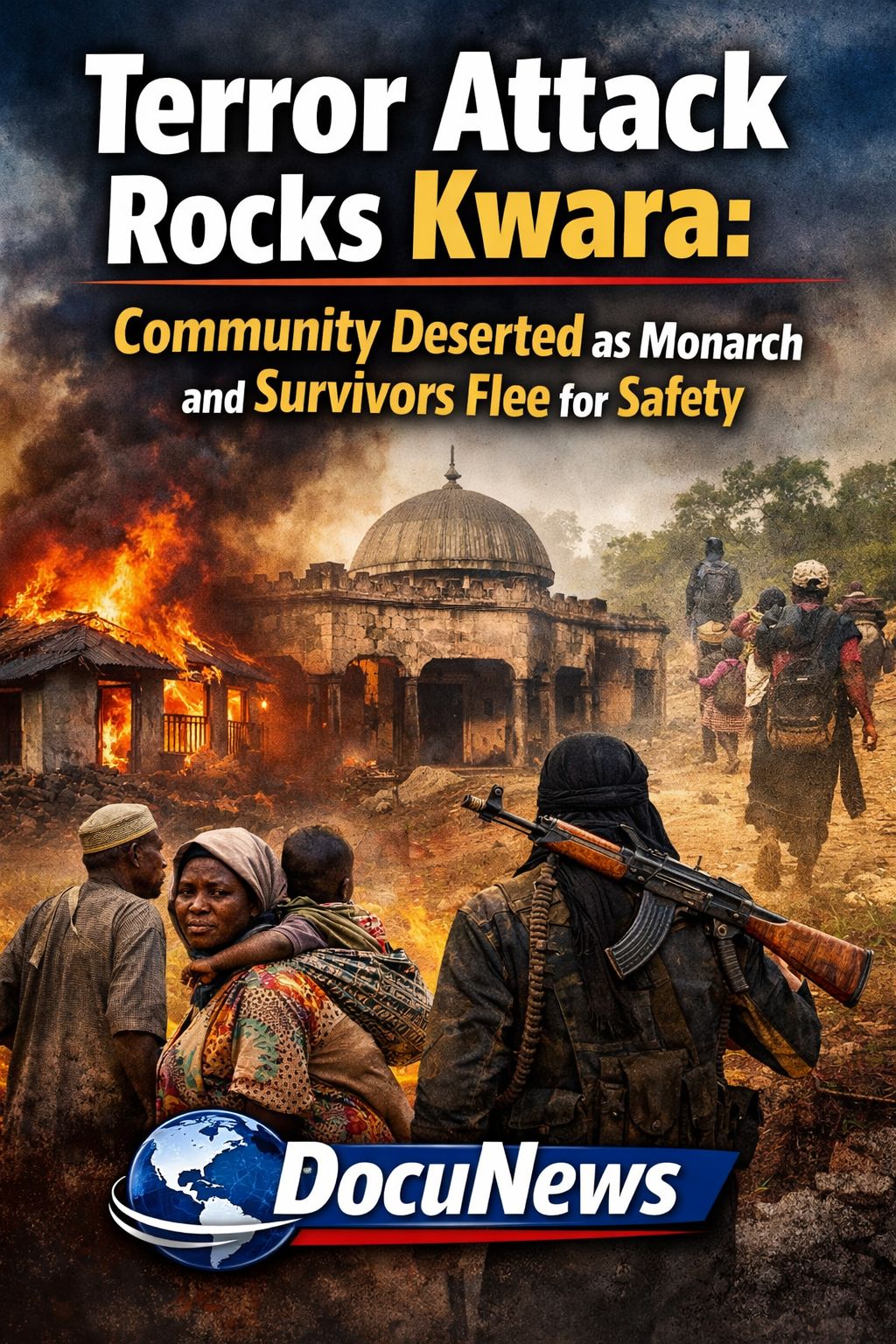
Terror Attack Rocks Kwara: Community Deserted as Monarch and Survivors Flee for Safety has become one of the most disturbing security developments in North-Central Nigeria this year, leaving behind shattered homes, grieving families, and a region struggling to recover from sudden violence. What began as a quiet rural evening quickly descended into chaos as heavily armed extremists stormed peaceful villages, forcing residents to abandon everything they owned while fleeing for their lives. Today, once-busy settlements stand eerily silent, their streets empty, their markets closed, and their people scattered across neighboring towns and forests.
The coordinated assault unfolded between February 3 and February 4, 2026, in Woro and Nuku communities located in Kaiama Local Government Area of Kwara State. According to eyewitnesses, attackers arrived late at night on motorcycles and pickup vehicles, firing continuously as they advanced. Within hours, houses burned, shops collapsed into ashes, and families became separated in the darkness. The violence marked a painful turning point for communities that had previously avoided large-scale terror incidents.
As fear spread rapidly, survivors escaped through farmlands and bush paths, carrying children on their backs and guiding elderly relatives through rough terrain. Even the traditional ruler fled alongside residents, a symbolic moment that highlighted the gravity of the crisis and the complete breakdown of local security.
For Photo Credit Visit Disclaimers: Use Of AI Images In Our Newsletters
Villages Reduced to Ghost Settlements
Initially, many residents believed the gunshots would fade like distant disturbances they had heard before. However, the sound grew louder, and panic soon followed. Militants moved aggressively from street to street, forcing doors open and setting buildings ablaze. Families scattered in different directions while screams echoed across the villages. Some villagers hid inside unfinished buildings, while others crawled through tall grass in desperate attempts to remain unseen.
Community members later explained that the attackers operated with frightening coordination. They blocked escape routes, destroyed food stores, and chased fleeing residents deep into surrounding forests. In several areas, villagers were rounded up in open spaces before gunmen opened fire. By morning, bodies lay across compounds and farmlands, leaving survivors emotionally broken and physically exhausted.
Local volunteers and humanitarian sources estimate that more than 160 people lost their lives during the raid, although search efforts continue, and the final figure may rise. Entire households disappeared overnight, leaving relatives in neighboring communities searching for missing loved ones. The destruction also wiped out years of hard-earned progress in agriculture, education, and small business development.
Traditional Palace Destroyed as Monarch Escapes
The attack did not spare cultural institutions. Parts of the traditional palace were burned, destroying artifacts and documents that represented generations of heritage. At first, conflicting reports emerged about the monarch’s whereabouts. Later confirmations revealed that he escaped through bush routes with assistance from villagers, narrowly avoiding capture.
Traditionally, royal palaces symbolize protection, unity, and leadership. Their destruction deeply affected residents, who now feel stripped of both physical safety and cultural identity. Schools, health centers, mosques, churches, and market stalls also suffered damage, leaving communities without essential services.
The monarch’s escape reinforced how indiscriminate the attack was. No one received special protection. Children, farmers, traders, and elders all faced the same danger, further deepening the sense of abandonment felt by survivors.
Read Also Top 10 Herbal Remedies in Nigeria | DocuNews Central
Survivors Flee as Displacement Grows
By daylight, displaced residents emerged slowly from hiding. Some walked for hours to nearby towns, relying on strangers for water and transportation. Others arrived barefoot, weak from hunger and shock. Women and children made up the majority of those fleeing, while several families remain separated as relatives continue searching across shelters and neighboring villages.
Many survivors abandoned livestock, crops, and household belongings during their escape. As a result, food insecurity now threatens hundreds of displaced households. Temporary shelters have formed in nearby communities, but resources remain stretched. Clean water supplies run low, medical clinics struggle to manage wounded victims, and relief materials arrive in limited quantities.
Local volunteers, faith groups, and youth organizations provide support where possible, yet the growing number of displaced persons overwhelms available assistance. Aid workers warn that without rapid intervention, disease outbreaks and malnutrition could emerge.
Government Reaction and Military Deployment
Following widespread outrage, President Bola Ahmed Tinubu ordered immediate military deployment to affected areas, while Kwara State Governor Abdulrahman Abdulrazaq condemned the attack and promised justice for victims. Security forces increased patrols across Kaiama and surrounding districts, aiming to prevent further incursions.
Nevertheless, survivors insist help arrived too late. Many believe faster response could have saved lives. Regional analysts also warn that extremist groups increasingly exploit rural isolation, moving operations beyond traditional conflict zones.
International observers continue monitoring the situation. According to Africa News, Nigeria faces expanding militant threats across central regions, while humanitarian agencies urge sustained security presence and community engagement.
Humanitarian Needs Continue to Rise
Displacement has created a mounting humanitarian crisis. Children sleep on classroom floors. Mothers line up for drinking water. Elderly survivors wait hours for treatment. Medical teams struggle to treat gunshot wounds and trauma-related conditions.
Organizations such as the International Committee of the Red Cross emphasize urgent support for internally displaced families, stressing the importance of food, shelter, psychosocial care, and long-term rehabilitation.
Meanwhile, community leaders call for coordinated relief efforts that prioritize dignity and sustainability, rather than temporary handouts.
you may have missed this “He Sacked Me for Speaking Out” — Ex-Soldier Accuses Army General Jamilu Sarham After Boko Haram Kills 117 Troops
Eyewitness Accounts Reveal Deep Trauma
Survivors continue sharing painful stories. One mother described carrying her wounded child across a stream under cover of darkness. A farmer recalled watching his house burn before escaping with nothing but the clothes he wore. Another resident hid inside tall grass for hours while gunfire echoed nearby.
These accounts highlight emotional wounds that may take years to heal. Local leaders now advocate trauma counseling alongside material aid, emphasizing that psychological recovery matters as much as physical rebuilding.
Economic and Educational Setbacks
Agriculture serves as the backbone of Kaiama communities. Unfortunately, the attack disrupted planting seasons and destroyed stored produce, threatening regional food supplies. Children also remain out of school as teachers fled and buildings suffered damage.
If stability does not return soon, education gaps will widen, and youth vulnerability may increase, creating conditions extremist groups often exploit.
Calls for Accountability and Long-Term Solutions
Civil society organizations demand transparent investigations and prosecution of perpetrators. Faith leaders organize peace prayers while urging restraint. Youth groups advocate stronger border controls and improved intelligence sharing.
Security experts recommend mobile patrols, community policing, and economic empowerment programs to address root causes of extremism. They also stress rebuilding trust between residents and authorities.
National Reflection After the Tragedy
The Kwara terror attack forces Nigeria to confront harsh realities about rural safety and emergency preparedness. Entire villages now stand empty. Families mourn loved ones. Children carry invisible trauma. Yet amid sorrow, resilience persists.
For ongoing updates, survivor interviews, and deeper investigative coverage, readers are encouraged to follow DocuNews Central, where developments continue to be tracked closely.
Background information on the wider context of the violence can also be found through Wikipedia’s overview of the 2026 Kwara attacks.
Conclusion
Terror Attack Rocks Kwara: Community Deserted as Monarch and Survivors Flee for Safety will remain etched in national memory as a moment of profound loss and awakening. The tragedy exposes deep security gaps while reminding Nigerians of the human cost behind headlines.
With decisive leadership, humanitarian commitment, and community-driven recovery, rebuilding remains possible. However, failure to act risks repeating this devastation elsewhere.
Nigeria stands at a crossroads. The choices made now will shape the safety of rural communities for years to come.
For Security Updates In Nigeria Visit Security updates Nigeria