


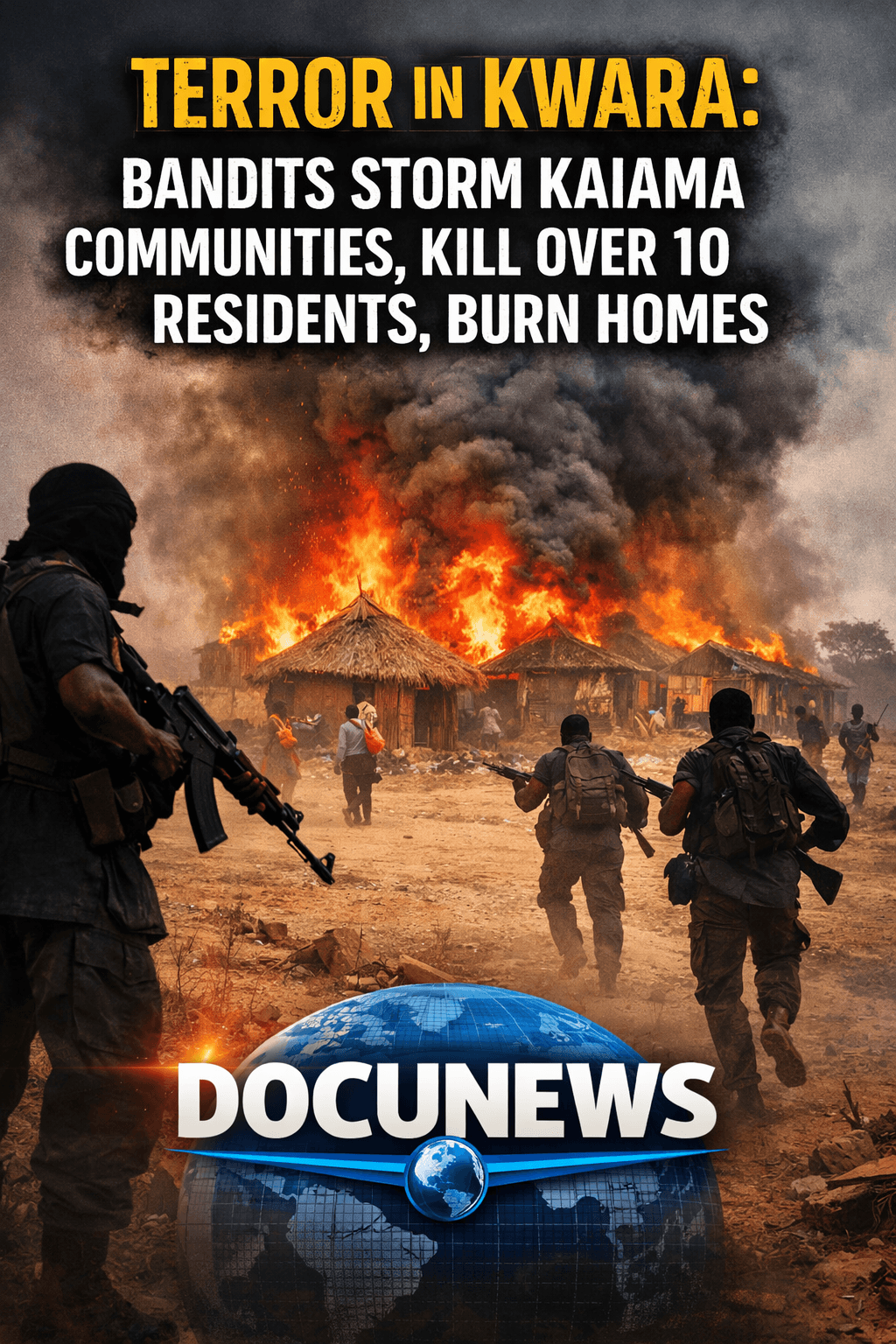
Photo Credit Visit Disclaimers: Use Of AI Images In Our Newsletters
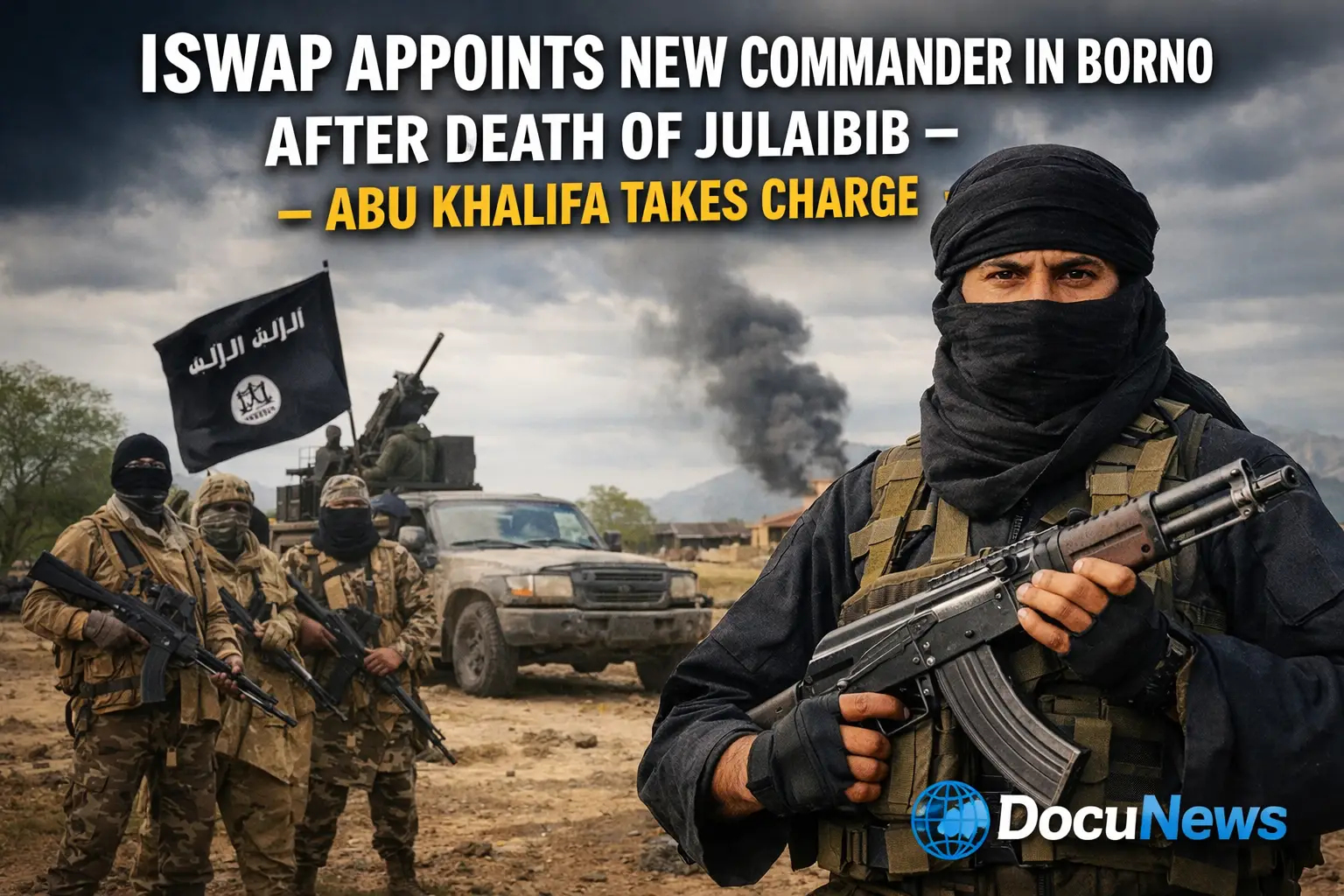
Terror in Kwara: Bandits Storm Kaiama Communities, Kill Over 10 Residents, Burn Homes has plunged northern Kwara State into grief after heavily armed bandits invaded peaceful villages, killed civilians, destroyed homes, and forced families to flee. The violent raid shattered daily life in farming communities and renewed nationwide concern over Nigeria’s worsening rural insecurity.
The deadly invasion occurred on Tuesday evening, February 3, 2026, in Woro and Nuku villages within Kaiama Local Government Area of Kwara State. According to eyewitness accounts, attackers arrived around 6:00 p.m., firing gunshots into residential compounds while residents scrambled for safety. Within minutes, panic spread as people abandoned homes, farms, and personal belongings to escape into nearby bushes.
A Coordinated Assault That Left Communities Devastated
Residents described a terrifying sequence of events. First came distant gunfire. Moments later, motorcycles sped through narrow paths as armed men poured into the villages from multiple directions. The attackers moved aggressively from house to house, shooting sporadically and issuing threats. As smoke rose from burning rooftops, villagers ran in different directions, many carrying children or elderly relatives on their backs while others crawled through farmland to avoid detection.
Eyewitnesses estimated that close to 200 bandits participated in the raid, operating freely for more than an hour before security operatives reached the area. Poor road networks and difficult terrain delayed emergency response, giving the attackers enough time to inflict maximum damage. Several buildings were destroyed, including shops and parts of the Emir of Woro’s palace, leaving visible scars across the community.
For more Security Updates In Nigeria Visit Security updates Nigeria
Confirmed Deaths and Widespread Destruction
Local authorities confirmed that more than ten residents lost their lives during the attack, although community leaders fear the death toll could rise as search efforts continue. Dozens of houses were reduced to ashes, while food supplies, clothing, and farming tools were completely destroyed. Families who survived now face homelessness and uncertainty, relying on neighboring villages for shelter and assistance.
Security officials acknowledged the incident and said joint patrols involving police and military personnel had begun across Kaiama and surrounding areas. However, residents insist that stronger preventive measures are needed to stop future invasions.
For broader reporting on armed violence across Nigeria, Reuters provides ongoing coverage here: https://www.reuters.com/world/africa/
Government Reaction and Rising Public Anger
The Kwara State Government condemned the attack and expressed sympathy for affected families. Governor AbdulRahman AbdulRazaq directed security agencies to intensify operations in vulnerable communities and promised support for displaced residents. Despite these assurances, opposition parties and civil society groups criticized what they described as slow intervention and insufficient rural protection.
The Peoples Democratic Party urged federal authorities to establish permanent security posts in border communities, warning that temporary patrols would not deter organized bandit groups. Human rights organizations have also raised alarms about Nigeria’s growing insecurity, noting that rural populations remain especially exposed. Human Rights Watch continues to document these trends at https://www.hrw.org.
Why Kaiama Remains Exposed to Armed Attacks
Kaiama lies close to forest corridors linked to Borgu National Park, an area long suspected to serve as a hideout for criminal gangs. The dense vegetation allows attackers to move unnoticed, launch raids, and retreat quickly. In addition, limited surveillance infrastructure and weak telecommunications make early warning difficult, leaving residents vulnerable.
Security analysts argue that intelligence sharing between local communities and federal agencies must improve. They also stress the need for modern equipment and rapid-response units. The International Crisis Group offers detailed regional security assessments at https://www.crisisgroup.org.
Survivors Recount Moments of Fear and Loss
Many survivors shared heartbreaking stories. One mother said she ran barefoot through farmland while clutching her infant as bullets echoed behind her. Another resident recalled hiding behind cassava plants, watching flames consume his home. Several elderly villagers collapsed from exhaustion after hours in the bush and later required medical attention.
Children who witnessed the violence now struggle with sleep and concentration, while parents worry about long-term trauma. Community volunteers and faith groups have begun offering basic counseling, although professional mental health support remains limited.
You may have missed this Zamfara Attack Latest Updates on Killings and government Response
Humanitarian Needs Grow as Families Displaced
Displaced families currently shelter in nearby towns, depending on donations for food, blankets, and clean water. Medical volunteers treat injuries, while community leaders organize temporary accommodation. Aid groups warn that prolonged displacement could deepen poverty if support does not arrive quickly.
The International Organization for Migration tracks internal displacement nationwide and highlights urgent needs at https://www.iom.int. Relief workers emphasize that trauma care must accompany material assistance to help survivors rebuild their lives.
Economic Fallout Hits Farming Communities Hard
Kaiama residents rely heavily on agriculture for survival. Since the attack, many farmers have abandoned fields, livestock have scattered, and local markets have closed. Transport operators have suspended services, cutting off trade routes. If farming activities fail to resume soon, food shortages may follow, worsening hardship across the region.
Banditry Spreads Across North-Central Nigeria
Once concentrated in the North-West, bandit networks now operate across parts of Niger, Kwara, and Kogi states. These groups exploit unemployment, weak governance, and porous borders. Security experts insist that military action alone will not solve the problem, calling instead for education investment, youth empowerment, and rural development.
BBC Africa provides continuous coverage of regional security issues at https://www.bbc.com/news/world/africa.
Security Agencies Launch Manhunt as Residents Demand Justice
Following the deadly assault, security agencies began coordinated patrols across Kaiama and neighboring communities. Soldiers and police officers established temporary checkpoints while aerial surveillance was reportedly requested to track fleeing attackers. Meanwhile, residents urged authorities to move beyond symbolic deployments and pursue a sustained manhunt that targets bandit camps hidden within forest corridors.
Community representatives also called for intelligence-driven operations, noting that locals often spot strange movements days before attacks. However, fear of retaliation prevents many from speaking out. As a result, security experts now recommend anonymous tip systems and closer collaboration between villagers and law enforcement. Analysts further warned that rapid-response units must remain in Kaiama for several weeks, not days, because attackers often regroup once security presence fades.
Read more Kaduna banditry update: How armed groups attacked villages this week
Traditional Rulers Step Forward to Calm Tensions
In the aftermath, traditional leaders organized emergency meetings aimed at calming displaced residents and discouraging reprisals. Clerics and community elders encouraged unity, stressing that revenge attacks would only deepen suffering. Instead, they appealed for collective resilience and cooperation with authorities. These engagements helped reduce panic while reinforcing the importance of peaceful recovery.
The Emirate council also initiated dialogue with youth groups to prevent misinformation from spreading across social media platforms. Local leaders emphasized that panic narratives often worsen trauma and undermine rebuilding efforts. Across Nigeria, traditional institutions increasingly play frontline roles during crises, using their influence to restore order at grassroots levels.
Psychological Trauma Shadows Survivors
Beyond physical destruction, emotional wounds continue to surface. Parents report recurring nightmares among children. Elderly residents relive gunshots in their sleep. Many survivors now startle at loud noises, fearing another invasion. Mental health professionals warn that untreated trauma could linger for years, affecting productivity, education, and family stability.
Health advocates urge state governments to integrate trauma counseling into emergency response programs. International agencies also recommend mobile clinics for crisis-affected villages. The World Health Organization outlines trauma recovery strategies at https://www.who.int.
Women and Children Bear the Heaviest Burden
Women now shoulder responsibility for displaced households while struggling to secure food and shelter. Many lost cooking utensils, clothing, and savings during the fires. Some pregnant women missed antenatal appointments after fleeing their homes. Children face interrupted schooling as classrooms close and families relocate.
Teachers worry that prolonged absence could increase dropout rates, especially among teenage girls. Education advocates emphasize that emergency learning spaces should be created quickly to keep students engaged. UNICEF highlights child protection needs during conflicts at https://www.unicef.org.
Economic Shockwaves Spread Beyond Kaiama
The attack also disrupted regional trade. Farmers who supplied grains and vegetables to nearby towns suspended harvest activities. Transporters avoided rural routes, citing safety concerns. Consequently, market prices began rising within days. Small business owners reported losses after shops burned or customers disappeared.
Economic analysts warn that continued instability could reverse months of local development progress. They argue that rebuilding must include microfinance support and agricultural recovery grants. Without such intervention, poverty levels may deepen across surrounding communities.
Security Experts Urge Structural Reforms
Security professionals believe Nigeria must rethink rural protection strategies. They advocate community policing, drone surveillance, and permanent forward operating bases in high-risk zones. Furthermore, analysts stress that intelligence gathering should start at village level. When residents feel safe sharing information, attacks become easier to prevent.
The Nigerian Institute of International Affairs regularly publishes policy recommendations on internal security at https://niia.gov.ng.
Youth Leaders Call for Employment Programs
Youth representatives argue that job creation could reduce recruitment into criminal networks. Many bandit groups exploit idle young men by offering quick money. Skill acquisition centers, vocational training, and agricultural cooperatives could redirect vulnerable youth toward productive livelihoods. Development economists agree that security efforts must pair with economic opportunity to achieve lasting peace.
Faith-Based Organizations Mobilize Relief
Churches and mosques across Kwara began collecting donations for displaced families. Volunteers distributed food, clothing, and toiletries while coordinating temporary housing. Religious leaders also organized prayer sessions, encouraging hope amid despair. Their involvement strengthened community solidarity during a painful period.
National Debate Intensifies Over Rural Safety
The Kaiama attack reignited national conversation about rural security. Lawmakers renewed calls for increased defense budgets and improved police recruitment. Some legislators proposed constitutional amendments allowing states greater control over policing, while others emphasized border monitoring and arms trafficking prevention.
Media’s Role in Accountability
Accurate reporting plays a vital role in ensuring transparency. Journalists who document rural violence help amplify forgotten voices and pressure authorities to act. Independent platforms continue highlighting insecurity trends, ensuring policymakers cannot ignore affected communities.
For verified reporting and investigative coverage, readers can follow DocuNews Central.
Long-Term Recovery Requires Coordinated Action
Recovery will demand cooperation between federal agencies, state authorities, humanitarian organizations, and community leaders. Rebuilding homes must go hand in hand with restoring livelihoods and strengthening security infrastructure. Experts also emphasize land restoration, school rehabilitation, and healthcare access as pillars of stability.
Conclusion
The brutal bandit attack on Kaiama communities stands as a painful reminder of Nigeria’s ongoing rural security crisis. Lives were lost, homes burned, and families scattered. Yet amid devastation, resilience emerged as neighbors supported one another and leaders mobilized relief.
Moving forward, authorities must sustain security operations, prioritize intelligence gathering, and address socioeconomic drivers of violence. At the same time, humanitarian assistance must reach every displaced household. Although healing will take time, collective commitment can restore hope.
With decisive leadership, community cooperation, and national resolve, Kaiama can rebuild stronger than before. For continuous updates and trusted reporting, visit DocuNews Central.