




Terrorists from Mali and Burkina Faso Storm Nigeria, Triggering U.S. Military Action.
Terrorists from Mali and Burkina Faso Storm Nigeria, Triggering U.S. Military Action
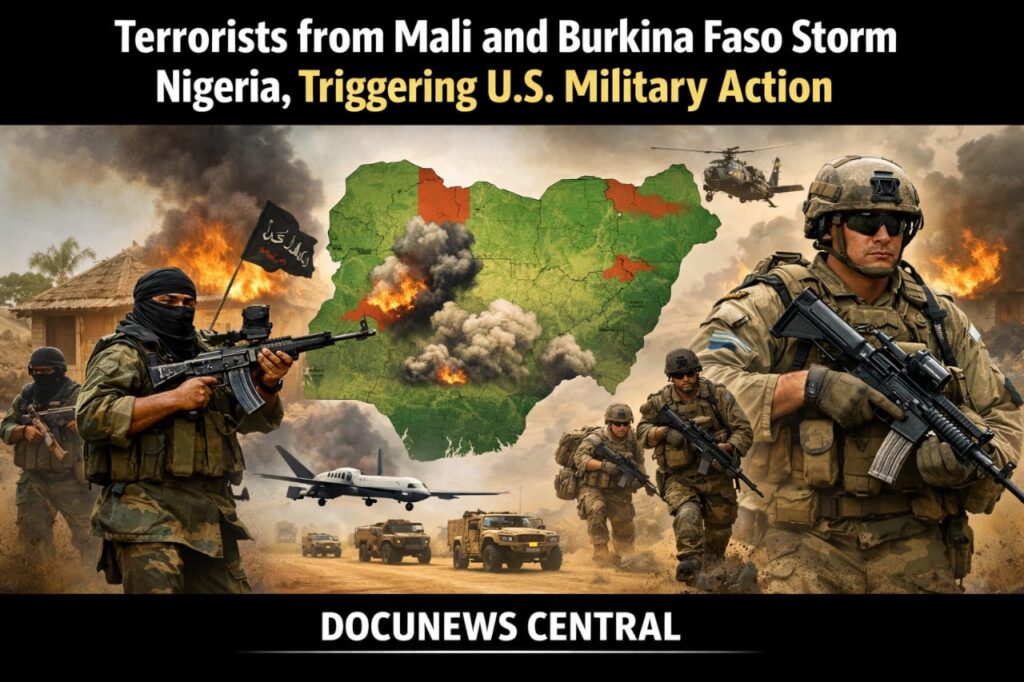
Terrorists from Mali and Burkina Faso Storm Nigeria, Triggering U.S. Military Action. Fresh revelations from top military sources have confirmed that armed terrorists from Mali and Burkina Faso infiltrated Nigeria with plans to carry out coordinated attacks across four states in the North-West region. However, before the plot could unfold, decisive military action was taken. Acting on credible intelligence, the United States Navy, working in close coordination with the Nigerian Armed Forces, launched precision strikes that successfully neutralized key terrorist targets.
This development has not only exposed the expanding reach of Sahel-based terror networks but has also highlighted the growing urgency of regional and international cooperation in addressing cross-border insecurity. More importantly, it has reinforced Nigeria’s resolve to prevent foreign-backed militant violence from taking root within its borders. Read also “We Hit Them Hard”: Trump Confirms Lethal Military Strike Against Islamic State in Nigeria here at www.docunewscentral.com
Foreign Terrorists Cross Borders Into Nigeria
According to senior security officials, the infiltrating fighters moved into Nigeria from neighboring Mali and Burkina Faso through porous border routes. These militants reportedly belonged to foreign-linked terror factions that have remained active across the Sahel region for years. Their objective, intelligence sources revealed, was to strike communities in Sokoto, Zamfara, Niger, and Katsina states simultaneously.
The planned attacks were expected to target rural settlements, security formations, and civilian population centers. Analysts believe the timing was deliberate. With the festive season approaching, the terrorists aimed to exploit reduced vigilance and create mass fear among civilians.
However, Nigerian intelligence agencies, working alongside international partners, detected the movement early. Surveillance data confirmed a large convergence of armed fighters assembling at identified locations within North-West Nigeria. As a result, urgent countermeasures were initiated.
Why the U.S. Military Became Involved
Following the intelligence breakthrough, Nigerian authorities sought technical and operational support from the United States. This decision followed existing bilateral security cooperation agreements between both nations. Consequently, a joint operational plan was developed to disrupt the terror cells before they could strike.
U.S. naval assets positioned in international waters provided long-range strike capabilities, while advanced drone surveillance supported target verification. Importantly, Nigerian forces remained actively involved throughout the operation, supplying real-time intelligence and post-strike ground assessments.
Military officials emphasized that the strikes strictly targeted confirmed terrorist camps and logistics hubs. Civilian structures were deliberately avoided to prevent collateral damage. This careful planning, officials said, ensured compliance with international law and Nigeria’s sovereignty.
Precision Strikes Neutralize Terror Threat
The coordinated strikes, carried out with high-precision weaponry, successfully destroyed multiple terrorist locations. According to military assessments, several high-value targets were eliminated during the operation. Additionally, weapons stockpiles, communication equipment, and supply routes used by the militants were dismantled.
Following the strikes, Nigerian ground forces launched mop-up operations across affected areas. These operations focused on clearing remnants of the terror cells and preventing any regrouping attempts. Security patrols were also intensified across border communities.
Military commanders described the mission as “highly successful,” noting that the planned attacks were effectively neutralized before execution. They further stated that intelligence monitoring continues to ensure long-term stability.
The Sahel Crisis and Its Spillover Into Nigeria
The infiltration underscores a broader regional challenge. Over the past decade, Mali and Burkina Faso have struggled with escalating insurgency fueled by extremist groups exploiting weak governance and porous borders. As pressure increases in the Sahel, these groups have increasingly attempted to expand southward.
Security analysts have repeatedly warned that Nigeria’s North-West region faces heightened risk due to its proximity to the Sahel. Without strong border enforcement, terror networks find opportunities to move fighters, weapons, and supplies across countries.
This latest incident confirms those warnings. It also demonstrates how instability in one region can rapidly affect neighboring states if left unchecked.
Impact on Affected Nigerian States
For residents of Sokoto, Zamfara, Niger, and Katsina states, the operation has brought mixed reactions. While many welcomed the swift intervention, concerns remain about possible retaliation by surviving militants.
Authorities have therefore urged residents to remain vigilant and cooperate with security agencies. Community leaders have also been encouraged to report suspicious movements promptly. Meanwhile, security deployments across the four states have been strengthened.
Government officials assured citizens that measures are in place to protect civilians and prevent any resurgence of terrorist activity.
Growing Importance of Nigeria–U.S. Security Cooperation
The operation has highlighted the evolving nature of Nigeria’s counterterrorism strategy. Rather than relying solely on domestic resources, authorities are increasingly leveraging international partnerships to address complex threats.
Officials from the Ministry of Foreign Affairs confirmed that the collaboration followed established diplomatic channels. They stressed that Nigeria remains in full control of its security decisions, with foreign support serving a complementary role.
Experts believe this model of cooperation may become more common as terrorist networks adopt transnational tactics.
Potential Risks Going Forward
Despite the success of the strikes, security analysts caution that risks remain. Terror groups often adapt quickly after setbacks. As a result, there is concern that militants may attempt smaller, decentralized attacks or shift operations to other regions.
Additionally, humanitarian agencies are monitoring possible displacement in border communities, as fear of further violence could force residents to flee. Authorities have been advised to prepare contingency plans.
Nevertheless, officials remain confident that sustained intelligence-driven operations will reduce these risks significantly.
What Nigerians Should Expect Next
- Increased military patrols across border areas
- Enhanced aerial and ground surveillance
- Stronger intelligence sharing with regional partners
- Continued community engagement and public awareness campaigns
Security agencies have reiterated their commitment to staying ahead of emerging threats. Citizens have also been encouraged to remain calm while cooperating fully with lawful security measures.
Conclusion
The attempted infiltration of terrorists from Mali and Burkina Faso into Nigeria marks a serious escalation in regional security threats. However, the swift and coordinated response by Nigerian forces and the United States military prevented what could have been devastating attacks across four states.
This operation serves as a strong signal that Nigeria will not tolerate foreign-backed terrorism on its soil. It also reinforces the importance of regional stability, proactive intelligence, and international cooperation in confronting modern security challenges.
As vigilance continues, the focus now shifts to sustaining security gains, protecting civilians, and addressing the root causes of cross-border extremism.
— DocuNews Central
External Reference:
Vanguard Nigeria | Council on Foreign Relations

One thought on “Terrorists from Mali Burkina Faso Storm Nigeria, Triggering U.S. Military Action”