





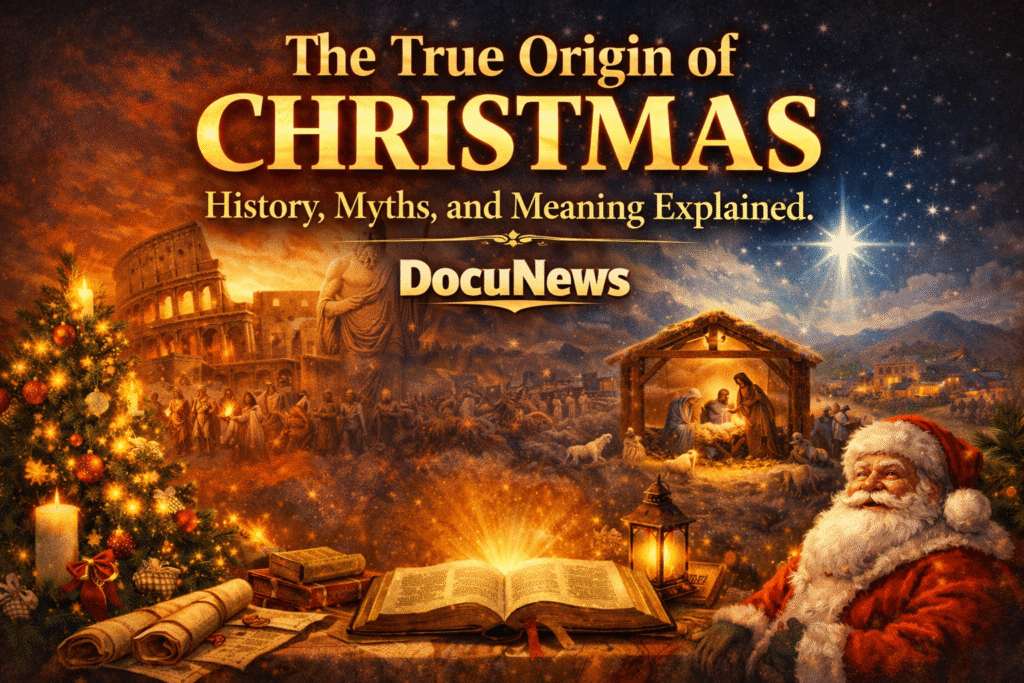
The True Origin of Christmas: History, Myths, and Meaning Explained.
The True Origin of Christmas: History, Myths, and Meaning Explained.
Christmas stands as one of the most widely celebrated events in the world. Every year, millions decorate homes, exchange gifts, sing carols, and gather with family. However, despite its popularity, many people still ask a crucial question: where did Christmas truly come from? While some believe it began directly with the birth of Jesus Christ, others argue that it grew from older pagan traditions. Therefore, understanding the true origin of Christmas requires careful historical, cultural, and religious examination.
In this detailed analysis, we will explore the ancient world, early Christianity, biblical records, and cultural adaptations. Moreover, we will separate well-known myths from verifiable historical facts. Most importantly, we will explain the deeper meaning behind Christmas and why it continues to shape faith, culture, and global traditions today.
Understanding the World Before Christmas
To understand Christmas clearly, we must first examine the world before Christianity. Long before the birth of Jesus, ancient civilizations already celebrated seasonal festivals. These events often marked the winter solstice, which usually occurred around late December. During this time, people noticed that days began to grow longer again. As a result, many cultures associated the season with hope, renewal, and the victory of light over darkness.
For example, the Romans observed Saturnalia, a festival honoring Saturn, the god of agriculture. This celebration involved feasting, gift-giving, and social role reversals. Similarly, in Northern Europe, Germanic tribes celebrated Yule, which focused on rebirth, nature, and survival during harsh winters. Consequently, these traditions later influenced how people celebrated seasonal festivals.
However, it is essential to note that these celebrations did not involve Jesus Christ. Instead, they reflected agricultural cycles and human survival instincts. Therefore, when Christianity later spread across the Roman Empire, it encountered deeply rooted cultural practices.
For more background on ancient Roman festivals, you can read this detailed overview from Encyclopedia Britannica.
The Birth of Jesus: What the Bible Actually Says
One of the most debated questions about Christmas concerns the birth date of Jesus Christ. Interestingly, the Bible does not specify an exact date for Jesus’ birth. The Gospel accounts in Matthew and Luke describe the circumstances of his birth, yet they omit any calendar reference. Therefore, claims that Jesus was born on December 25 lack direct biblical support.
Luke’s Gospel mentions shepherds watching their flocks at night. Some scholars argue that this detail suggests a warmer season, possibly spring or early autumn. Nevertheless, biblical texts focus more on the significance of Jesus’ arrival than on precise timing. Consequently, early Christians did not initially celebrate Jesus’ birthday.
Instead, early believers emphasized Jesus’ death and resurrection. Passover and Easter held far greater importance within early Christian communities. Only centuries later did church leaders begin to consider a formal celebration of Christ’s birth.
You can explore the biblical narratives directly through Bible Gateway’s Luke 2 passage.
Why December 25 Became Associated with Christmas
The association of Christmas with December 25 developed gradually. By the fourth century, Christianity had gained legal status in the Roman Empire. Church leaders then faced the challenge of guiding new converts away from pagan customs. Therefore, they often reinterpreted existing festivals rather than abolishing them entirely.
December 25 already carried significance in Roman culture. Around this date, Romans celebrated the birthday of Sol Invictus, the “Unconquered Sun.” Since Christians viewed Jesus as the “Light of the World,” church leaders found symbolic value in aligning Christ’s birth with a festival of light. As a result, December 25 emerged as a practical and theological choice.
Importantly, this decision did not mean that Christianity adopted pagan worship. Instead, church leaders redirected cultural attention toward Christ. Over time, the meaning of the date shifted dramatically. Consequently, many former pagan celebrations faded while Christian theology took center stage. read also Explosion Rocks Mosque in Borno Market; Worshippers Died here at docunewscentral.com
Common Myths About Christmas Origins
Several myths surround the origin of Christmas, and these misconceptions often create confusion. One common claim suggests that Christmas directly copies pagan rituals. However, historical evidence shows a more complex process. Christianity did not simply borrow pagan practices wholesale. Rather, it transformed cultural elements to communicate its message more effectively.
Another myth claims that Christmas has no Christian meaning at all. This argument ignores centuries of theological development, liturgical practice, and spiritual reflection. Although cultural customs evolved, the central theme of Christ’s incarnation remained consistent within Christian teaching.
Additionally, some people argue that celebrating Christmas contradicts Christian faith. Yet, many Christian traditions view Christmas as an opportunity to reflect on humility, sacrifice, and divine love. Therefore, dismissing Christmas entirely overlooks its spiritual significance for millions of believers.
For a balanced historical discussion, see this article from History.com.
The Evolution of Christmas Traditions
As Christianity spread across Europe, Christmas traditions adapted to local cultures. Over time, various customs emerged, each adding layers of meaning and symbolism. For instance, gift-giving drew inspiration from the biblical account of the Magi. These wise men presented gifts to the infant Jesus, symbolizing honor and recognition.
Similarly, evergreen trees became popular symbols of life and hope. During winter, when most plants appeared lifeless, evergreens remained vibrant. Therefore, Christians adopted them as reminders of eternal life through Christ. Although the Christmas tree has pre-Christian roots, its Christian symbolism developed later.
Carols also evolved during the Middle Ages. These songs helped communicate biblical stories to largely illiterate populations. Consequently, music became a powerful teaching tool. Over centuries, carols blended theology, storytelling, and cultural expression.
For related cultural insights, you may find our internal guide helpful: History of Christian Traditions.
Santa Claus: From Saint to Symbol
Another prominent figure associated with Christmas is Santa Claus. Contrary to popular belief, Santa did not originate as a fictional character. Instead, he evolved from Saint Nicholas, a fourth-century Christian bishop known for generosity. Saint Nicholas lived in what is now Turkey and gained a reputation for helping the poor.
Over time, stories about Saint Nicholas spread throughout Europe. Different cultures adapted his image and name. Eventually, Dutch settlers brought the tradition of “Sinterklaas” to America. Thereafter, commercial influences reshaped his appearance into the modern Santa Claus figure.
Although Santa Claus now represents commercial aspects of Christmas, his roots trace back to charitable Christian values. Therefore, understanding his origin reveals how cultural storytelling evolves over time.
Theological Meaning of Christmas
At its core, Christmas celebrates the incarnation of Jesus Christ. According to Christian belief, God entered human history in a humble form. This concept emphasizes love, humility, and redemption. Therefore, Christmas carries deep theological meaning beyond decorations and festivities.
The incarnation teaches that divine love reaches humanity directly. Rather than remaining distant, God chose to experience human life. Consequently, Christmas highlights compassion, sacrifice, and hope. These values continue to inspire believers worldwide.
Many Christian leaders encourage focusing on these principles during Christmas. Acts of kindness, charity, and forgiveness align closely with the message of Christ’s birth. Thus, Christmas offers an opportunity for spiritual reflection and personal growth.
Commercialization and Modern Challenges
In modern times, commercialization has reshaped Christmas significantly. Retail marketing often emphasizes spending, luxury, and material success. As a result, some people feel disconnected from the original meaning of the holiday. Nevertheless, awareness allows individuals to make intentional choices.
Families and communities can reclaim meaningful traditions by prioritizing relationships and service. Volunteering, sharing meals, and supporting those in need help restore balance. Therefore, Christmas can still reflect its deeper values despite modern pressures.
For practical ways to celebrate meaningfully, see our internal article: Celebrating Christmas with Purpose.
Christmas Across Different Christian Perspectives
Not all Christians view Christmas in the same way. Some denominations celebrate it enthusiastically, while others approach it cautiously. These differences often stem from interpretations of scripture and historical practice. Nevertheless, mutual respect encourages constructive dialogue.
Certain groups focus strictly on biblical instruction and avoid holidays not explicitly commanded in scripture. Others view Christmas as a cultural observance that honors Christ. Therefore, understanding these perspectives promotes tolerance within the broader Christian community.
Global Celebrations and Cultural Diversity
Christmas traditions vary widely across the globe. In some countries, celebrations emphasize religious services. In others, cultural customs take precedence. For example, in parts of Africa, Christmas includes community gatherings, music, and extended family meals. Meanwhile, European countries often highlight markets and historical rituals.
Despite these differences, common themes unite global celebrations. Joy, generosity, and hope remain central. Consequently, Christmas serves as a unifying cultural and spiritual event.
Separating History From Assumption
When examining Christmas origins, careful distinction between evidence and assumption matters greatly. Historical records, biblical texts, and cultural analysis provide clarity. However, misinformation often spreads through repetition rather than research. Therefore, critical thinking remains essential.
By studying reliable sources and historical context, individuals can form balanced views. This approach reduces unnecessary conflict and promotes understanding. Ultimately, knowledge empowers meaningful discussion.
Why the Origin of Christmas Still Matters
Some people question why the origin of Christmas matters today. After all, modern celebrations differ greatly from ancient practices. Yet, understanding origins helps preserve meaning. When people know the historical and spiritual foundation, they can celebrate with intention.
Furthermore, origin studies reveal how cultures adapt and evolve. Christmas illustrates how beliefs interact with society. Therefore, its history provides valuable insight into human tradition and faith.
Conclusion: Rediscovering the Meaning of Christmas
The true origin of Christmas reflects a complex blend of history, culture, and faith. While ancient festivals influenced timing and customs, Christian theology shaped the celebration’s core meaning. Jesus Christ remains central to Christmas within Christian belief.
By separating myths from facts, we gain a clearer understanding. Moreover, this knowledge encourages respectful dialogue and thoughtful celebration. Ultimately, Christmas invites reflection on love, hope, and purpose.
As each season returns, individuals can choose how they celebrate. Whether through faith, family, or service, Christmas continues to offer profound meaning. Understanding its origin allows that meaning to shine even brighter.
For further reading on religious history, visit Britannica’s Christmas Overview.


ejcassinoapp, pra quem curte jogar no celular, esse app é a pedida! Rápido, fácil de usar e com todos os jogos que a gente ama! Baixa aí o ejcassinoapp.