






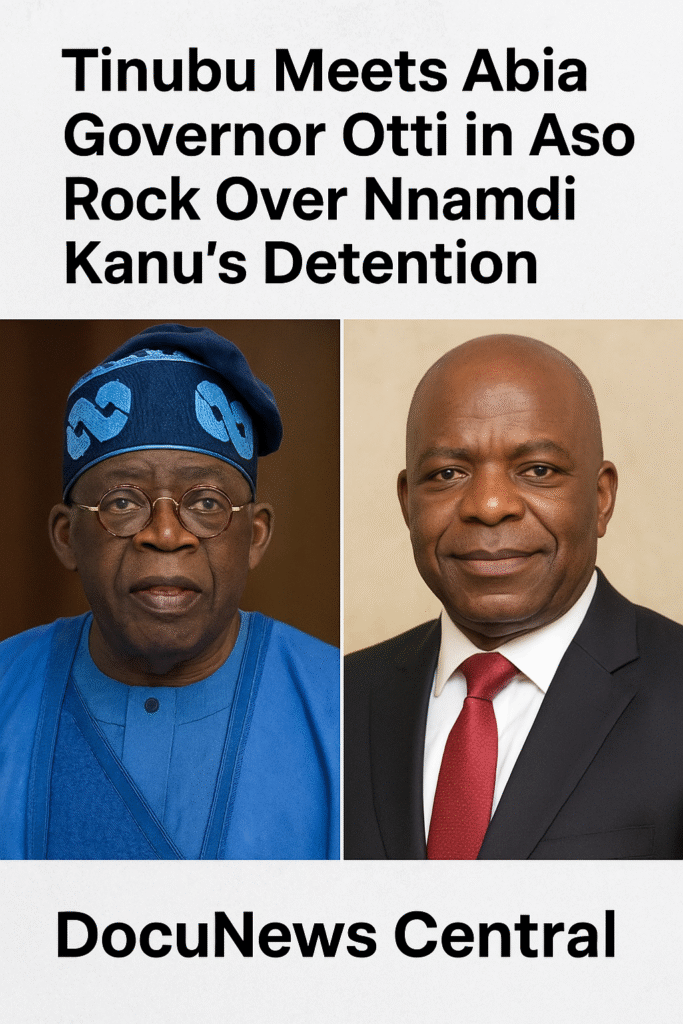
President Bola Ahmed Tinubu held a high-level meeting with Abia State Governor Alex Otti inside the Presidential Villa in Abuja. Although the Presidency did not reveal full details, the conversation focused on security challenges in the South-East, economic plans for Abia State, and the growing calls for the release of Nnamdi Kanu. Because many groups continue to demand a fresh approach, the meeting attracted wide attention across Nigeria.
The visit took place at a sensitive moment. Many organisations in the region have urged the Federal Government to consider a political solution. Some leaders believe such a move can reduce tension in the South-East. Others think it can help calm business activities that have slowed down due to unrest. Therefore, Otti’s meeting with Tinubu created new expectations.
Even though the discussions remained private, reliable sources at the Villa shared hints. According to them, the governor used the opportunity to present concerns from stakeholders in Abia State. Moreover, he asked for deeper cooperation between the Federal Government and the state. Because regional peace remains important to national stability, the meeting carried great weight.
Why the Meeting Matters Now
The South-East has experienced several disruptions in recent years. While the government continues to implement security operations, many residents want long-term solutions. Therefore, Governor Otti’s visit came at the right time. It also came after several public statements from leaders urging dialogue.
At the moment, the call for Nnamdi Kanu’s release is louder than before. Civic groups, traditional rulers, and political leaders have organised meetings. They want the Federal Government to consider a political step that can create peace. Because of these demands, any engagement between Tinubu and Otti sparks interest.
Furthermore, Tinubu’s government has shown a desire to improve national unity. His administration also continues to push for stability across all regions. Therefore, many Nigerians are eager to learn what direction the talks may take. Still, both sides have chosen to keep many details private, perhaps to prevent misinterpretations.
Otti’s Position and Why He Went to Aso Rock
Governor Otti has been vocal about the challenges affecting Abia State. He believes economic development cannot succeed without peace. Because of this, he has frequently called for broader dialogue with the Federal Government.
Likewise, he has argued that business activities in the South-East depend on calm communities. With that concern in mind, he visited Aso Rock to present the views of many groups. He also aimed to show the President how the state intends to partner with the centre.
Although his statements remain cautious, he has repeated that peace is essential. And since Tinubu has shown openness toward inclusive governance, the meeting happened at a convenient time. Consequently, citizens hope for a productive outcome.
Tinubu’s Broader Relationship With the South-East
Since May 2023, Tinubu has stressed national unity. Because of this priority, he has met with several governors from the region. He has also appointed notable figures from the South-East into important roles. These moves show a willingness to build trust.
At the same time, the President continues to manage national security challenges. A recent development was the resignation of the Defence Minister, which you covered here: Defence Minister Mohammed Badaru Abubakar Resigns.
Additionally, the Nigerian Army recently destroyed a Boko Haram tank during an operation, as reported here: Nigerian Army Takes Down Boko Haram, Destroys Their Tank.
These events created more discussions about national security. Because security wins give the government more space to consider political dialogue, observers believe Tinubu may explore diplomatic steps.
What the South-East Leaders Expect
Many leaders from the region are now pushing for long-term peace. They also want more federal projects focused on roads, power, and economic zones. Because the region has suffered from slow investment, they believe improved stability will attract new business.
Traditional rulers have organised peace forums. Civil society organisations have held summits to explore development ideas. Additionally, faith-based groups continue to call for mutual understanding. Because these groups influence large communities, their voices matter.
Several political leaders also argue that the legal process around Kanu should include political considerations. Although the courts continue their work, many citizens view his detention as a major cause of tension. Therefore, they want the President to consider alternatives.
Still, the Federal Government has repeatedly said national security remains a priority. So any decision must respect law, order, and peace.
Reactions After the Meeting
After news of the meeting broke, social media became active. People across Nigeria shared opinions. Many expressed hope that the conversation will lead to a peaceful conclusion. Others asked the President to act with caution. Because the issue is sensitive, some Nigerians want gradual steps instead of sudden decisions.
Several news platforms also analysed the event. International media houses such as BBC News and Al Jazeera continued to follow the story because global media often track Nigerian politics.
Possible Outcomes of the Tinubu–Otti Meeting
- Renewed Dialogue: The government may begin fresh conversations with leaders from the South-East.
- Security Adjustments: The Federal Government may review ongoing operations in the region.
- Economic Initiatives: Tinubu may approve additional projects for Abia State.
- Legal and Political Considerations: The President may discuss the legal path with advisers.
- Stakeholder Engagement: Traditional rulers, youth groups, and civil organisations may join the next round of talks.
Why Nnamdi Kanu’s Case Remains Central
Kanu’s case continues to dominate public conversation in the South-East. His supporters believe he should be released. Many think his freedom can reduce unrest. Additionally, they believe businesses will recover faster if peace returns.
Furthermore, they argue that economic activities in states like Abia, Imo, and Enugu have suffered because of insecurity. Therefore, they want the Federal Government to consider a political step.
Still, the matter is complex. It involves legal issues, security concerns, and regional expectations. Because of this, the government continues to study the situation carefully.
Tinubu has not closed the door to dialogue. He has often stated that unity is essential for national growth. So many observers believe he may explore peaceful options.
What Abia People Expect From Their Governor
Residents of Abia State want development. They also want peace. Because of this, they expect Governor Otti to work closely with the Federal Government.
Many hope his meeting with the President will attract more federal projects. Others want improvements in roads, public services, and job creation. Moreover, some citizens want more security posts to protect rural areas.
Since the governor has already taken steps toward improving infrastructure, people hope for more partnerships. Because federal support can increase progress, the meeting was important.
How the Meeting Could Shape the Region’s Future
The South-East has great economic potential. It has skilled workers, strong trade routes, and active manufacturing hubs. Therefore, peace in the region can benefit the entire country.
If the President and the governor continue discussions, the results could include better business confidence, faster projects, calm communities, improved relations, and increased investment.
Conclusion
Tinubu’s meeting with Governor Otti has created new hope in the South-East. Because the discussions focused on security, development, and the future of Nnamdi Kanu’s case, the talks generated major interest.
Even though the final outcome remains unclear, the meeting shows that both sides are open to dialogue. Since peace benefits everyone, many Nigerians want more communication between the government and the region.
As conversations continue, the public will watch closely. Many people hope the next steps will support unity, progress, and lasting stability.


7 thoughts on “Tinubu Meets Governor Otti in Aso Rock Over Nnamdi Kanu”