


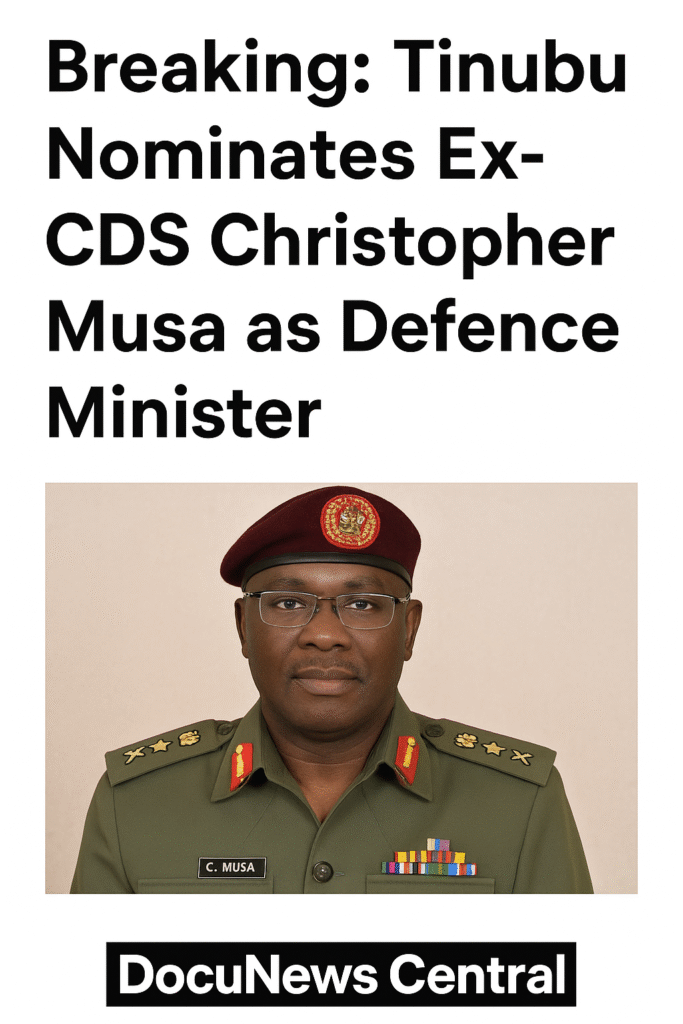
Breaking: Tinubu Nominates Ex-CDS Christopher Musa as Defence Minister
In a major political move, President Bola Tinubu has nominated the immediate past Chief of Defence Staff (CDS), General Christopher Musa, as Nigeria’s new Minister of Defence. This decision marks a significant development in the nation’s security and defence sector.
The nomination follows months of speculation about who would take over the critical role of Defence Minister. General Musa, known for his strategic military insight, has served in various capacities in the Nigerian Armed Forces. His appointment is expected to bring continuity and reform to the ministry.
Profile of General Christopher Musa
General Christopher Musa is a seasoned military officer with decades of experience in Nigeria’s armed forces. He rose through the ranks due to his leadership skills, operational expertise, and dedication to national security. As the immediate past CDS, Musa played a crucial role in shaping military strategies, overseeing operations, and coordinating joint exercises.
His tenure as CDS saw several initiatives aimed at modernizing the army and enhancing operational efficiency. Analysts believe that his appointment as Defence Minister will help translate military experience into policy, bridging the gap between strategy and governance. For context, see the recent [resignation of Defence Minister Mohammed Badaru Abubakar](https://docunewscentral.com/defence-minister-mohammed-badaru-abubakar-resigns/), which opened this position for Musa.
Implications for National Security
The nomination comes at a critical time for Nigeria, with security challenges in various regions. The North-East continues to face threats from insurgent groups, while banditry and kidnappings remain pressing concerns in other parts of the country. General Musa’s appointment signals the government’s intent to prioritize security and strengthen the Armed Forces’ response capability.
Experts suggest that Musa’s deep understanding of military operations can lead to more effective collaboration between the Defence Ministry and the Nigerian military. His leadership is likely to focus on intelligence-driven operations, improved logistics, and personnel welfare. Notably, the [Nigerian Army recently took down Boko Haram and destroyed their tank](https://docunewscentral.com/nigerian-army-takes-down-boko-haram-destroys-their-tank/), showing the kind of operations Musa will oversee at a ministerial level.
Political Reactions
The announcement has elicited mixed reactions across the political spectrum. Supporters argue that Musa’s experience makes him an ideal candidate to lead the Defence Ministry. They emphasize his commitment to national unity and security reforms. Critics, however, question whether a former CDS can transition effectively into a ministerial role, which involves balancing military strategy with political considerations.
Regardless of opinion, the nomination underscores President Tinubu’s approach to security: appointing experienced professionals who understand the complexities of modern warfare and governance.
Previous Roles and Achievements
Throughout his military career, General Musa has held key positions, including:
- Commander of various army divisions
- Head of operational commands in conflict zones
- Coordinator of joint military exercises
- Advisor on defence policy to top government officials
His efforts in training, mentoring, and leading troops have earned him respect from both colleagues and international partners. His achievements are often cited in discussions about professionalizing Nigeria’s Armed Forces.
Expectations from the Defence Ministry
As Defence Minister, Musa is expected to focus on several priorities:
- Enhancing military readiness and response times
- Modernizing equipment and logistics
- Strengthening intelligence capabilities
- Improving welfare and training for personnel
- Promoting civil-military cooperation
Experts also hope he will introduce reforms that reduce bureaucratic delays in procurement and project implementation. Observers believe Musa’s experience in the field can lead to more pragmatic, results-driven policies.
International Implications
Musa’s appointment may also impact Nigeria’s international defence partnerships. His previous collaborations with foreign military counterparts could facilitate joint exercises, intelligence sharing, and strategic alliances. Countries such as the United States, United Kingdom, and regional partners have often lauded his professionalism and dedication.
For more on Nigeria’s defence partnerships, visit DefenceWeb.
Transition from Military to Civil Service
While Musa’s military background is extensive, the Defence Ministry requires a combination of strategic vision and political acumen. Observers note that transitioning from active service to a cabinet-level position involves navigating legislative oversight, budget allocations, and policy formulation.
President Tinubu, however, appears confident that Musa’s leadership skills and integrity will ensure a smooth transition. This move aligns with the broader trend of appointing experts with technical experience into ministerial positions.
Public Response and Social Media
The nomination has sparked discussions across social media platforms. Many Nigerians have expressed optimism, citing Musa’s reputation for discipline and professionalism. Some users highlight the need for innovative approaches to tackle security issues, while others stress accountability and transparency in the Defence Ministry.
Platforms like Twitter and LinkedIn are currently buzzing with analyses, predictions, and public opinions regarding Musa’s potential strategies as minister.
Looking Ahead
The coming weeks will focus on the confirmation process in the National Assembly. Legislators will evaluate Musa’s credentials, past achievements, and vision for the Defence Ministry. Analysts believe that once confirmed, his tenure could redefine Nigeria’s approach to national security and military governance.
Observers suggest that the ministry under Musa could focus on community engagement, intelligence-led operations, and modernization of forces. Civil society organizations are calling for increased transparency in defence spending and improved protection for vulnerable populations.
Conclusion
President Bola Tinubu’s nomination of General Christopher Musa as Defence Minister is a strategic decision. It reflects a commitment to strengthening Nigeria’s defence framework. Musa’s experience, discipline, and leadership skills position him to tackle complex security challenges. His appointment is likely to bring reforms, improved coordination, and renewed focus on national defence priorities.
As Nigeria awaits confirmation, citizens, political analysts, and international partners will closely monitor developments. The hope remains that this leadership change will translate into tangible security improvements across the country.
Stay updated on developments and expert analyses at DocuNews Central and other trusted news outlets like BBC Africa and Reuters Nigeria.


