
Troops Kill 168 Bandits, Arrest 357 Collaborators, Rescue 1,624 Kidnap Victims in Northwest
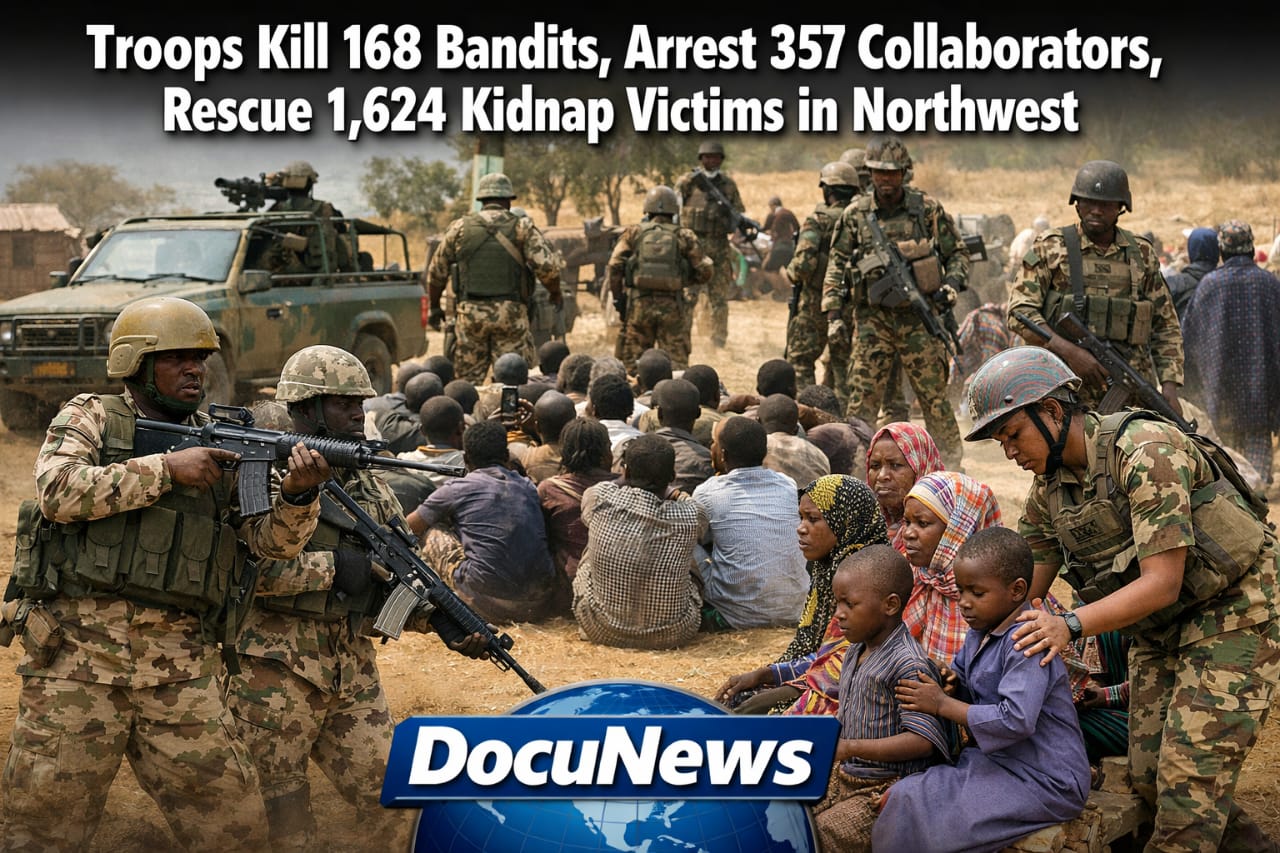
An unprecedented offensive by Nigerian security forces delivered a crushing blow to criminal networks in the northwest, as troops killed 168 bandits, arrested 357 of their collaborators, and rescued 1,624 kidnapped victims through coordinated operations that targeted the heart of banditry and terror networks. This multi‑layered campaign reshaped security dynamics, cut critical resources from militants and saw communities regain freedom once lost to fear and violence. The results shatter expectations and mark a defining moment in Nigeria’s long struggle against insurgency and criminal violence.
To understand the scope of this achievement, an effort spanning January 1 through December 31, 2025 in Gusau, Zamfara State, Northwest Nigeria was used as the operational benchmark. Maj.-Gen. Warra Idris, the Theatre Commander of the Joint Task Force Operation Fansan Yamma (OPFY), disclosed these results during a media briefing with defence correspondents, detailing how troops struck hard and refused to ease pressure on bandit groups responsible for untold suffering.
For Our Image Credit Visit Disclaimers: Use Of AI Images In Our Newsletters
168 Bandits Neutralised: Tactical Precision and Impact
At the heart of this campaign was the military’s determination to dismantle the armed groups that terrorised rural communities, ambushed travellers, and held civilians for ransom. In all, security forces killed 168 bandits, including several leaders known for their brutality and logistical prowess. 1
This was no random tally. Each neutralisation occurred after intelligence‑led operations identified specific camps and hideouts. Most of these bandits operated deep within forests and ungoverned spaces across states like Zamfara, Sokoto, Kebbi, and Katsina. These areas have historically served as refuge for armed gangs. Over the years, the presence of criminals in these zones stifled agriculture, blocked trade routes, and forced entire villages to flee. (See related background on Nigeria’s security context: Nigeria Risk Index on banditry) 2
Troops engaged in direct assaults with brutal efficiency. Often, these engagements began with air support to weaken enemy positions and surveillance to verify troop movements. The Air Component of Operation Fansan Yamma executed hundreds of sorties to degrade strongholds, cut off supply lines, and create chaos within bandit ranks.
The result was decisive. Bandit bases that once functioned as near‑permanent bases of crime collapsed under pressure. Movement corridors that rebels once used freely became contested zones. In multiple engagements, troops advanced with precision, leveraging both ground manoeuvres and aerial surveillance to ensure high impact with minimal collateral damage.
Read Also Nigerian Military Airstrikes on Bandit Camps in Ifelodun and Patigi
Air Interdiction and Ground Force Synergy
Air interdiction played a pivotal role, enabling forces to strike deep into territories where bandits thought they were safe. In total, the Air Component conducted over 460 air sorties across the theatre, targeting camps and disrupting coordinated operations.
This approach forced many criminal groups into disarray. Even if not defeated outright, their ability to regroup, rearm, and reroute ransom caravans was substantially hindered. Local air dominance gave security forces an undeniable edge, and its sustained application kept pressure on those who rely on concealment within dense terrain.
357 Collaborators Arrested: Undermining the Support Infrastructure
Beyond neutralising frontline fighters, troops executed operations to arrest 357 collaborators believed to sustain the bandits’ wider criminal infrastructure. These individuals included logistics helpers, informants, arms couriers, and supply coordinators.
It’s critical to appreciate why this matters. Armed groups do not operate in isolation. They rely on local helpers, transporters, informants to avoid detection, and civilians who may be coerced or enticed into providing services that normalise the criminal enterprise. Removing these collaborators disrupted the comodities and information flows that make banditry resilient. Each arrest cut off a thread in a complex network, making the entire system less cohesive and less capable.
Security officials highlighted that the focus on collaborators represented a strategic shift. Rather than targeting only combatants, the task force aimed to sever the operational links that allow bandits to receive food, ammunition, shelter, and mobilisation support. These moves grounded the network and denied it the capacity to regenerate quickly after outbreaks of violence.
Moreover, such arrests weakened the bandits’ psychological grip on local communities. When collaborators are removed, potential supporters grow wary of involvement. This psychological deterrent is as valuable as physical arrests because it reduces the pool of civilians who might otherwise be coerced into aiding armed groups.
People are reacting to this Bandits Invade Gombe Community, Kill Two Persons, Abduct Four
Intelligence and Community Cooperation
Intelligence played a key role in arresting collaborators. Troops did not operate blindly. Instead, they worked with local contacts and community leaders who provided information on suspicious movements or known associates of criminal gangs. This cooperation ensured that raids were timely and targeted, reducing the risk of wrongful detentions and improving operational success. This community‑security nexus also fostered trust, which is essential for long‑term stability.
1,624 Kidnap Victims Rescued: Humanitarian Priority Restored
Perhaps the most impactful statistic was the rescue of 1,624 kidnapped victims, an outcome that has profound implications for families, communities, and regional morale.
Kidnapping for ransom has been one of the most devastating facets of insecurity in Northwest Nigeria. Mass abductions crippled education, obstructed agriculture, devastated local markets, and forced entire families into cycles of ransom payments. With each rescue, lost lives were restored. Mothers were reunited with children. Fathers returned to provide for their families. Entire communities breathed easier.
Among those rescued were not only ordinary civilians but individuals who had entered captivity due to high‑profile targeted abductions. Officials confirmed that two serving soldiers and one retired senior officer were among those freed. These high‑profile rescues carried symbolic weight, showing that even sophisticated kidnappings were not beyond the reach of security forces.
The rescue operations combined ground sweeps with rapid extraction missions. Intelligence often indicated the locations of detention camps. Troops moved quickly—sometimes at night—to secure these areas, engage with captors, and evacuate the captives. Surrounding the camps with overwhelming force helped prevent escapes and ensured the safety of hostages.
Reintegration and Aftercare Support
Rescued individuals faced immediate care challenges. Many suffered from trauma, malnutrition, or injuries sustained in captivity. Civil authorities, aid organisations, and community leaders collaborated to provide medical care, counselling, and shelter. Psychological support became a priority, recognising that the physical safety of victims is only one part of the healing process.
Programs were quickly organised to help reunite victims with families and begin the long process of reintegration into society. For some, the ordeal lasted months. Their release brought overwhelming relief, often accompanied by international attention and calls for sustained peace efforts.
Historical and Regional Context
The events of 2025 must be seen against the backdrop of decades of insecurity across Northwest Nigeria. Banditry, which emerged in the last decade, has roots in economic strife, youth unemployment, easy access to weapons, and decades‑old disputes over land and grazing rights.
Northwest Nigeria became one of the regions most affected by kidnappings and bandit attacks. In some years prior, reports noted extremely high death tolls and mass abductions, driving humanitarian crises and internal displacement.
For example, studies by risk analysts highlighted that over 400,000 people were forced from their homes due to insecurity, and entire communities suffered long‑term disruptions to agriculture and schooling. These patterns shaped the environment in which the latest offensive took place, making the recent successes even more noteworthy.
You may have missed this Six Terrorists Killed as Troops Rescue Kidnapped Girl in Zamfara
The Broader Fight Against Insecurity
It is important to note that the battle against bandits in Nigeria’s Northwest is not isolated from similar operations nationwide. Across 2025, Nigerian security forces intensified efforts against various armed threats, including Boko Haram in the Northeast and criminal gangs in other regions. Broader operations recorded multiple successes, including arrests, weapon recoveries, and additional rescue missions.
These efforts show a unified strategic approach: improve civilian safety, disrupt criminal networks systematically, and strengthen the rule of law. While challenges remain, this offensive has reshaped expectations and tactics for future missions.
Official Statements and Strategic Vision
Maj.-Gen. Warra Idris emphasised that the campaign’s success was rooted in sustained pressure and coordination among security agencies. He highlighted the need to maintain offensive momentum to dismantle remaining enclaves of criminal operations.
Strategic goals now include continued offensive operations, strengthening long‑range patrols, expanding intelligence networks into remote communities, and cutting off remaining supply routes that sustain banditry. Idris also urged civilians to support security efforts by providing credible information to authorities.
The Chief of Defence Staff, Gen. Olufemi Oluyede, received commendations from the Theatre Commander for his strategic guidance and support in shaping the offensive. Their shared message underlines a unified command and commitment to lasting peace in the Northwest.
Voices from Affected Communities
Local residents expressed mixed emotions. Relief was a common theme, especially among families reunited with abducted loved ones. Many praised the troops for their bravery and effectiveness. However, a lingering concern remained: that while this offensive was successful, long‑term peace requires sustained security, economic support, and investment in social infrastructure.
Community leaders also stressed the importance of accountability and ongoing engagement between citizens and security forces. They urged that successful operations not be treated as isolated victories but as pillars of a long‑term strategy to rebuild trust and stability in areas long affected by fear and displacement.
Conclusion: A Turning Point—but Not an Endpoint
The Nigerian military’s year‑long campaign delivered concrete results: 168 bandits were killed, 357 collaborators were arrested, and 1,624 kidnapped victims were rescued. These outcomes represent significant tactical achievements and a powerful humanitarian success that brought relief to thousands of families.
However, these achievements must be sustained. The resilience and adaptability of armed groups mean that security remains fragile. Long‑term peace will require continuous military pressure, community trust, socioeconomic rebuilding, and improved intelligence networks. The victories of 2025 offer a blueprint for what is possible when strategy, coordination, and determination align.
For now, communities in the Northwest have a renewed sense of hope. Lives lost to fear are being reclaimed. Captives are being freed. The criminal infrastructure that once seemed immovable now shows signs of irreversible decline. This is not just a tactical victory—it is a reclaiming of freedom and the promise of stability for millions.
For more Security Updates In Nigeria Visit Security updates Nigeria and Legit.ng


Okay, mga ka-baterybetinlogin, log in na! Easy access and fun games. Di kayo magsisisi. Good luck! baterybetinlogin