






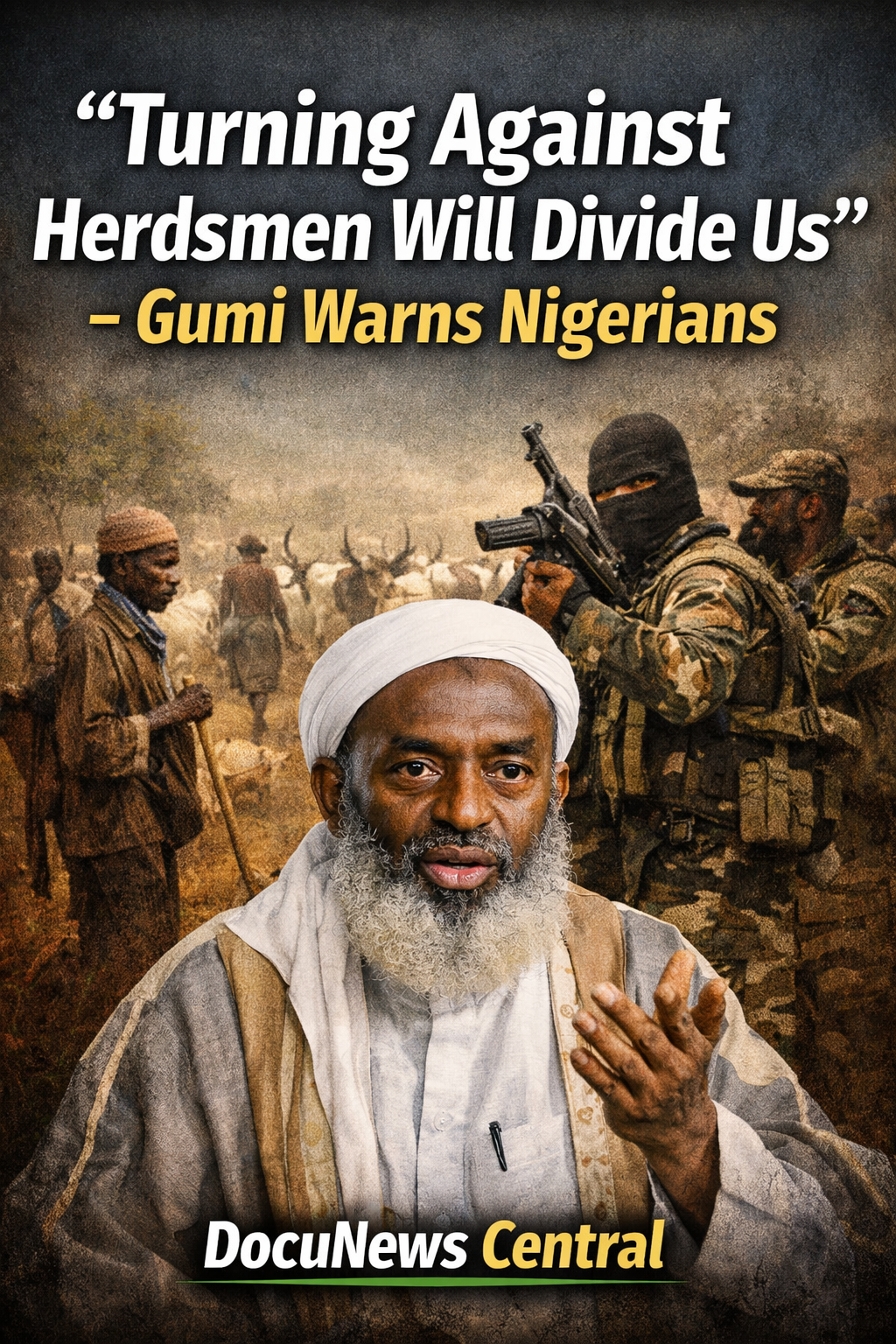
Nigeria’s long-running debate over herdsmen and communal security has once again taken centre stage following a controversial statement by Islamic scholar Sheikh Ahmad Gumi, who warned that hostility toward herdsmen could further fracture the nation. According to him, herdsmen are not outsiders but part of Nigeria’s social fabric, and any attempt to push them out or treat them as enemies could deepen divisions rather than restore peace.
Although many Nigerians reacted strongly to his remarks, the statement has reopened a critical national conversation about coexistence, identity, security, and the future of rural livelihoods. More importantly, it raises a difficult but necessary question: can Nigeria solve the herdsmen crisis through confrontation, or does dialogue offer a more sustainable path?
Understanding Sheikh Gumi’s Position
Sheikh Ahmad Gumi has remained one of the most vocal religious figures commenting on Nigeria’s security challenges. Over the years, he has consistently argued that exclusion, demonisation, and collective punishment fuel insecurity rather than reduce it. In his latest remarks, he stressed that herdsmen “are going nowhere” and urged Nigerians to accept coexistence as a reality rather than a choice.
According to Gumi, herdsmen form part of Nigeria’s historical and economic structure. Therefore, he believes that treating them as permanent enemies risks inflaming ethnic tensions and undermining national cohesion. While critics accuse him of downplaying violence linked to armed groups, supporters argue that his message focuses on long-term peace rather than emotional retaliation.
Moreover, his warning comes at a time when Nigeria already faces deep divisions along ethnic, religious, and regional lines. Consequently, any rhetoric that promotes collective blame could further weaken trust among communities.
The Roots of the Herdsmen–Farmer Conflict
To fully understand Gumi’s warning, it is important to examine the origins of the herdsmen crisis. For decades, nomadic pastoralism coexisted relatively peacefully with farming communities. However, several factors have gradually turned competition into conflict.
Climate Change and Shrinking Resources
Firstly, climate change has drastically reduced grazing land in northern Nigeria. As desertification spreads southward, herdsmen increasingly move into farming regions in search of pasture and water. As a result, competition over land intensifies, often leading to disputes.
Population Growth and Land Pressure
Secondly, Nigeria’s rapidly growing population has placed enormous pressure on land use. Farmlands now extend into traditional grazing routes, leaving little room for seasonal migration. Consequently, accidental crop destruction often triggers violent confrontations.
Weak Governance and Security Gaps
In addition, weak local governance and poor conflict-resolution mechanisms allow minor disputes to escalate. When authorities fail to intervene early, affected communities often resort to self-help. Unfortunately, this cycle encourages reprisal attacks and collective suspicion.
These underlying issues suggest that the crisis goes beyond ethnicity or religion. Therefore, framing herdsmen solely as enemies oversimplifies a complex problem.
Why Gumi Says Hostility Will Divide Nigeria
Sheikh Gumi’s central argument rests on the belief that collective hostility fuels national fragmentation. According to him, when an entire group is labelled as a threat, innocent members suffer alongside criminals.
Collective Blame and Its Consequences
History shows that collective blame often produces resentment rather than compliance. For example, when communities feel targeted, they become less willing to cooperate with authorities. As a result, intelligence sharing declines, making it harder to isolate criminals.
Furthermore, branding all herdsmen as violent ignores the millions who live peacefully and depend on pastoralism for survival. Consequently, such narratives deepen mistrust and widen social gaps.
Ethnic and Regional Tensions
Nigeria’s diversity remains both its strength and vulnerability. When security challenges take on ethnic undertones, they risk inflaming regional grievances. Gumi warns that turning herdsmen into enemies could reinforce dangerous “us versus them” thinking.
Moreover, similar patterns have previously worsened tensions in other parts of the country. Therefore, repeating the same mistakes may only prolong instability.
Public Reaction and National Debate
Unsurprisingly, Gumi’s statement triggered intense reactions across social media and political platforms. Many Nigerians, especially victims of violent attacks, rejected his message outright. They argue that calls for coexistence ignore the pain of affected communities.
However, others believe that emotional responses, although understandable, may cloud long-term solutions. They argue that acknowledging grievances should not prevent dialogue.
Meanwhile, civil society groups have called for a balanced approach that condemns violence while avoiding collective punishment. According to them, peace requires accountability, justice, and inclusion. Read also Sheikh Gumi Slams FG: ‘Why Run to the US When Pakistan, Turkey Are There?’
Security Concerns and the Question of Justice
One major criticism of Gumi’s stance involves justice for victims. Critics ask whether coexistence can succeed without accountability. Indeed, no society can thrive if crimes go unpunished.
However, coexistence does not mean tolerating criminality. Rather, it involves separating criminals from law-abiding citizens. Therefore, effective policing, intelligence-driven operations, and fair trials remain essential.
Nigeria’s security agencies have repeatedly stressed the importance of community cooperation. Ironically, hostile rhetoric often undermines this cooperation. Consequently, Gumi’s warning highlights a critical contradiction in current responses.
For more insight, read this related analysis on DocuNews Central.
The Role of Dialogue in Conflict Resolution
Dialogue remains one of the most effective tools for resolving protracted conflicts. Across Africa, negotiated settlements have succeeded where force alone failed. Therefore, Gumi’s call aligns with global conflict-resolution principles.
Traditional Conflict Mediation
Historically, local leaders mediated disputes between herders and farmers. These mechanisms, although imperfect, prevented escalation. Reviving such systems could complement modern governance.
Government-Led Engagement
In addition, the government can facilitate structured dialogue involving farmers, herders, security agencies, and traditional rulers. When all parties feel heard, trust gradually improves.
According to the International Crisis Group, inclusive dialogue significantly reduces the likelihood of recurring violence.
Economic Importance of Pastoralism
Another key aspect often overlooked in public debates involves economics. Pastoralism contributes significantly to Nigeria’s food supply, particularly meat and dairy products. Disrupting this sector without alternatives could worsen food insecurity.
Moreover, millions of Nigerians depend directly or indirectly on livestock trade. Therefore, policies that alienate herders risk economic consequences.
Media Narratives and Their Impact
Media framing plays a powerful role in shaping public opinion. Sensational headlines often amplify fear and anger. While reporting violence remains necessary, balanced storytelling matters.
For deeper insight, see this resource by BBC Media Action on conflict-sensitive journalism.
Conclusion: A Warning Nigeria Cannot Ignore
Sheikh Gumi’s statement may provoke discomfort, yet it raises an essential truth: Nigeria cannot afford deeper division. While communities deserve protection and justice, turning entire groups into enemies risks worsening the very insecurity Nigerians seek to end.
Ultimately, peace demands courage — not only to confront criminals but also to resist narratives that divide. As Nigeria navigates its complex security landscape, dialogue, accountability, and coexistence remain the only sustainable path forward.



4 thoughts on ““Turning Against Herdsmen Will Divide Us” — Gumi Warns Nigerians”