


US Airstrikes in Nigeria: Gumi Calls It Sovereignty Breach
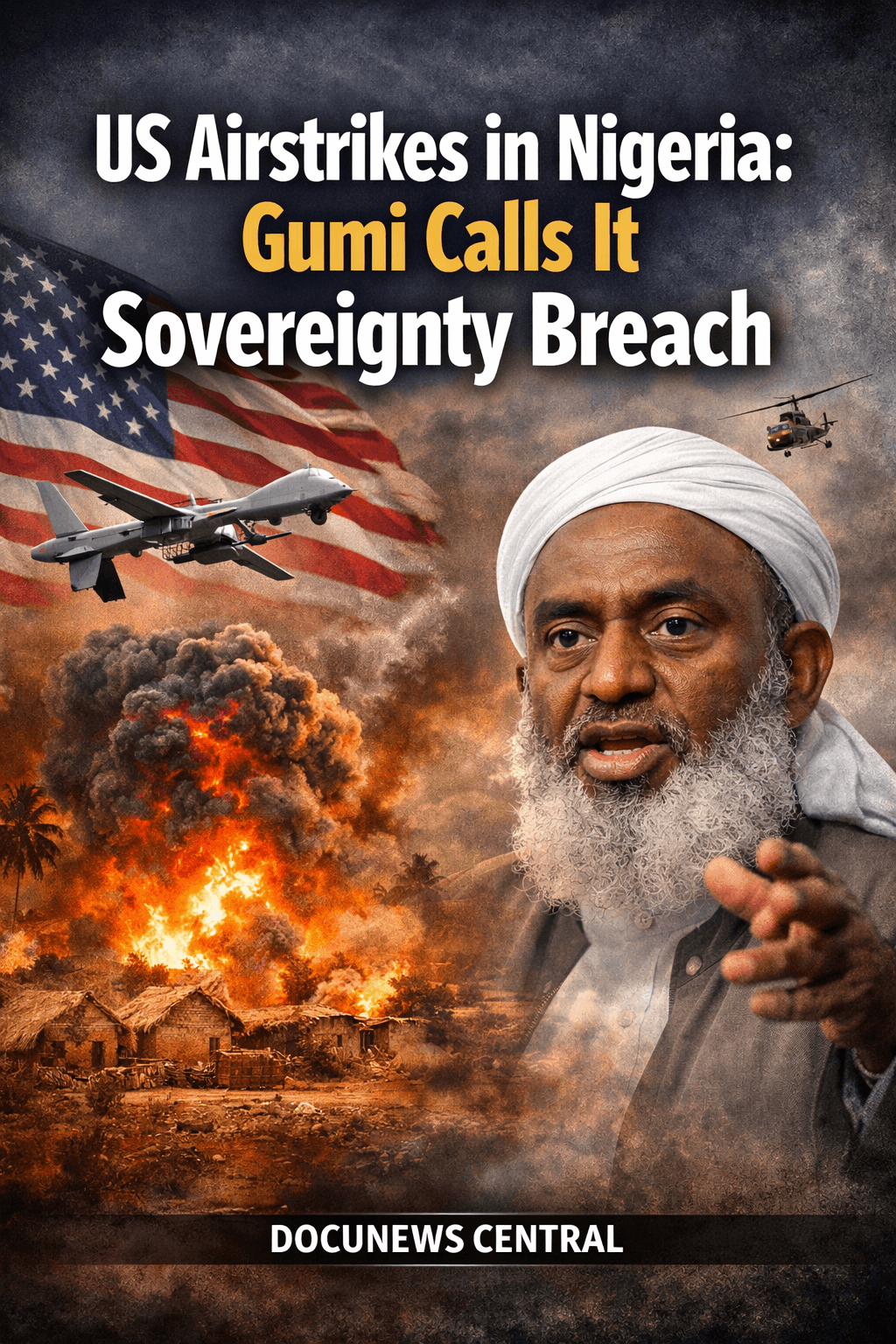
The recent US airstrikes in Nigeria have sparked widespread controversy, drawing sharp criticism from influential figures such as Sheikh Ahmad Gumi. Known for his outspoken views on security and governance, Gumi described the military actions as a direct infringement on Nigeria’s sovereignty. This statement has reignited national discussions about foreign intervention and the government’s role in safeguarding territorial integrity. Also read this Many Feared Dead as Suspected Terrorists Invade Kebbi Village
Gumi Speaks Out Against US Airstrikes in Nigeria
In a public address, Sheikh Gumi emphasized that Nigeria’s sovereignty must be respected at all costs. He stated that unilateral military operations by foreign powers undermine the authority of the Nigerian government. Analysts argue that these strikes, while targeting extremist groups, risk setting a dangerous precedent where foreign nations operate without explicit consent from local authorities.
The news community in Nigeria has widely covered Gumi’s statement, highlighting the growing unease among citizens about foreign military involvement. Critics warn that such interventions could escalate tensions rather than curb violence.
Political Implications of the Sovereignty Breach
The political ramifications of the US airstrikes in Nigeria are significant. Lawmakers in the National Assembly have demanded clarification from the executive branch regarding the authorization of these operations. Several human rights organizations have also issued statements emphasizing the importance of following international law and respecting national borders.
According to experts, foreign military interventions often carry unintended consequences. They may provide short-term tactical gains, yet the long-term political and social costs can outweigh immediate benefits. Gumi’s warning underscores the delicate balance between security operations and national sovereignty. Read about this security updates here US Plans Fresh Airstrikes on Terrorist Hideouts in Nigeria- Riley
Impact on Local Communities
The areas affected by the strikes have experienced heightened anxiety among residents. Reports indicate that civilians are concerned about collateral damage and the disruption of daily life. Community leaders are calling for increased dialogue between government officials and foreign partners to ensure that operations do not compromise the safety and autonomy of local populations.
Local media coverage, including Premium Times Nigeria, has documented these concerns extensively. Gumi’s statement resonates with many Nigerians who fear that foreign interventions, even with good intentions, may threaten national stability.
Legal Perspectives on US Airstrikes
From a legal standpoint, international law requires that foreign military action in a sovereign nation must have the explicit consent of that nation’s government. Gumi highlighted that bypassing these protocols constitutes a breach of international norms and raises questions about accountability. Legal scholars argue that respecting sovereignty is crucial for maintaining global diplomatic relations.
For more on international law and military intervention, see United Nations: International Law.
Responses from the Nigerian Government
The Nigerian government has acknowledged Gumi’s concerns but maintains that collaboration with foreign partners is necessary to combat insurgency. Officials assert that joint operations are conducted under strict oversight to minimize civilian impact. Nevertheless, public sentiment continues to sway towards caution and skepticism.
Gumi’s repeated warnings about the US airstrikes in Nigeria serve as a reminder that citizens and leaders alike value sovereignty as a non-negotiable principle. Transparency and dialogue are essential to ensure that foreign assistance does not cross boundaries that compromise national authority. Have you seen this update? Heavy Airstrikes Rock Zamfara as Nigerian Military Targets Dogo Sule’s Hideout
International Reactions
Global observers have taken note of the controversy. Analysts in the United States and Europe recognize that while combating terrorism is a shared goal, respecting host nation sovereignty remains critical. Failure to do so could harm diplomatic ties and reduce cooperation on broader security initiatives.
Reports by international media outlets, such as BBC News, have highlighted Gumi’s statements as a reflection of a broader debate about foreign military presence in sovereign nations. This dialogue is crucial for shaping future policy decisions.
Conclusion: Balancing Security and Sovereignty
The debate over the US airstrikes in Nigeria: Gumi calls it sovereignty breach is far from over. On one hand, there is the urgent need to address terrorism and banditry that threaten the nation. On the other hand, preserving the integrity of Nigeria’s borders and governance structures is paramount. Sheikh Gumi’s outspoken criticism has sparked a nationwide conversation on finding a balance between security collaboration and sovereignty protection.
Going forward, it is essential for all stakeholders, including government officials, foreign partners, and civil society, to engage in transparent dialogue. By respecting Nigeria’s autonomy while addressing security threats, the nation can achieve sustainable peace without compromising its sovereignty.
For further insights on security and governance in Nigeria, visit Vanguard News Nigeria.