
 DocuNews Central
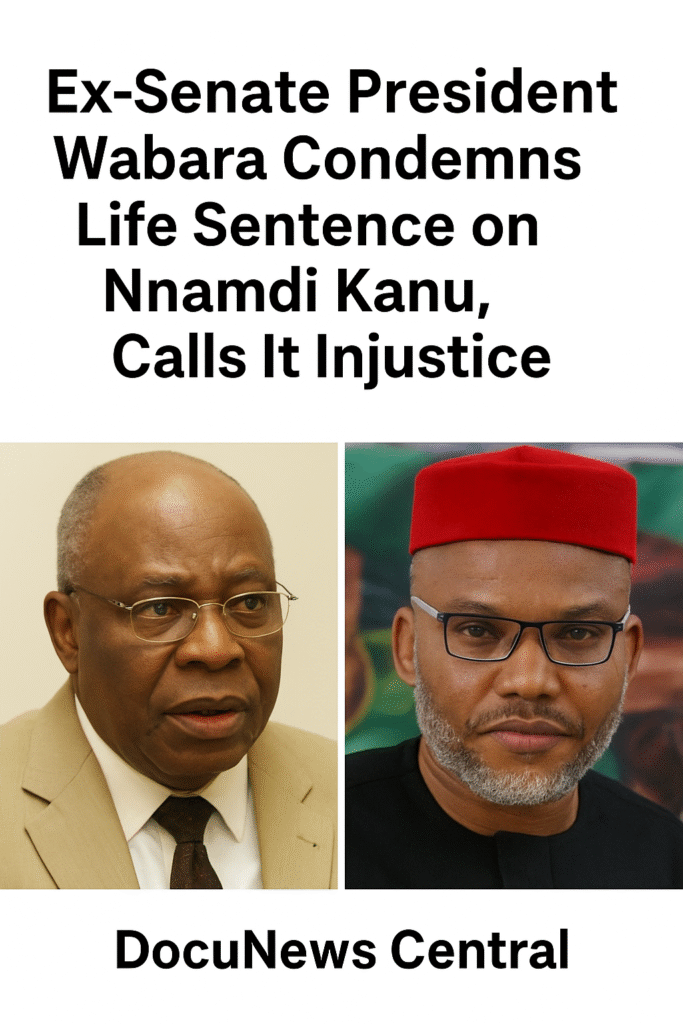
Ex‑Senate President Adolphus Wabara has publicly expressed his condemnation of the life sentence handed down to Nnamdi Kanu, the leader of the Indigenous People of Biafra (IPOB). According to Wabara, the verdict represents a miscarriage of justice and undermines the principles of fairness and equality before the law. He emphasized that Kanu should not be labeled a terrorist without comprehensive evidence presented in an impartial judicial process.
Wabara’s reaction follows the Federal High Court’s ruling, which sentenced Kanu to life imprisonment for offenses related to terrorism and treasonable activities. The judgment sparked widespread debate among political leaders, human rights organizations, and civil society groups, both within Nigeria and internationally. Wabara highlighted the broader implications of the court’s decision, warning that such a ruling could escalate tensions and undermine national unity if perceived as unfair or politically motivated.
The former Senate President called for immediate judicial review and expressed confidence in Nigeria’s legal system to correct any errors. “Every citizen deserves a fair trial and protection under the law,” Wabara stated during a press briefing. “We must ensure that justice is not only done but also seen to be done.” He urged legal teams to explore all available avenues to appeal the sentence and prevent long-term consequences that could affect social cohesion.
Reactions from the South-East and Other Leaders
Wabara’s condemnation resonates with several leaders from the South-East geopolitical zone. According to a report, Ben Kalu, Deputy Speaker of the House of Representatives, has also called for a political and legal solution following Kanu’s sentencing. He emphasized dialogue and reconciliation as crucial steps to address grievances and maintain peace within the region.
Similarly, advocacy groups such as the Igbo Community Association have voiced concerns over the fairness of the trial. Leaders have described the verdict as predetermined and politically influenced. These groups are urging citizens to remain calm while engaging legal channels to contest the judgment.
Human Rights Perspectives
Human rights organizations have monitored Kanu’s trial closely. Wabara’s statement aligns with concerns raised by these bodies, which have argued that political interference in judicial processes can erode public confidence in the legal system. According to reports, organizations both within Nigeria and abroad have called for transparency, adherence to international legal standards, and due process to ensure that the rights of the accused are fully respected.
Wabara stressed the importance of balancing national security concerns with individual liberties. “While combating crime and ensuring security is essential, it must not come at the expense of fundamental human rights,” he said. He warned that labeling political activists as terrorists without clear and convincing evidence sets a dangerous precedent for civil liberties and freedom of expression.
Public Reactions and Civil Society Engagement
The sentencing has elicited strong responses from civil society groups. Protests, peaceful demonstrations, and social media campaigns have intensified following the verdict. Wabara urged citizens to channel their opinions through legal and peaceful means rather than violent confrontation. He reiterated the need for dialogue, stating that civic engagement and constructive debate remain the most effective tools for societal change.
Various professional groups have also weighed in. Lawyers, academics, and former public officials have called for a thorough review of the judicial proceedings to ensure compliance with national and international legal norms. Wabara’s statement serves as a rallying point for these voices, emphasizing that legal remedies must be prioritized over extra-judicial actions.
Implications for National Unity
The case carries significant implications for Nigeria’s social and political landscape. Wabara warned that continued unrest or perceived injustice could deepen regional divisions and strain relationships between federal authorities and local communities. He stressed that unity and reconciliation are vital, particularly in ethnically and politically diverse regions.
To mitigate potential conflicts, Wabara suggested increased dialogue between federal authorities, regional leaders, and civil society organizations. He also highlighted the importance of credible communication strategies to prevent misinformation and reduce tensions among the populace.
Legal Recourse and Appeal Options
Following his condemnation of the life sentence, Wabara advocated for immediate appeal efforts. Legal experts have noted that the appeals process can address procedural errors, review evidence, and ensure that the verdict aligns with constitutional protections. Wabara underscored the importance of a transparent and prompt appellate process to maintain public trust in the judiciary.
He also encouraged legal teams to engage international human rights organizations for guidance and monitoring. According to Wabara, international attention can reinforce accountability, ensuring that Nigeria’s legal system upholds both domestic law and global standards.
Media Coverage and Information Dissemination
Media organizations have extensively covered Kanu’s sentencing, highlighting reactions from political figures, civil society, and community leaders. Wabara’s comments have been widely reported across major Nigerian news outlets, amplifying the call for review and due process. Responsible reporting and factual coverage, according to Wabara, are essential to prevent misinformation and maintain public confidence in the legal process.
Looking Ahead
Ex-Senate President Wabara concluded his statement by emphasizing the need for calm, constructive engagement, and adherence to legal channels. He called on all stakeholders to


