
 DocuNews Central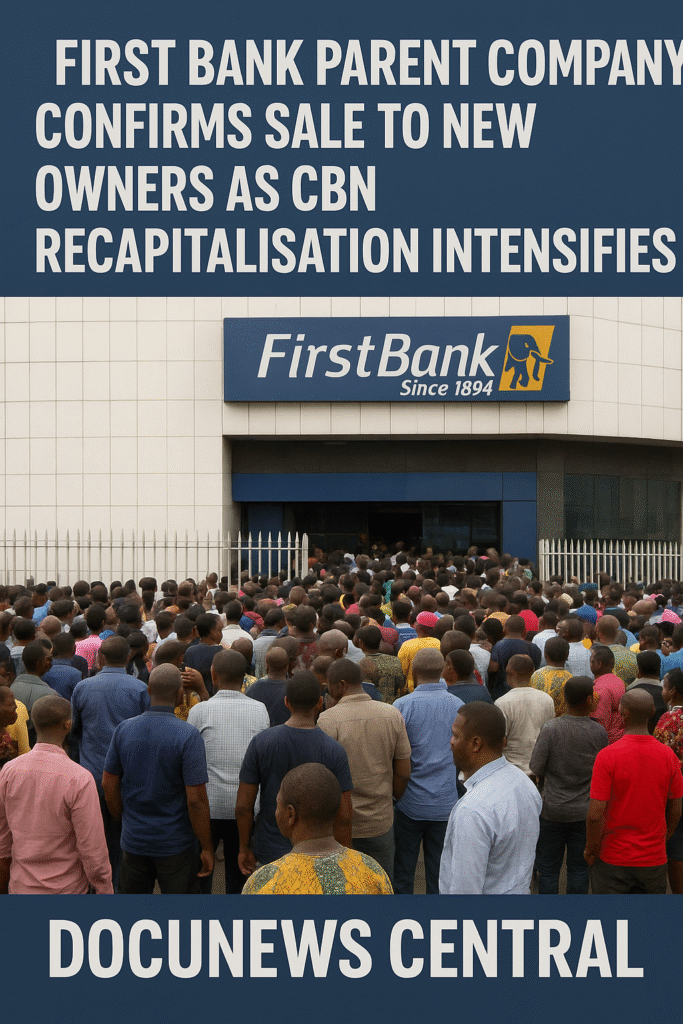
Introduction
First Bank has always stood as a major pillar in Nigeria’s financial sector. Because of its long history, many people follow its activities closely. Now, a major shift has taken place. The parent company has confirmed the sale of the bank to new owners. This sale happened as the Central Bank of Nigeria (CBN) continues its banking recapitalisation drive. Since this policy aims to strengthen the financial system, the sale has created strong reactions across the country. Many analysts believe it signals deep changes in the industry.
Although the new ownership may bring hope, it also raises questions. People want to know what this sale means for customers, investors, and Nigeria’s entire banking landscape. As the news spreads, experts have started giving their views. Their comments show that the event is both historic and strategic.
Background of the Recapitalisation Drive
The CBN recapitalisation policy did not come as a surprise. Over the past few years, Nigeria’s economy has faced several challenges. Because of inflation, weak currency performance, and global financial pressure, the banking sector struggled. So, the CBN took steps to strengthen financial institutions. The recapitalisation drive became one of its boldest decisions. The plan requires banks to increase their minimum capital within a specific time frame.
This policy created urgency. Many banks began to look for strong investors. Some started restructuring. Others explored mergers and acquisitions. The sale of First Bank became one of the biggest results of this push. Because First Bank is a major institution, the news attracted wide attention. Many industry watchers said the sale showed how serious the CBN is about its reforms.
Why the Parent Company Chose to Sell
The parent company faced rising pressure. Because recapitalisation required huge funds, the group needed a solid strategy. Internal restructuring alone would not cover the capital needed. So, the sale became the most realistic option. It allowed the company to attract fresh investment. It also gave room for new leadership and new ideas. Since recapitalisation timelines were strict, the sale became the final decision.
Another reason involved long-term sustainability. Many global financial changes affected the group. Because of these issues, the parent company needed a partner with strong financial capabilities. The new investors brought solid backing. They also came with new growth plans. Their strategy aligned with the current economic direction. So, the sale became a strategic move instead of a sudden decision.
Who Are the New Owners?
The new owners consist of a powerful investor group. Although the full details may still unfold, early statements reveal that the investors have strong interest in the African financial space. They have also managed successful financial portfolios in the past. Since they understand banking risks, analysts believe they will bring discipline and innovation.
Because this investor group has long-term plans, many customers feel hopeful. The new owners plan to strengthen technology. They also plan to expand regional operations. Although these plans are ambitious, they show serious commitment. Because of this, the banking industry expects major changes soon.
Immediate Impact on Customers
Many customers reacted with worry at first. However, the parent company reassured them quickly. The sale will not affect daily banking services. All accounts remain safe. All loans also remain valid. Although customers may see new improvements soon, the bank’s core services will continue without interruption.
Because the new owners plan digital upgrades, customers may enjoy faster services. Many users also expect better mobile banking performance. Since First Bank serves millions of people, service improvement remains a key expectation.
Impact on Nigeria’s Banking Landscape
The sale has created a strong signal. Many banks now understand that recapitalisation is serious business. Because of this, some banks have started looking for investors. Others are planning mergers. Many financial analysts predict a major restructuring wave. The banking sector may become stronger. It may also become more competitive.
Since recapitalisation aims to protect customers, CBN may continue monitoring these developments. Many banks must take decisive steps to meet the required capital. Because First Bank has taken a bold step, more banks may follow soon.
Industry Experts React
Reactions have been mixed. Some experts believe the sale is a positive step. They say it will bring modernisation. Others say it exposes structural weaknesses in the banking sector. Many also argue that recapitalisation will reshape the banking market. Since these changes affect millions of people, the industry is watching closely.
Another set of analysts believes the sale marks a new era. They expect stronger banks. They expect better financial management. They also expect more foreign investment. Because foreign investors follow market trends, many may show interest soon.
Internal Links for Better SEO
For more Nigerian economic updates, visit our detailed financial section on Business News. You may also read our report on recent Economic Trends to understand the impact of recapitalisation policies.
What Happens Next?
The sale still needs regulatory approval. Although the process is moving fast, it must follow due procedures. After approval, the new owners will begin full operations. They will also announce their official plans. Many expect them to introduce new digital platforms. Others expect fresh leadership appointments. Since these steps may shape the bank’s future, the public will follow closely.
The recapitalisation deadline still stands. So, many banks must act fast. Some will explore mergers. Others may restructure. Since CBN wants a stronger system, these changes may continue throughout the year.
Impact on Investors
Investors reacted quickly. Many started reviewing their portfolios. Because ownership changes affect share performance, investors want clarity. The parent company promised transparency. They also promised regular updates. Since investors depend on stability, many hope for strong management.
Another factor involves new growth opportunities. Many investors believe the sale may unlock new value. Because new owners often bring fresh strength, share performance may improve in the long-run. Analysts expect short-term volatility. However, they also expect long-term gains.
Broader Economic Implications
The Nigerian economy continues to face pressure. So, the banking sector must remain strong. Recapitalisation aims to protect the financial market. Since banks support businesses, reforms affect the entire economy. Many economists believe the sale may restore confidence. They also believe it may attract foreign investment. Because investors love stability, stronger banks may bring positive results.
Another major implication involves customer protection. Stronger banks offer safer deposits. They also support better lending. Because Nigeria depends on banking support, economic growth may increase. So, recapitalisation may lift the economy over time.
How the Sale Aligns With Global Trends
Global banking trends show similar patterns. Many countries now strengthen capital requirements. Since the global economy faces uncertainty, stronger banks matter. Nigeria’s policy aligns with global standards. So, the sale fits into global expectations.
Many global institutions have faced restructuring. Because digital banking dominates today’s world, financial institutions must adapt. First Bank’s new owners may bring these global ideas into Nigeria. Analysts expect modern tools. They also expect new security systems.
Possible Challenges Ahead
Although the sale looks promising, challenges may appear. Integration takes time. Staff adjustments may also take place. Because new leadership often brings new methods, the bank may need time to adapt. Another challenge involves public perception. First Bank has built trust over many years. The new owners must maintain that trust.
Regulatory processes may also take time. So, people must stay patient. Although there may be changes, customers will still receive the services they know.
Statement From the Parent Company
The parent company confirmed the sale. They also thanked customers for their loyalty. Their statement stressed stability. It also expressed confidence in the new owners. Because the group wants smooth transition, they promised support throughout the process. They also assured customers that the bank remains strong.
CBN’s Position
The Central Bank welcomed the step. They said recapitalisation aims to protect customers. They also said banks must remain strong enough to handle risks. Because the sale supports this goal, the CBN sees it as a positive development. They promised to monitor the process. They also promised fairness.
Conclusion
The sale of First Bank marks a new chapter in Nigeria’s banking story. Because of the recapitalisation policy, the banking environment continues to transform. This sale stands out as one of the most important events in the financial sector this year. Although many questions remain, one thing is clear. Nigeria’s banking system is entering a new era of strength, stability, and deeper reforms.
As more banks respond to the recapitalisation directive, more changes may appear. So, customers, investors, and analysts will continue watching closely. This moment may shape the future of Nigerian banking for many years.
For more updates, visit DocuNews Central for detailed reports and continuous analysis.


