 DocuNews Central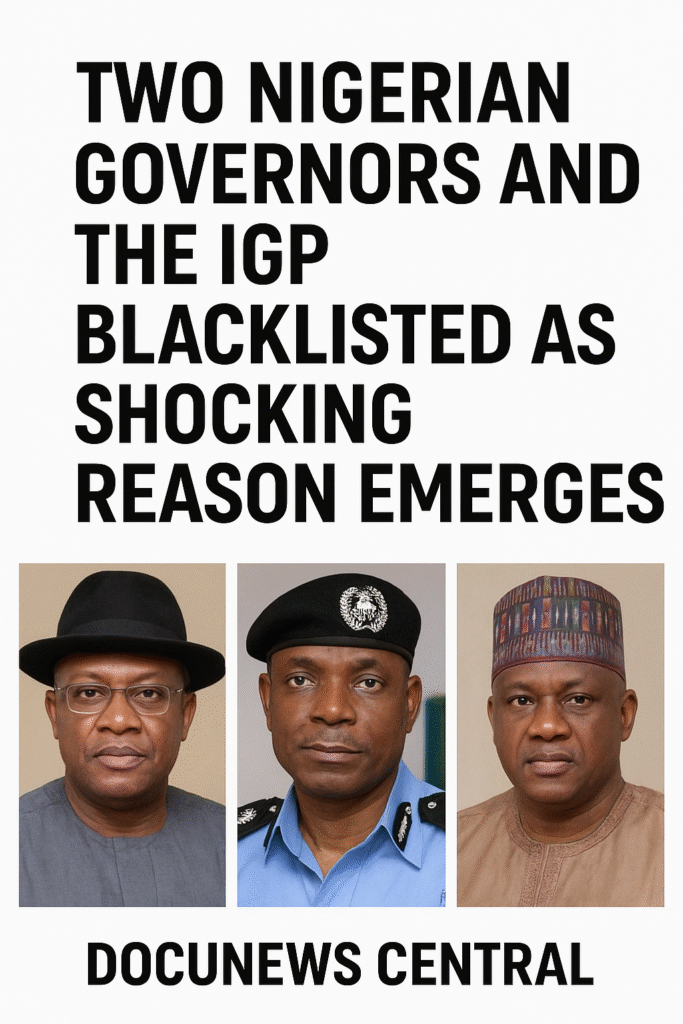
Nigeria witnessed a major surprise after news confirmed that two serving governors and the Inspector-General of Police (IGP) had been blacklisted by an international monitoring agency. Because this development appeared sudden, many citizens immediately began searching for answers. Therefore, this report explains what happened, why it matters, and how the decision may influence the country going forward.
Although several rumours surfaced earlier, the confirmation triggered wider discussions. Since the individuals involved hold sensitive offices, the situation attracted attention across the nation. Meanwhile, media outlets continued releasing fresh updates, and analysts started linking the development to deeper security concerns. Consequently, the story gained massive traction.
To get more context, readers may also check similar reports such as the resignation of Defence Minister Mohammed Badaru Abubakar as well as the Nigerian Army’s latest operation against Boko Haram. Both updates help explain why security issues remain a major national topic.
Public Reactions After the Blacklisting Announcement
Immediately after the report surfaced, tension rose across political circles. Because this type of sanction rarely targets top-ranking officials, Nigerians expressed shock. Even though the country has faced scrutiny in the past, this case felt unusual. Therefore, citizens demanded clearer information.
Soon after, journalists contacted several sources. Although responses differed, most pointed toward issues involving governance, suspicious activities, and regional monitoring systems. Since the international agency involved rarely acts without evidence, analysts believed the move was deliberate. Consequently, the debate intensified.
Why the Governors and the IGP Were Blacklisted
According to reliable officials, the blacklisting stemmed from concerns raised by an oversight organisation monitoring governance-related transactions. Even though the report avoided exposing sensitive data, it highlighted irregular patterns that triggered alarms. Because global institutions monitor activities that may affect regional stability, they decided to act immediately. As a result, the affected officials were placed on a restrictive list.
Although the individuals denied wrongdoing, the agency insisted the observed patterns justified the decision. Since the organisation collaborates with several global partners, the matter quickly spread beyond Nigeria. Consequently, international attention increased significantly.
Interestingly, similar cases have surfaced in other countries. However, this situation drew more attention because the individuals hold offices connected to security, administration, and public trust. Therefore, Nigerians demanded a thorough review.
Possible Effects on Governance
Because these positions influence several sectors, the blacklisting may create disruptions. For instance, travel restrictions might limit the affected individuals from attending global security meetings. As a result, diplomatic communication may weaken. In addition, projects linked to their offices may face tighter scrutiny.
Furthermore, development partners may request additional verification before approving new agreements. Since credibility plays a major role in international dealings, any negative signal slows down cooperation. Consequently, some states may experience delays in receiving grants, support, or investment approvals.
Beyond that, political parties may rethink their candidate selection process. Because public trust is essential, this event may push parties to adopt stronger internal checks. Although election cycles create natural shifts, this case might accelerate reforms.
Government Response to the Blacklisting
Soon after the announcement, aides to the governors dismissed the claims. However, the public insisted on more transparency. Because the matter affects national integrity, several groups demanded full disclosure. Meanwhile, conversations continued across media platforms.
The police leadership later issued a brief reaction. Although the statement did not offer detailed explanations, it confirmed awareness and promised a review. Since trust remains important for law enforcement agencies, many Nigerians expect a clearer explanation soon.
Comments From Civil Society Organisations
Civil society groups quickly reacted to the development. Because these organisations monitor governance and accountability, they demanded a proper investigation. In their view, Nigeria must protect its image while maintaining strict standards. Therefore, they called for swift action.
Some groups also encouraged the National Assembly to look into the matter. Since lawmakers possess oversight powers, they believe a public hearing would help reveal more details. Although no official decision has been made, pressure continues to rise.
Impact on Nigeria’s International Reputation
Unfortunately, blacklisting of high-ranking officials often affects how investors view any nation. Because global investors consider transparency a major requirement, they may adopt a cautious approach. Already, early observations show expectations of slower foreign commitments. However, experts believe Nigeria can regain confidence quickly if handled properly.
Fortunately, the country has recovered from similar challenges in the past. Since Nigeria remains one of the strongest African economies, global partners stay open to collaboration. Therefore, with stronger communication and improved systems, the nation can maintain investor interest.
Possible Legal Steps
Rumours suggest that the affected officials may challenge the blacklisting. Although this remains uncertain, legal experts believe it is possible through international channels. However, such cases often take time. Therefore, both sides may gradually negotiate as events develop.
Public Reactions Across Nigeria
Across cities, towns, and online platforms, Nigerians continue discussing the matter. Because political issues often trigger strong sentiments, opinions vary widely. While some citizens support the blacklisting, others argue that it may be politically motivated. However, most agree that clarity is necessary.
Several Nigerians want the officials to address the nation directly. Since open communication reduces speculation, a transparent statement could calm tensions. Although some supporters defend the individuals, critics insist on accountability.
What Could Happen Next?
Because the situation is evolving, Nigerians expect new updates soon. Authorities may release detailed statements, and international agencies may offer clarifications. Until then, discussions will continue. Therefore, the next few days may determine the national mood.
Political analysts also believe parties may reevaluate their internal systems. Since trust plays a major role during election seasons, leaders may introduce stronger ethical guidelines. Consequently, reforms could begin earlier than expected.
Why This Issue Matters
This case goes far beyond the individuals involved. Because the positions they hold influence national security, governance, and international cooperation, the blacklisting highlights deeper concerns. Therefore, the situation offers Nigeria an opportunity to strengthen institutions.
If the review leads to meaningful reforms, the country will benefit greatly. Since accountability drives growth, transparency becomes even more critical. Therefore, Nigerians must remain engaged and informed.
Stay Informed With DocuNews Central
As new developments unfold, DocuNews Central will continue to provide accurate updates. Because reliable reporting is essential, we ensure our stories remain verified and clear. Therefore, readers should follow our platform for more security, political, and governance reports.
Subscribe on DocuNews Central to receive timely alerts, breaking news, and in-depth coverage of events shaping Nigeria’s future.


