
Security updates Nigeria
Tinubu Responds Swiftly to Borno Terr. Strike, Orders Security Boost

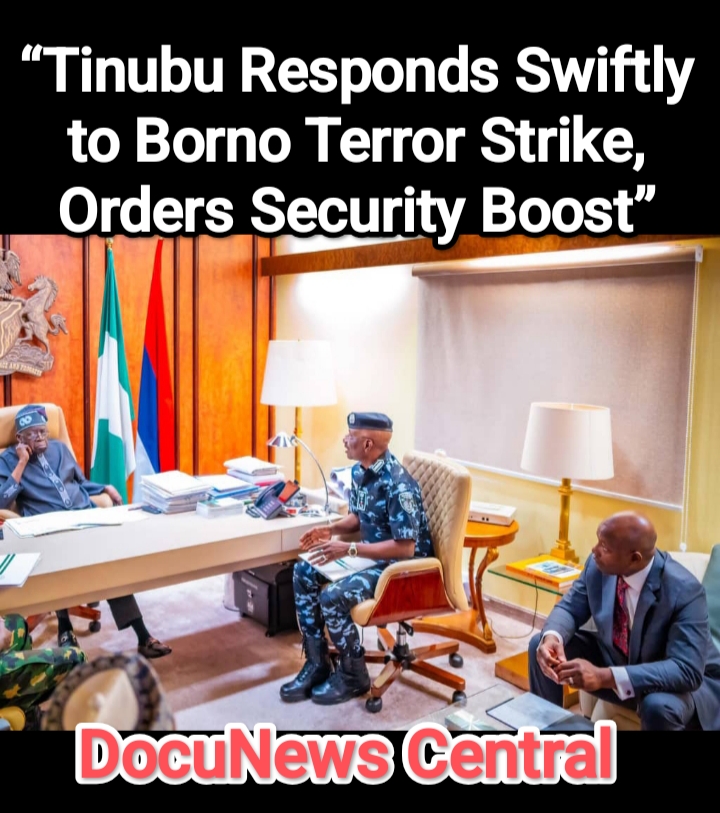
Tinubu In his Office with his Defense Minister.
Tinubu Responds Swiftly to Borno Terror Strike, Orders Security Boost
On Wednesday, December 24, 2025, a violent terrorist attack struck the city of Maiduguri in Borno State, Nigeria. The explosion occurred at the Al‑Adum Mosque in Gamboru Market during evening prayers. Consequently, the attack caused multiple casualties and instilled fear across the city. President Bola Ahmed Tinubu acted immediately by ordering enhanced security measures and deploying tactical teams to apprehend the perpetrators. (statehouse.gov.ng)
The attack highlights ongoing challenges in the northeast. Moreover, it underscores the urgency for coordinated security operations. Citizens, government officials, and civil society reacted strongly to the incident. This article examines the federal response, security measures, community impact, and the broader context of insurgency in Nigeria.
The Maiduguri Bombing
At approximately 6:10 p.m., an improvised explosive device detonated inside the mosque. Worshippers attending Maghrib prayers experienced panic, injuries, and confusion. Reports indicate that five people died while around 35 sustained injuries. Hospitals received victims immediately, and medical staff worked urgently to provide care. (tvcnews.tv)
Residents described chaotic scenes as people fled the area. Market stalls suffered damage, and emergency responders arrived quickly. In addition, eyewitnesses confirmed that the attackers targeted a densely populated religious area. Such incidents show the persistent threat posed by insurgents in northeastern Nigeria. (ripplesnigeria.com)
Historically, Borno State has faced repeated attacks from extremist groups, including Boko Haram and its splinter factions. These groups exploit vulnerable communities, targeting civilians and government facilities. For background on previous attacks, refer to the June 2025 Maiduguri bombing.
Immediate Federal Response
Following the attack, Vice-President Kashim Shettima condemned the violence and assured citizens that the government would act decisively. He emphasized that federal authorities collaborate with state security agencies to restore peace. (statehouse.gov.ng)
President Tinubu ordered tactical teams to move into Maiduguri immediately. These teams include personnel from the Nigerian Army, Department of State Services (DSS), and rapid-response units. Moreover, the president instructed security forces to intensify surveillance, monitor key locations, and apprehend suspects without delay. (tvcnews.tv)
Consequently, security agencies established checkpoints, expanded patrols, and coordinated intelligence sharing. These measures aim to prevent further attacks and reassure residents that their safety is a top priority. In addition, federal authorities deployed officers to strategic locations, including marketplaces, mosques, and other crowded areas. (saharareporters.com)
Strengthening Security Measures
Furthermore, authorities increased surveillance using drones, CCTV cameras, and mobile units. Officers conduct regular inspections at entrances to religious and commercial sites. Meanwhile, local community leaders cooperate with security agencies to report suspicious activities. These proactive steps aim to minimize future threats and increase citizen confidence.
Additionally, authorities reviewed emergency response protocols. Hospitals received instructions to prepare for mass casualty incidents. Security forces established rapid communication lines for immediate reporting of threats. As a result, response times have improved, and coordination between agencies became more efficient.
Government Communication Strategy
Vice-President Shettima addressed the nation to reassure citizens. He emphasized federal commitment to eliminating terrorism and protecting communities. Furthermore, he expressed condolences to families of victims and promised a swift investigation. The statement aimed to restore public trust and deter future attacks. (statehouse.gov.ng)
Moreover, media outlets broadcast updates and government advisories widely. Press conferences detailed tactical deployments, safety measures, and preventive strategies. Consequently, citizens received clear guidance on how to protect themselves and cooperate with authorities.
Broader Security Context
While investigations continue, analysts suggest Boko Haram or its splinter groups may be responsible. The Nigerian Army has urged heightened vigilance in religious centers, especially during festive seasons. (nairametrics.com)
Insurgency in northeastern Nigeria has displaced millions and disrupted economic activities. Moreover, difficult terrain, porous borders, and social challenges complicate counterterrorism efforts. For historical context, see June 2025 Maiduguri bombing.
Political and Civil Reactions
Opposition parties, including the Peoples Democratic Party (PDP), criticized the government’s security strategy. They accused the administration of failing to prevent attacks despite available intelligence. (vanguardngr.com)
Nevertheless, federal authorities stressed coordination between state and federal levels. Community leaders called for calm and unity, urging citizens to avoid panic. These efforts aim to maintain stability and prevent further social disruption.. Read Also “We Hit Them Hard”: Trump Confirms Lethal Military Strike Against Islamic State in Nigeria here at www.docunewscentral.com
Community Impact and Resilience
The attack deeply affected families, local businesses, and daily routines. Residents expressed grief and concern, yet many demonstrated resilience. Moreover, community organizations offered support, including counselling and financial aid. Such measures help victims recover and reinforce societal cohesion.
Religious leaders encouraged tolerance and cooperation. They emphasized that terrorism should not divide communities or instill fear. Meanwhile, security agencies maintain vigilance to ensure continuity of daily activities safely.
Next Steps
1. Investigation and Apprehension
Authorities will pursue suspects aggressively. They will combine intelligence gathering, forensic analysis, and tactical field operations. Moreover, collaboration across agencies will increase efficiency.
2. Strengthened Security Footprint
Checkpoints, patrols, and surveillance measures will continue in high-risk areas. Authorities plan regular security drills to improve responsiveness. Consequently, potential threats will be detected and neutralized promptly.
3. Community Support Programs
Government and NGOs will provide aid to affected families. Services include counseling, financial assistance, and social reintegration programs. Additionally, memorials will honor victims and support public healing.
4. Policy Review and Debate
The attack will renew discussions on security reforms. Policymakers may consider budget allocations, counterterrorism strategies, and intelligence enhancements. Therefore, long-term improvements are likely to follow.
Conclusion
President Tinubu acted decisively to address the Borno attack. Tactical teams, surveillance operations, and coordinated intelligence efforts demonstrate federal commitment. Meanwhile, citizens and community leaders cooperate to maintain order and resilience. (ripplesnigeria.com)
This incident highlights ongoing security challenges in northeastern Nigeria. Continuous vigilance, interagency coordination, and community engagement remain essential. Moreover, preventive measures and proactive policies will reduce risks and protect citizens during festive seasons and beyond.
Further Reading
- Reuters: Mosque bombing casualties
- June 2025 Maiduguri suicide bombing (Wikipedia)
- Sahara Reporters: Police screening measures