
Security
Security Alert: ISWAP Acquires 35 Drones to Target Nigerian Troops

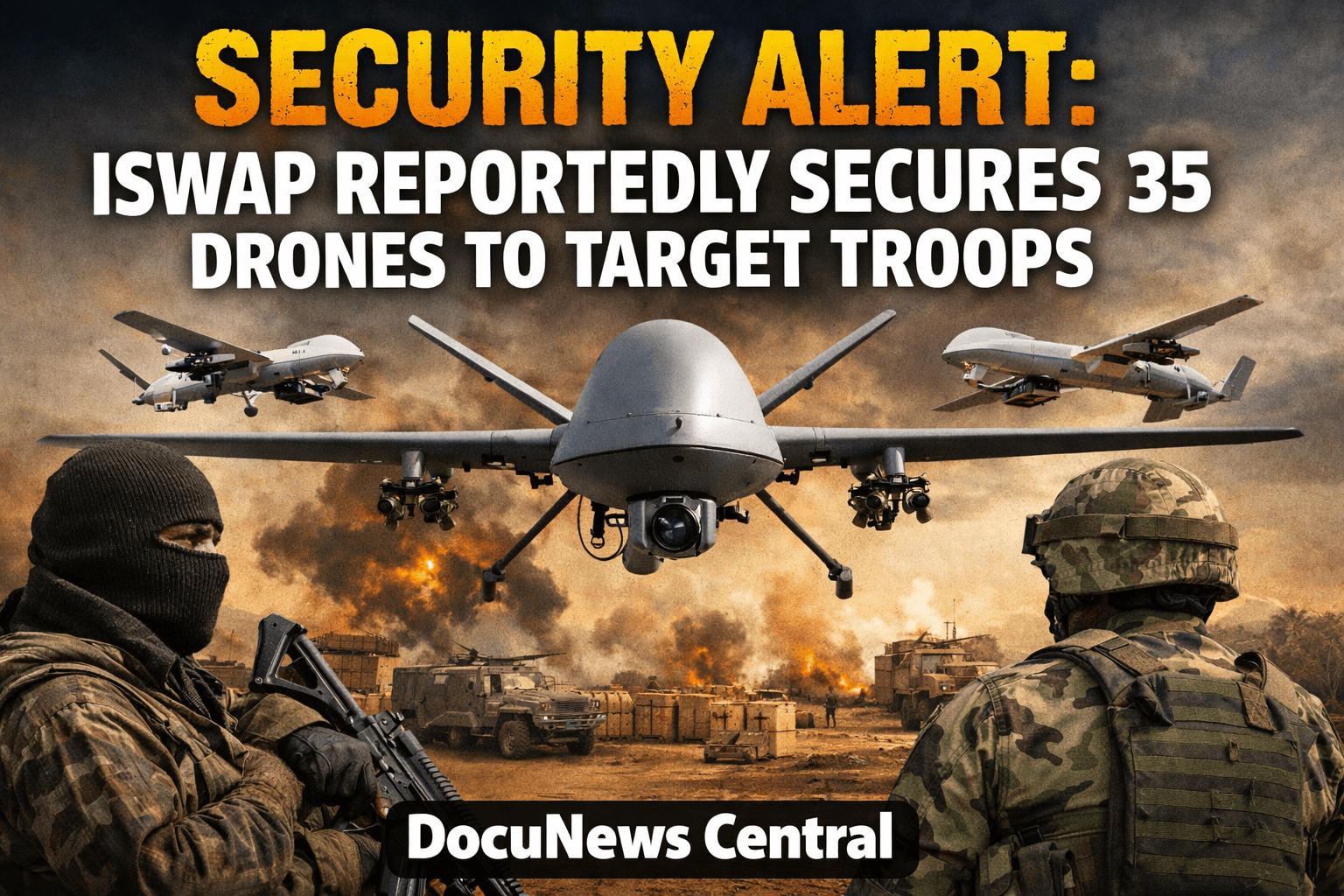
Security Alert: ISWAP Acquires 35 Drones to Target Nigerian Troops
The security situation in Nigeria’s North-East has become alarming. On Monday, 12 January 2026, reports confirmed that ISWAP acquired around 35 drones. The group plans to use these UAVs to target Nigerian troops in Borno and Yobe states. [Premium Times]
These drones introduce a new threat. As a result, military forces now face an enemy capable of observing troop movements from the sky. Analysts warn this development could significantly change combat strategies in the region.
ISWAP’s Drone Expansion Raises Serious Concerns
ISWAP has operated in the Lake Chad region for years. Nevertheless, acquiring drones shows increased sophistication. The UAVs are commercially modified but can perform surveillance and possibly offensive operations. [Global Upfront]
Security sources explained that drones provide real-time intelligence. Fighters can identify troop positions without direct engagement. Consequently, military planners fear this may change how operations occur in Borno and Yobe states.
Details from Monday, 12 January 2026
On Monday, 12 January 2026, Nigerian military intelligence confirmed the drones are operational. They are stationed at multiple locations along the Lake Chad corridor. Sources noted that ISWAP intends coordinated strikes on Nigerian positions. [Premium Times]
- 35 drones are ready for deployment.
- Insurgents moved them through established supply routes near Lake Chad.
- The UAVs can conduct reconnaissance, identify targets, and carry out potential strikes.
- Military officials issued alerts across sensitive areas.
The military has implemented countermeasures. Electronic warfare tools and early warning systems now detect drones before they strike. Furthermore, coordination between units has improved to reduce risks.
Impact on Troops and Civilians
The drones affect both soldiers and civilians. Troop movements may now be tracked. Therefore, military bases require heightened security. Civilians in operational areas could face risks if drones operate nearby. Relief agencies continue monitoring the situation closely.
Military officials emphasize vigilance. Trainers now instruct troops to respond quickly to aerial threats. Additionally, counter-drone measures protect both personnel and civilians. [Nigerian Army]
Drone Warfare: A New Challenge
Drone technology is transforming combat. Insurgents can gather intelligence and strike without direct confrontation. Analysts point out that ISWAP’s drone use mirrors global trends, where smaller groups leverage technology to offset conventional disadvantages. [Global Upfront]
Although the drones are not highly advanced, they remain dangerous. Nigerian troops and infrastructure could face serious risks without effective countermeasures. Therefore, adaptation and preparation are crucial.
Nigerian Military Response
Under Operation Hadin Kai, the Nigerian military intensified patrols. Commanders deployed counter-drone systems and electronic warfare technologies in key areas. In addition, they coordinated with regional and international partners to close operational gaps.
Troops now receive updated training to detect and respond to drones. Forward operating bases are reinforced. Supply routes receive close monitoring to prevent drone surveillance. Military leadership stresses rapid information sharing and proactive defense.
What Comes Next?
Experts predict ISWAP may conduct surveillance flights first. Strikes could follow depending on troop movements. The military prepares to intercept drones and minimize potential damage. Early detection and swift response remain critical.
Civilians in Borno and Yobe are advised to remain vigilant. Authorities urge communities to report unusual aerial activity immediately. Awareness campaigns educate residents on drone threats and safety measures. This emerging challenge could redefine regional security protocols.
Long-Term Implications
ISWAP’s drone acquisition signals a shift in insurgent capabilities. Small groups can now gather actionable intelligence remotely. This reduces their exposure to direct conflict. Nigerian forces must adapt to counter asymmetric threats effectively. Additionally, this highlights the importance of technology in modern warfare.
Military planners stress integrating drones into defense strategies. Monitoring insurgent movements and predicting attacks has become more critical than ever. Coordination between ground troops, aerial surveillance, and intelligence units ensures operational superiority.
Community and Humanitarian Concerns
Civilians now face increased risk. Drone activity over towns and villages could expose residents to danger. Humanitarian organizations prepare contingency plans. Evacuation routes, emergency shelters, and communication systems receive review.
Community leaders receive briefings on preventive measures. Awareness programs educate residents to identify suspicious aerial activity. Rapid reporting to authorities can save lives and reduce potential harm.
Regional Security Cooperation
Nigeria works with neighboring countries to address the drone threat. Sharing intelligence and conducting coordinated patrols form part of regional security initiatives. Cross-border monitoring prevents drones from operating outside Nigerian territory. This cooperation strengthens security across the Lake Chad region.
International partners contribute expertise in counter-drone technologies. Joint efforts enhance detection, tracking, and neutralization. Training programs for military personnel now include global best practices to improve effectiveness.
Conclusion
Reports from Monday, 12 January 2026 reveal a significant development in North-East Nigeria. ISWAP’s 35 drones pose a serious threat to troops in Borno and Yobe. Military adaptation, proactive countermeasures, and civilian awareness remain crucial to mitigate danger.
The skies above the region are now as contested as the ground. Rapid response, coordination, and preparedness remain vital. Both military personnel and civilians face new risks. Vigilance is required to maintain security and stability. [Premium Times]
Related Stories:
- Army Disrupts Gun Supply, Rescues 18 From Sea Pirates
- Military Bombs Waste Funds Meant for Schools — Gumi
- Suspected Terrorists Strike Police Post in Kogi, Kill CJTF Operative
