
Security
Army Disrupts Gun Supply, Rescues 18 From Sea Pirates

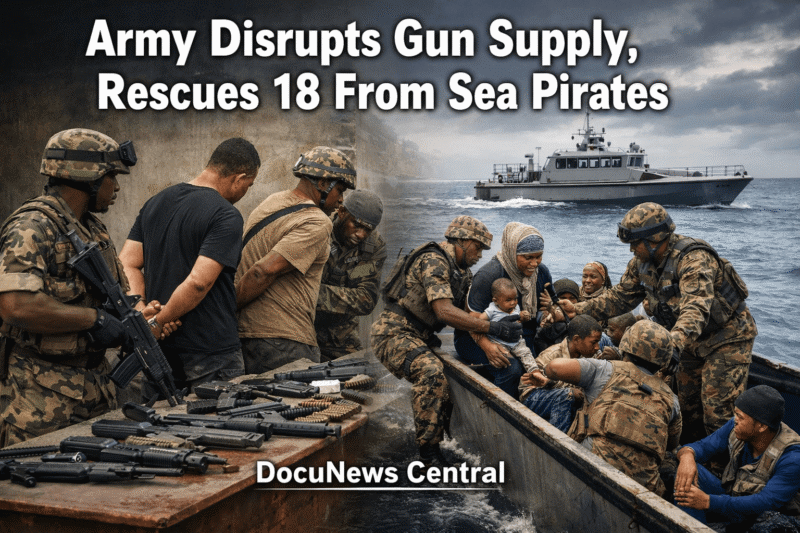
Army Disrupts Gun Supply, Rescues 18 From Sea Pirates
Security operations often unfold quietly, yet their impact reshapes lives and restores confidence across affected communities. Such was the case when coordinated military actions protected civilians and blocked criminal activity across two strategic regions of Nigeria. On Monday, January 12, 2026, Nigerian Army units carried out decisive operations in Taraba State and Cross River State, stopping illegal arms movement and freeing innocent passengers from maritime criminals. The actions, which occurred between the morning and late afternoon hours, reflected firm resolve and careful execution.
The successful missions underscored the importance of vigilance, intelligence-driven planning, and rapid response in maintaining national security. Communities that had faced anxiety over rising criminal threats welcomed the developments with renewed hope and trust in security institutions.
Early Intelligence Leads to Arrests in Taraba State
In the early hours of Monday, January 12, 2026, at about 8:30 a.m., Nigerian Army personnel acting on credible intelligence intercepted two suspected gun suppliers along a known transit corridor in Jalingo, Taraba State. The suspects were believed to be transporting firearms intended for criminal networks operating within and beyond the region.
Prior intelligence reports had highlighted an increase in covert movements along rural routes connecting border communities. Acting swiftly, troops established a discreet surveillance operation that allowed them to track the suspects without alerting nearby accomplices. This approach reduced the risk of confrontation and ensured public safety.
Following a brief interception, the two individuals were taken into custody without incident. Security personnel recovered items suspected to be linked to arms trafficking, which were immediately documented and secured for further investigation. Authorities confirmed that the suspects would face interrogation and prosecution in line with Nigerian law.
Local residents later expressed relief that the operation prevented dangerous weapons from reaching criminal hands. Many noted that illegal arms circulation had fueled insecurity and economic disruption in recent months. The arrests therefore represented more than a law enforcement success; they marked a turning point for community confidence.
How the Army Disrupts Gun Supply Networks
Efforts to curb illegal weapons distribution require a layered strategy. In this case, military units combined intelligence analysis, community engagement, and route monitoring to achieve success. By cutting off supply lines, security forces reduced the operational capacity of armed groups that rely on such weapons to sustain criminal activity.
Military officials explained that disrupting supply chains often yields long-term benefits. When weapons fail to reach intended destinations, criminal plans collapse, internal rivalries weaken, and communities gain breathing space. This operation in Taraba State demonstrated how targeted action can create widespread positive effects.
Beyond arrests, the operation sent a deterrent signal to others involved in arms trafficking. Authorities emphasized that surveillance along key transit corridors would continue, ensuring that similar attempts face swift consequences.
Distress Call Sparks Swift Response in Cross River
Later that same day, attention shifted from land routes to coastal waters. At approximately 3:45 p.m. on Monday, January 12, 2026, Nigerian Army maritime units received an emergency alert concerning an attack on a passenger boat in Akpabuyo Local Government Area, Cross River State.
The vessel, carrying 18 passengers including women and infants, was traveling toward Calabar when armed sea pirates intercepted it. Witnesses later reported that the attackers demanded valuables and threatened passengers, creating panic among those onboard.
Water transport remains vital for many coastal communities, making such attacks especially disruptive. Families depend on boats for trade, schooling, and medical access. The incident therefore posed a serious threat not only to the passengers but also to regional stability.
Upon receiving the distress call, military units deployed immediately. Patrol boats moved toward the reported location, guided by real-time communication and local navigation knowledge. The rapid response limited the pirates’ ability to relocate or escalate the situation.
Army Disrupts Gun Supply Efforts Behind Maritime Crime
Maritime crime often connects directly to illegal arms circulation. Pirates rely on weapons to intimidate passengers and resist security patrols. By confronting such incidents, security forces not only protect victims but also weaken broader criminal networks.
During the Cross River operation, troops approached with caution, prioritizing civilian safety. Their presence alone disrupted the attackers’ plans. The pirates retreated, allowing soldiers to secure the boat and escort passengers to safety.
Medical personnel examined the rescued individuals upon arrival at shore. Although shaken, all passengers were confirmed safe. Families reunited, and community leaders expressed gratitude for the swift intervention.
Relief and Gratitude From Affected Communities
Following the operations, reactions across Taraba and Cross River reflected widespread relief. Traders, fishermen, and commuters acknowledged that security challenges had affected daily routines. Many expressed appreciation that decisive action restored a sense of normalcy.
In Jalingo, business owners noted improved confidence in transporting goods. In coastal settlements near Akpabuyo, boat operators reported renewed willingness among passengers to travel by water. These responses highlighted the broader social impact of effective security measures.
Community leaders urged residents to continue cooperating with authorities. They emphasized that timely information sharing remains essential for preventing crime and ensuring rapid response when threats arise.
Coordinated Security Strategy at Work
The successes recorded on January 12, 2026, illustrated the value of coordination among security units. Intelligence teams, ground troops, and maritime patrols worked within a unified framework that emphasized communication and adaptability.
Officials explained that operations now rely heavily on community-based intelligence. Residents familiar with local terrain and routines often provide early warnings that enable preventive action. This partnership strengthens trust and enhances effectiveness.
Logistical preparedness also played a role. Adequate equipment, trained personnel, and clear command structures ensured that responses remained efficient and disciplined throughout both operations.
Broader Implications for National Security
Security analysts note that such operations contribute to long-term stability. By addressing both land-based arms trafficking and maritime crime, authorities tackle interconnected threats. Reduced weapon availability limits violent crime, while safer waterways support economic growth.
These efforts align with national objectives to secure borders, protect trade routes, and safeguard citizens. While challenges remain, each successful intervention builds momentum toward sustained improvement.
Observers also stress the importance of legal follow-through. Prosecuting suspects transparently reinforces deterrence and strengthens public trust in the justice system.
Steps Toward Sustained Safety
Maintaining progress requires continued investment in surveillance, training, and community outreach. Expanding patrol coverage along waterways and transit corridors will further limit criminal opportunities.
Public awareness campaigns can also help residents recognize and report suspicious activity. When communities feel empowered, security efforts gain depth and reach.
Support for victims remains equally important. Counseling and reintegration assistance help affected individuals recover and resume normal life after traumatic experiences.
Conclusion
On Monday, January 12, 2026, Nigerian Army operations in Taraba State and Cross River State delivered meaningful results. Two suspected gun suppliers were arrested in Jalingo during a morning operation, while 18 passengers were rescued from sea pirates off the Akpabuyo coastline later that afternoon.
These actions demonstrated effective planning, rapid response, and commitment to public safety. For residents of both regions, the operations restored confidence and underscored the value of vigilance and cooperation. As security forces continue their efforts, communities across Nigeria look forward to safer roads, waterways, and everyday life.
For additional updates on security developments, visit our internal coverage on Security updates Nigeria
For official information, see the Nigerian Army and global perspectives from the United Nations Office for Disarmament Affairs.
Related Stories:
- Military Bombs Waste Funds Meant for Schools — Gumi
- Suspected Terrorists Strike Police Post in Kogi, Kill CJTF Operative
- Police, Military Take War to Bandits in Kogi Forests
- Rule of Law Under Fire Over Nnamdi Kanu’s Detention

droversointeru
January 26, 2026 at 7:02 am
You can definitely see your enthusiasm within the work you write. The arena hopes for even more passionate writers such as you who aren’t afraid to say how they believe. Always follow your heart.