





Photo Credit Visit Disclaimers: Use Of AI Images In Our Newsletters
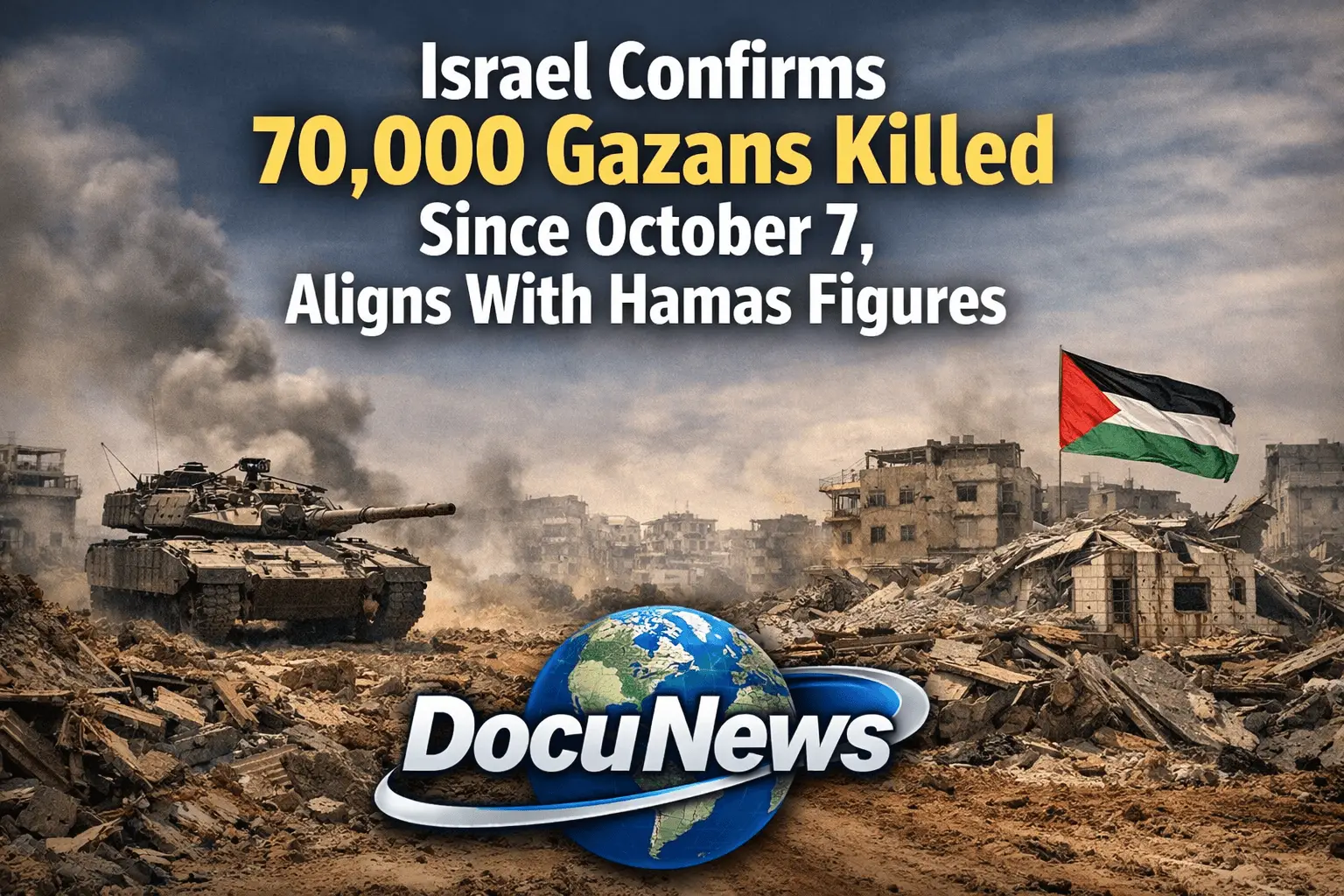
Israel Confirms 70,000 Gazans Killed Since October 7, Aligns With Hamas Figures
Some wars end with treaties. Others end with truths that take years to surface. In the case of the war between Israel and Hamas, one of the most contested truths has always been the human cost. Numbers became weapons. Statistics turned political. Every figure faced challenge, denial, or dismissal.
Now, after nearly eighteen months of sustained fighting, mounting international scrutiny, and growing internal assessments, the Israeli military has publicly acknowledged that approximately 70,000 people have been killed in the Gaza Strip since the war began. Crucially, this estimate aligns closely with the figure long reported by the Hamas-run Gaza Health Ministry.
This development marks a historic shift. For the first time since October 7, 2023, Israel has accepted the overall magnitude of the death toll cited by Gaza authorities. While disagreements remain over classifications and responsibility, the acceptance of the total number changes the narrative of the war’s human impact.
The confirmation does not signal the end of the conflict. However, it reshapes how the war will be remembered, analyzed, and judged in the years ahead.
Read also Deadly Night in Ukraine: Russian Drone Attack Leaves Three Dead
The Attack That Triggered the War
The current conflict did not emerge gradually. It began with shock and violence that reverberated far beyond the region.
On October 7, 2023, Hamas and allied armed groups launched a coordinated assault from the Gaza Strip into southern Israel. Fighters crossed fortified borders, attacked civilian communities, struck military bases, and seized hostages. The scale and speed of the attack stunned Israeli authorities and the international community.
Israeli officials later confirmed that about 1,200 people were killed during the assault, most of them civilians. In addition, around 250 individuals were abducted and taken into Gaza. The attack marked one of the deadliest days in Israel’s history.
Israel responded with an immediate and expansive military campaign. Airstrikes targeted Hamas infrastructure. Ground forces entered Gaza weeks later. Over time, the operation expanded across northern, central, and southern parts of the enclave.
As the fighting intensified, so did the debate over civilian casualties.
Israel Confirms 70,000 Gazans Killed Since October 7
From the early weeks of the war, the Gaza Health Ministry released frequent casualty updates. These figures quickly climbed into the tens of thousands. Israel consistently disputed them, arguing that Hamas controlled the ministry and manipulated information for propaganda purposes.
That stance has now softened.
On January 29, 2026, senior Israeli military officials briefed journalists and confirmed that their internal assessments place the total number of deaths in Gaza at around 70,000 since October 7, 2023. This estimate broadly matches the figure reported by the Gaza Health Ministry.
Israeli officials stressed that the military has not published a complete, independent casualty registry. However, intelligence reviews, satellite analysis, battlefield reports, and demographic modeling led analysts to conclude that the overall number cited by Gaza authorities reflects the scale of loss.
This acknowledgment represents Israel’s first public alignment with Hamas-run figures since the war began.
You may have missed this 15 Dead in Colombian Plane Crash, Including Prominent Lawmaker
How the Gaza Health Ministry Compiled Its Figures
The Gaza Health Ministry has served as the primary source of casualty data throughout the conflict. Hospitals, clinics, emergency responders, and morgues provided the raw data. Civil registries also contributed to the overall count.
The ministry reported more than 70,000 deaths and over 170,000 injuries by late January 2026. These numbers include men, women, and children. They do not separate civilians from fighters. They also do not consistently specify causes of death.
International organizations such as the United Nations and the World Health Organization frequently cited the ministry’s figures while noting limitations. Despite those caveats, the absence of alternative comprehensive data meant the numbers shaped global understanding of the war.
Israel long rejected these totals. That rejection no longer defines official policy.
Why Israel’s Acceptance of the Figure Matters
The significance of Israel’s acknowledgment extends far beyond a single statistic.
First, it influences historical documentation. Casualty figures form the backbone of how wars are recorded and studied. Acceptance by one of the warring parties strengthens the credibility of the record.
Second, it affects global media coverage. For months, journalists balanced Gaza Health Ministry figures against Israeli denials. That balance now shifts, reducing uncertainty about the scale of loss.
Third, it impacts humanitarian planning. Aid agencies rely on accepted casualty data to assess needs, allocate resources, and plan reconstruction efforts.
Finally, it shapes legal and ethical debates. Any future investigations into the conduct of the war will begin with widely accepted baseline figures.
What “Aligns With Hamas Figures” Really Means
Israel’s alignment with the Gaza Health Ministry’s estimate does not mean full agreement on interpretation.
Israeli officials emphasize that the figure reflects total deaths, not confirmed civilian deaths. The military continues to argue that many of those killed were Hamas fighters or members of other armed groups.
The Gaza Health Ministry does not provide a combatant-civilian breakdown. As a result, disputes persist over proportions rather than totals.
Even so, acknowledgment of the total number represents a decisive shift from outright rejection.
Israel Confirms 70,000 Gazans Killed Since October 7: The Human Reality
The number reflects lives disrupted, families shattered, and communities erased.
Gaza is among the most densely populated territories in the world. As Israeli forces advanced, residential neighborhoods became combat zones. Entire districts suffered extensive damage or destruction.
Hospitals struggled to operate under bombardment and shortages. Medical staff worked under extreme conditions. Power outages, fuel shortages, and limited supplies compounded the crisis.
Displacement became widespread. Many families fled multiple times, often with little warning. Shelters overflowed. Aid deliveries faced severe restrictions.
The confirmed death toll underscores the scale of this humanitarian catastrophe.
You may have missed this Seven Fighters Killed In Kastina as Bello Turji Seizes Jibia Peace Broker
Why Israel Delayed Confirming the Death Toll
Several factors explain the delay.
First, access to Gaza remained severely restricted. Independent verification proved difficult during active combat.
Second, Israeli officials feared that accepting Hamas-linked figures could legitimize the group politically.
Third, military assessments require time. Analysts must cross-check intelligence, strike records, and population data.
Over time, however, internal estimates increasingly mirrored Gaza’s published figures. Denial became harder to sustain.
International Reaction to the Confirmation
Humanitarian organizations described the acknowledgment as overdue.
Diplomats said the confirmation reinforced long-standing concerns about civilian harm.
Legal experts noted that accepted casualty figures could influence future inquiries into the war.
At the same time, Israeli officials reiterated that casualty totals alone do not determine legality or intent.
The debate continues, but the numbers now carry official recognition.
Verified Sources and Reporting
The acknowledgment appeared in reports published on January 29, 2026, by multiple outlets, including:
These reports cited senior Israeli military officials speaking on background.
What Remains Unclear
Despite alignment on totals, major questions remain unanswered.
How many of those killed were civilians?
How many were fighters?
How many deaths resulted indirectly from the collapse of health services and infrastructure?
Israel says further analysis continues.
Conclusion: A Defining Moment in the War’s Narrative
Israel confirms 70,000 Gazans killed since October 7.
That acknowledgment alone reshapes the conversation.
For the first time, Israel publicly aligns with the Hamas-run Gaza Health Ministry’s estimate. The confirmation does not erase suffering or resolve disputes. However, it anchors the war’s human cost in a shared reality.
As the conflict moves into its next phase, future debates will focus less on whether the losses occurred and more on accountability, reconstruction, and what comes next for Gaza and Israel alike.

One thought on “Israel Confirms 70,000 Gazans Killed Since October 7, Aligns With Hamas Figures”