




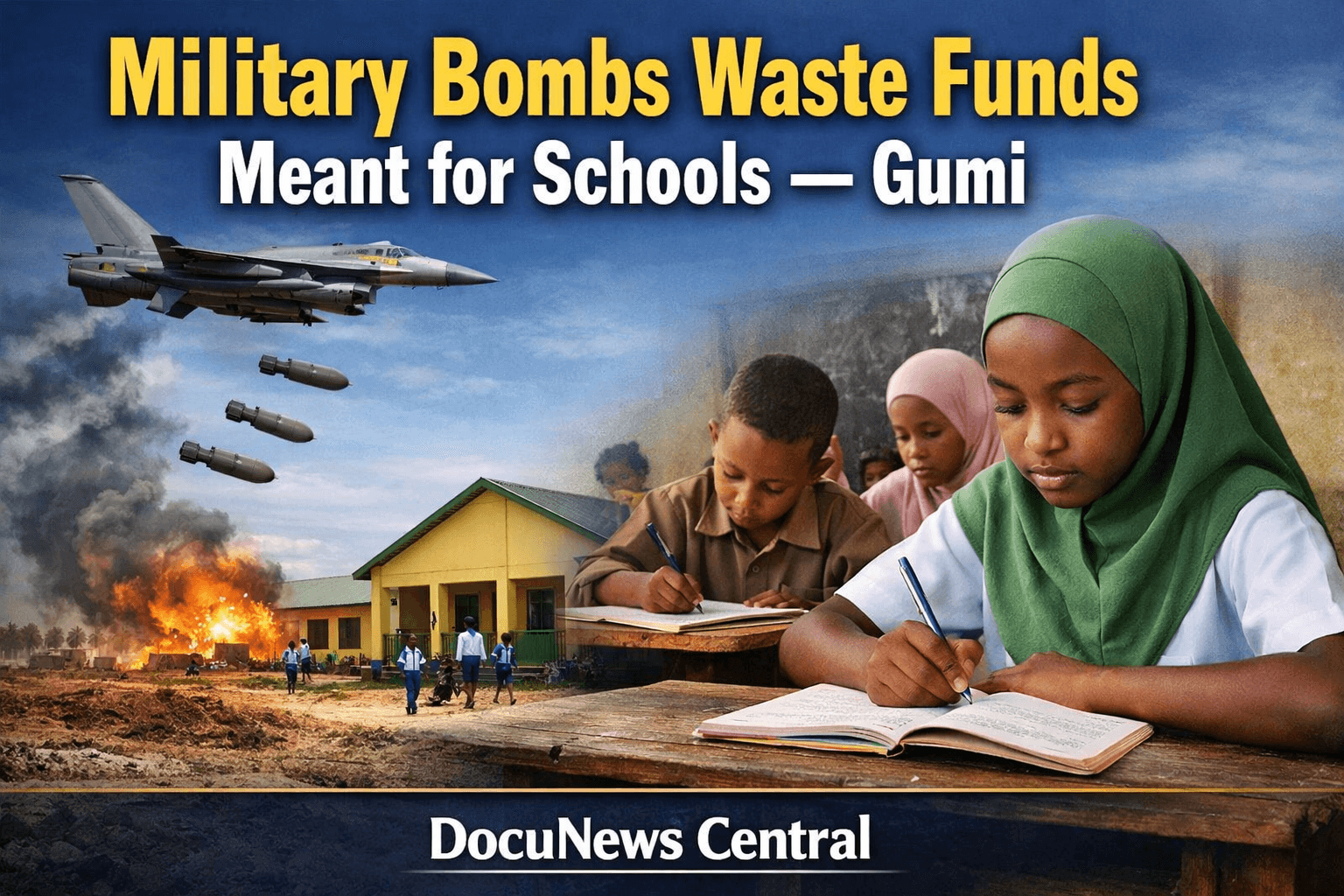
Military Bombs Waste Funds Meant for Schools — Gumi
Many Nigerians continue to debate the best approach to security and development, but few have spoken as boldly as Sheikh Ahmad Gumi. On Monday, 29 December 2025, in Sokoto State, Nigeria, at around 2:35 PM local time, the renowned cleric delivered a statement that stirred national conversation. He highlighted that millions spent on military bombs targeting terrorists could have been better invested in education, particularly in building schools and empowering communities. Gumi’s remarks shed light on the broader issue of how Nigeria allocates resources and the long-term impact of those choices.
The security challenges in Nigeria are complex and multifaceted. Militant groups, armed bandits, and terrorist organizations continue to destabilize communities across the north and central regions. While military action is often viewed as the primary solution, the high cost of bombs and airstrikes has prompted Gumi to question whether this approach is sustainable. He asserts that investing in education provides more lasting solutions by tackling the root causes of violence, rather than only addressing its symptoms.
Why Military Bombs Waste Funds Meant for Schools
The financial burden of ongoing military operations in Nigeria is staggering. Reports indicate that a single airstrike can cost several million Naira, factoring in intelligence, logistics, and weaponry. These costs, Gumi argues, could fund the construction of multiple schools, train hundreds of teachers, and supply essential learning materials to underserved communities. By redirecting these funds, Nigeria could create opportunities for young people who might otherwise be susceptible to extremist recruitment.
Moreover, the human cost of relying heavily on military action cannot be ignored. Airstrikes and ground operations often result in displacement, destruction of property, and trauma for communities caught in conflict zones. Education, by contrast, builds resilience, equips students with skills, and strengthens communities from within. Gumi’s critique suggests that policymakers must weigh the immediate gains of military action against the long-term benefits of social investment.
For context, consider [UNESCO reports on literacy and education in Nigeria](https://www.unesco.org/en). These reports highlight gaps in access to education, particularly in conflict-affected regions. Additionally, organizations such as the [Global Partnership for Education](https://www.globalpartnership.org/where-we-work/nigeria) provide insights into the potential impact of sustained investment in schools. Gumi’s argument aligns with these findings, emphasizing that education can act as a preventive tool against violence and extremism.
Schools as Catalysts for Community Transformation
Gumi stressed that schools are more than structures; they are catalysts for societal transformation. In northern Nigeria, decades of conflict have destroyed or disrupted access to education. Communities struggle with inadequate infrastructure, a shortage of qualified teachers, and limited educational resources. This has particularly affected vulnerable populations, including girls and rural children, exacerbating cycles of poverty and marginalization.
By investing funds currently used for military operations into schools, Nigeria could provide safe learning environments, equip classrooms with modern materials, and implement programs that foster critical thinking and leadership skills. Education also promotes social cohesion, reduces the appeal of extremist ideologies, and equips future generations to contribute positively to society. Gumi emphasized that redirecting these funds is not merely symbolic; it represents a practical strategy to address insecurity at its roots.
Communities themselves echo Gumi’s concerns. In interviews conducted with residents of Sokoto and neighbouring regions, parents frequently highlighted their fears of sending children to school due to insecurity. Many also noted that investment in education could provide alternative livelihoods, reduce dependence on crime, and empower local youth. This perspective reinforces the idea that military interventions alone cannot achieve sustainable peace.
Rethinking Security: Education as a Preventive Strategy
Education offers a proactive approach to national security. While military interventions can neutralize immediate threats, they do not address the systemic issues that give rise to violence. Schools, by contrast, create environments that encourage learning, critical thinking, and social responsibility. By equipping young people with knowledge and skills, education reduces the likelihood of radicalization and builds more resilient communities.
Investing in schools also generates economic benefits. Literate and skilled populations contribute to local economies, attract investment, and improve governance. By prioritizing education, Nigeria can cultivate a generation capable of addressing security challenges with innovative and sustainable solutions. Sheikh Gumi’s remarks suggest that long-term stability depends not on bombs, but on building human capacity and opportunity.
International examples support this view. In countries that have invested heavily in education despite security challenges, communities have demonstrated reduced conflict and improved social outcomes. For instance, [UNICEF reports on education in conflict zones](https://www.unicef.org/education) show that schools can serve as centers for social support and conflict prevention, providing children with safe spaces and promoting resilience in affected populations.
Voices from the Ground
The response to Gumi’s statement among local residents has been mixed but generally receptive. Many parents, educators, and community leaders agree that education is urgently needed. They recognize that children’s futures depend not only on immediate security but also on access to quality learning. At the same time, some residents emphasize that military protection remains critical to prevent attacks from armed groups, highlighting the delicate balance between immediate safety and long-term investment.
Experts in social development echo these sentiments. Scholars argue that without addressing underlying social and economic inequalities, security measures alone are insufficient. Investments in education, healthcare, and community development can reduce recruitment into extremist groups and foster sustainable peace. By advocating for schools over bombs, Gumi aligns his vision with broader development goals, emphasizing prevention rather than reaction.
National Implications: Policy and Investment
Gumi’s critique carries significant implications for national policy. Nigeria allocates substantial resources to military operations, often at the expense of social development programs. Redirecting even a fraction of these funds toward education could have transformative effects on communities across the north and central regions.
Policymakers face challenges in implementing such shifts, including political resistance, logistical constraints, and entrenched security concerns. However, the potential benefits — improved literacy rates, economic development, reduced violence, and enhanced social cohesion — make a compelling case for reassessing budget priorities. Initiatives such as [Nigeria’s Universal Basic Education Commission](https://ubeconline.com/) demonstrate the effectiveness of targeted investments in schooling and community programs. Legit.ng
Conclusion: Reimagining Priorities for Peace and Progress
On Monday, 29 December 2025, at around 2:35 PM in Sokoto State, Nigeria, Sheikh Ahmad Gumi issued a challenge to conventional security thinking. He argued that military bombs waste funds meant for schools, urging the government and citizens to consider long-term solutions to insecurity. His vision emphasizes education as a cornerstone of sustainable peace, promoting investment in human capital rather than destructive interventions.
Redirecting resources from military expenditures to education could create safe schools, provide opportunities for young people, and build resilient communities. Gumi’s statement encourages reflection on how Nigeria defines security and progress. Ultimately, sustainable peace depends not on the quantity of bombs dropped but on the quality of investments made in the next generation. By following this approach, Nigeria can cultivate a society equipped to face both current and future challenges with knowledge, skill, and resilience.
For further reading on education initiatives and conflict prevention strategies, visit [Global Partnership for Education Nigeria](https://www.globalpartnership.org/where-we-work/nigeria) and [UNESCO Education Reports](https://www.unesco.org/en). These resources offer insights into how targeted investment in education can create safer, more prosperous communities.
Related Stories
- Suspected Terrorists Strike Police Post in Kogi, Kill CJTF Operative
- Bandits Invade Sokoto Market, Leave Two Currency Dealers Dead
- Police, Military Take War to Bandits in Kogi Forests



One thought on “Military Bombs Waste Funds Meant for Schools — Gumi”