
National
Demand for Nnamdi Kanu’s Relocation As US Airstrikes Hit Sokoto

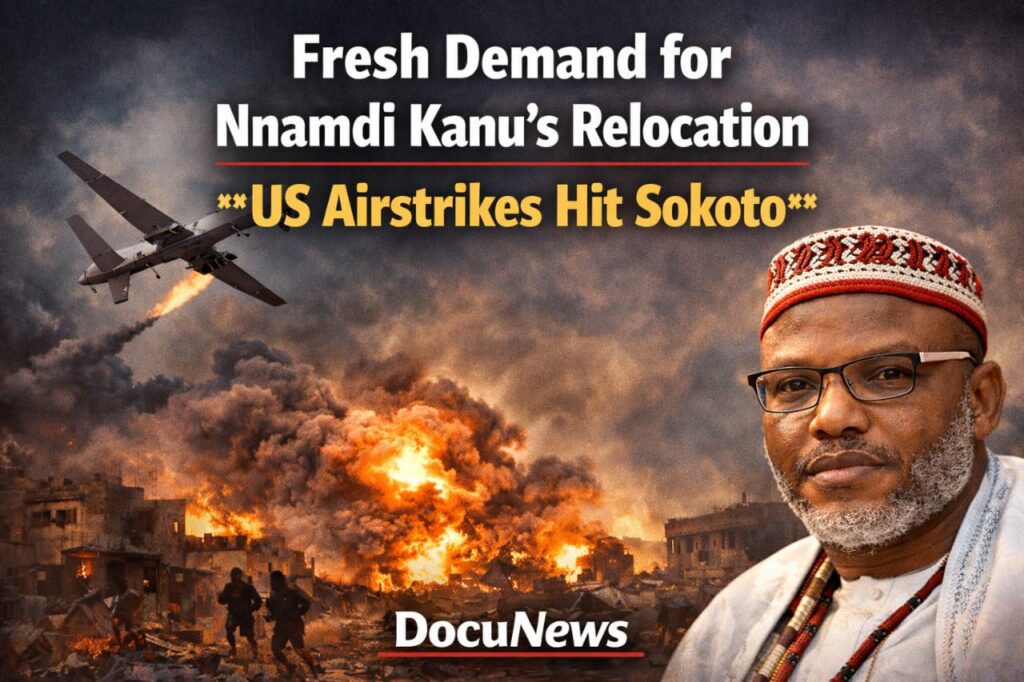
Fresh Demand for Nnamdi Kanu’s Relocation After US Airstrikes Hit Sokoto
Recent US airstrikes in Sokoto have reignited calls for relocating Nnamdi Kanu, the leader of the Indigenous People of Biafra (IPOB). On Christmas Day, the United States conducted targeted strikes against suspected militant hideouts. While intended to curb terrorist activities, these operations have raised serious concerns about civilian safety and the security of high-profile figures like Kanu.
Residents across Sokoto reported hearing multiple explosions that shook entire neighborhoods. Emergency services were mobilized immediately, and several districts underwent evacuation procedures. Families described a state of panic, with the holiday season amplifying fear. Local authorities emphasized the need for swift intervention to protect both civilians and prominent individuals from unintended harm. Read also “We Hit Them Hard”: Trump Confirms Lethal Military Strike Against Islamic State in Nigeria here at www.docunewscentral.com
Calls for Relocation
Regional leaders and security experts have called on the federal government to reconsider Kanu’s current location. A spokesperson for the security committee stated:
“Given recent developments, relocating key figures is essential. Security must take priority to prevent escalation or unintended consequences.”
Moving Kanu to a neutral and well-protected environment could help maintain political dialogue and prevent sudden disruptions.
Political analysts warn that airstrikes can complicate ongoing discussions between the federal government and IPOB. Dr. Chukwudi Eze of DocuNews Central commented:
“Ensuring the safety of political leaders like Kanu is crucial for dialogue. Relocation can reduce tensions and provide a secure environment for negotiation.”
By creating a safer space, authorities could allow constructive talks to continue while minimizing the risk of violent escalation.
Background on US Airstrikes and Sokoto
Sokoto, historically considered a relatively peaceful region, has increasingly faced security challenges over the past decade. Armed groups and militant networks have occasionally launched attacks, prompting both local and international responses. The recent US airstrikes form part of a broader counterterrorism strategy in West Africa.
While these operations aim to dismantle militant infrastructure, they also risk destabilizing local communities if conducted without precise coordination. Humanitarian organizations have previously highlighted the dangers of airstrikes in densely populated areas. Reports show that civilian casualties often accompany military operations when precautionary measures are insufficient.
Experts emphasize that protecting civilians is not only a moral obligation but also critical to preventing further radicalization and resentment within affected communities. Also for more verified news like ours visit Legit.ng
International Cooperation and Security
The airstrikes have sparked discussion about the role of international partners in domestic security matters. While foreign support can strengthen counterterrorism efforts, it can also complicate local political dynamics. Observers warn that operations lacking coordination with Nigerian authorities can inadvertently threaten civilians and high-profile political figures.
According to BBC News, transparency and strict safety protocols are essential in joint security operations. Experts argue that foreign involvement must complement, not undermine, local authority strategies. This ensures that military actions are effective without escalating tensions or creating new security risks.
Human rights organizations have urged full accountability for all parties involved. Amnesty International emphasized that adherence to international law is crucial to protecting civilians, including prominent figures like Kanu. Failure to maintain compliance could heighten local and international criticism and threaten regional stability.
Public Reaction and Social Media
The Sokoto community has actively used social media to share information about evacuation routes and safety measures. Residents have expressed concern for both themselves and prominent figures, noting that clear communication is essential to prevent panic and misinformation.
Analysts highlight that transparent, timely updates from authorities can reassure citizens and build public trust during tense situations. Lawmakers in the National Assembly have also raised concerns about the potential risks of foreign-led security operations. Upcoming sessions aim to review the implications for civilian protection, political stability, and regional security.
Relocating Kanu is seen as a precautionary measure that reduces the risk of targeted attacks while allowing dialogue to continue.
Political and Strategic Implications
Experts note that relocating Kanu has both political and strategic significance. Moving high-profile figures to safe zones ensures that dialogue with the federal government can proceed without disruption. Beyond immediate security concerns, relocation helps maintain civil society cohesion, ensures community trust, and mitigates the risk of escalating political tensions.
Interviews conducted by DocuNews Central show diverse opinions among Sokoto residents. Chief Obi Nwosu, a local security advisor, said:
“Relocation is the most practical option now. It allows key figures to operate safely while counterterrorism continues.”
Similarly, Dr. Fatima Bello, a political risk management expert, emphasized:
“Foreign involvement in local security must be carefully planned. Any misstep can affect public perception and government credibility.”
Legal and Humanitarian Considerations
The airstrikes have also raised legal questions regarding international law and Nigeria’s domestic regulations. Experts stress that compliance with both Nigerian law and international humanitarian standards is essential to prevent violations. According to ICRC reports, balancing operational effectiveness with humanitarian responsibility is critical. This includes minimizing civilian casualties, protecting political leaders, and ensuring the legitimacy of counterterrorism operations.
Humanitarian organizations highlight the importance of safe corridors for civilians during military operations. Transparent reporting and oversight mechanisms can prevent violations, reduce civilian harm, and ensure accountability for any unintended consequences.
Broader Political Context
The relocation debate comes amid broader discussions about Nigeria’s security policy. Analysts note that protecting high-profile political figures, especially during periods of foreign military involvement, is not only a security issue but a political strategy. Ensuring Kanu’s safety could strengthen ongoing dialogue, reduce tensions in the southeast, and signal responsible governance to the international community.
Additionally, relocation serves as a confidence-building measure. Communities and stakeholders observing the government’s approach may interpret proactive security steps as a commitment to peace and political stability.
Benefits of Relocation
- Enhanced Safety: Provides a controlled environment for political leaders and reduces the risk of targeted attacks.
- Facilitates Dialogue: Neutral zones create opportunities for uninterrupted discussions between the government and IPOB.
- Reduces Misinformation: Secure areas allow authorities to communicate directly with the public, countering rumors.
- Maintains Stability: Structured protocols for high-profile figures ensure continuity in governance and civil operations.
- Signals Proactive Leadership: Demonstrates that authorities prioritize both security and political processes.
Security experts recommend comprehensive protocols, including secure transport, vetted facilities, coordination with local law enforcement, and strict monitoring of public communications. These measures collectively reduce risks while enabling leaders to perform their roles safely.
Public Engagement and Media
Media coverage plays a critical role in shaping public perception during security crises. Authorities are encouraged to provide frequent updates, ensuring accurate information reaches the population. Analysts suggest using both traditional media and social platforms to counter misinformation, reassure residents, and maintain trust.
Social media reactions in Sokoto reveal a mix of concern and calls for urgent government action. Citizens have shared safety tips, evacuation plans, and community resources. Engagement from political leaders and security agencies helps mitigate fear and promotes cooperative responses to emergency situations.
Conclusion
The US airstrikes in Sokoto have heightened calls for Nnamdi Kanu’s relocation. Analysts, community leaders, and political experts agree that swift action is necessary to protect individuals and maintain regional stability. Relocating Kanu to a secure environment supports ongoing dialogue, reduces tensions, and prevents unintended consequences stemming from foreign-led military operations.
Ensuring the safety of political figures is a strategic measure that benefits both governance and regional security. For continuous updates and detailed analysis, visit DocuNews Central.
Related Articles
- Nigeria Security Updates
- International News on Africa
- Analysis: Nnamdi Kanu and Regional Security
- Amnesty International Reports
- DocuNews Central
