
National
Supreme Court Orders VP Rodríguez to Lead Venezuela as Maduro Faces U.S. Pressure

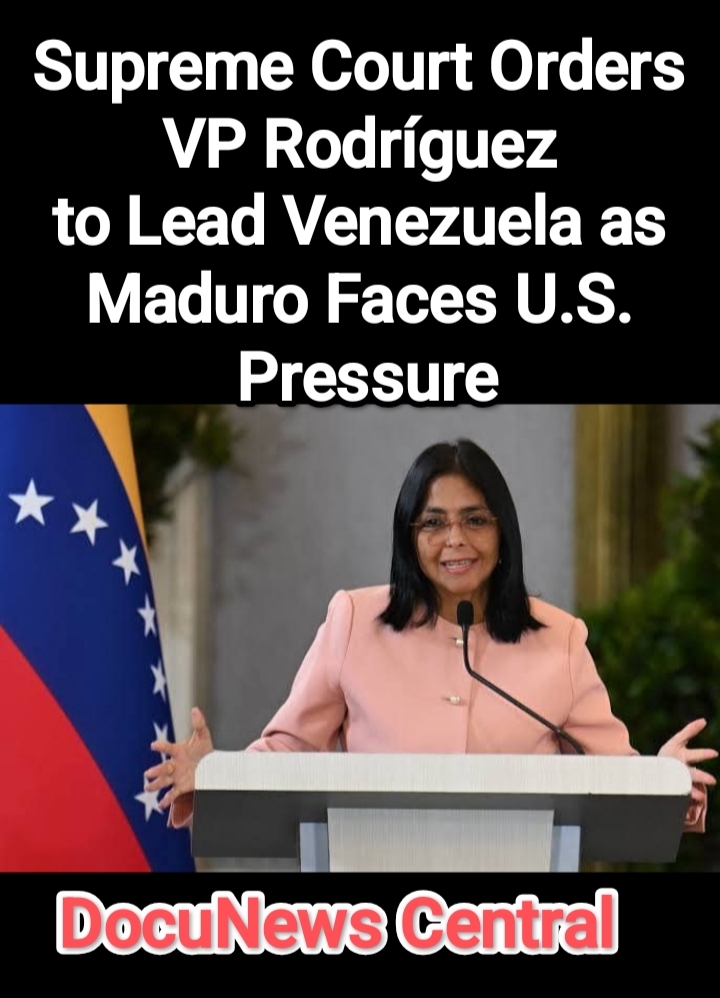
Supreme Court Orders VP Rodríguez to Lead Venezuela as Maduro Faces U.S. Pressure
In a dramatic turn of events, Venezuela’s Supreme Court has officially ordered Vice President Delcy Rodríguez to assume the role of interim president. This decision comes after mounting pressure from the United States on President Nicolás Maduro, whose administration has faced increasing international scrutiny over governance, economic mismanagement, and human rights concerns. The Supreme Court’s move signals a pivotal moment in Venezuelan politics, highlighting the tensions between domestic legal structures and foreign interventions.
The political landscape in Venezuela has long been volatile. Maduro’s leadership, following the tenure of Hugo Chávez, has faced criticism both domestically and abroad. With the U.S. intensifying its pressure, including sanctions and diplomatic measures, the Supreme Court’s decision to appoint Delcy Rodríguez as interim president demonstrates an urgent response aimed at maintaining internal stability while navigating external pressures. Pause and also read this information Deadly Bandit Attack in Kogi: Idofin Community Suffers Casualties
Supreme Court Orders VP Rodríguez to Lead Venezuela: Political Context
The Supreme Court’s announcement did not occur in isolation. Venezuela’s political environment has been under intense scrutiny, particularly regarding the legitimacy of Maduro’s continued presidency. Delcy Rodríguez, known for her loyalty to Maduro, has served as vice president and foreign affairs chief, earning both praise and criticism for her handling of domestic and international issues.
The U.S. government has consistently criticized Maduro’s administration, citing election irregularities and alleged human rights abuses. Sanctions have targeted key figures within the Venezuelan government, including financial and travel restrictions. The Supreme Court’s decision can be interpreted as a strategic move to safeguard national governance while signaling to the international community that Venezuela’s legal framework remains operational despite external pressures.
This development also raises questions about the balance of power within Venezuela. The Supreme Court, regarded as a stronghold of Maduro’s supporters, now places Rodríguez in a position of substantial authority. Analysts suggest this could either stabilize the nation or heighten political tensions, depending on how Rodríguez manages both domestic governance and international relations.
Delcy Rodríguez as Interim President: Implications for Venezuela
Assuming the interim presidency, Delcy Rodríguez faces immediate challenges. The economic crisis in Venezuela, characterized by hyperinflation, shortages of essential goods, and a collapsing currency, requires urgent attention. Furthermore, public confidence in political institutions remains fragile. Rodríguez’s ability to navigate these challenges will determine the trajectory of her interim administration.
Internationally, her appointment has elicited mixed reactions. While Maduro’s allies have welcomed the decision, countries aligned with the U.S. have expressed concern. Analysts predict that Rodríguez will need to engage in delicate diplomacy to maintain trade relations and address humanitarian concerns, particularly as Venezuela continues to face a refugee crisis affecting neighboring countries.
Rodríguez’s interim presidency may also reshape Venezuela’s political alliances. Domestically, she must manage a complex relationship with the National Assembly and other opposition groups. Externally, she must address the United States’ ongoing pressure, negotiate potential easing of sanctions, and reassure international investors about the stability of Venezuela’s political system. Many people are reacting to this headline China, Russia, Iran, and Cuba Unite to Support Venezuela Against U.S. Pressure
Supreme Court Orders VP Rodríguez to Lead Venezuela: International Reactions
The international community has closely monitored Venezuela’s political developments. The U.S., European Union, and several Latin American countries have criticized Maduro’s administration for eroding democratic institutions. With Delcy Rodríguez now serving as interim president, these nations face decisions on whether to recognize her authority or continue pressuring Maduro’s government.
Regional powers such as Cuba, Russia, and China have shown support for Maduro’s administration. Their stance may influence Rodríguez’s foreign policy decisions, particularly regarding trade, energy, and security cooperation. Meanwhile, humanitarian organizations continue to monitor the situation, emphasizing the need for immediate aid to mitigate the ongoing crisis affecting millions of Venezuelans.
The Supreme Court’s decision also has broader implications for Latin American geopolitics. Countries such as Colombia and Brazil, which share borders with Venezuela, are particularly affected by migration and economic instability. Rodríguez’s policies and ability to engage diplomatically could directly influence regional stability and international relations.
Challenges Ahead for Delcy Rodríguez’s Interim Leadership
While the Supreme Court Orders VP Rodríguez to Lead Venezuela as Maduro Faces U.S. Pressure marks a significant milestone, numerous challenges lie ahead. Economically, stabilizing the Venezuelan economy requires tackling hyperinflation, restoring confidence in financial institutions, and ensuring the supply of essential goods. Politically, Rodríguez must navigate a polarized society and manage opposition forces without escalating conflicts.
Moreover, international recognition remains uncertain. Rodríguez must balance domestic needs with diplomatic negotiations, particularly with the U.S. and European nations. Her leadership style, decision-making, and ability to unify key political actors will determine whether Venezuela moves toward stability or further turmoil.
Conclusion: Supreme Court Orders VP Rodríguez to Lead Venezuela as Maduro Faces U.S. Pressure
The appointment of Delcy Rodríguez as interim president underscores the fragility and complexity of Venezuela’s political system. The Supreme Court’s decision reflects both a response to external pressures and an attempt to maintain national governance. Rodríguez’s tenure, though interim, carries immense responsibility, encompassing economic recovery, domestic stability, and international diplomacy.
As Venezuela navigates this uncertain period, the global community will watch closely. The Supreme Court Orders VP Rodríguez to Lead Venezuela as Maduro Faces U.S. Pressure not only signals a shift in leadership but also highlights the intricate interplay between domestic politics and international influence. How Rodríguez handles these challenges will shape Venezuela’s future and its standing on the world stage. If you want to know more about DocuNews Central. Please visit this ABOUT US- DOCUNEWS CENTRAL
For further updates on Venezuelan politics and international affairs, visit BBC Latin America News and Reuters Americas.
