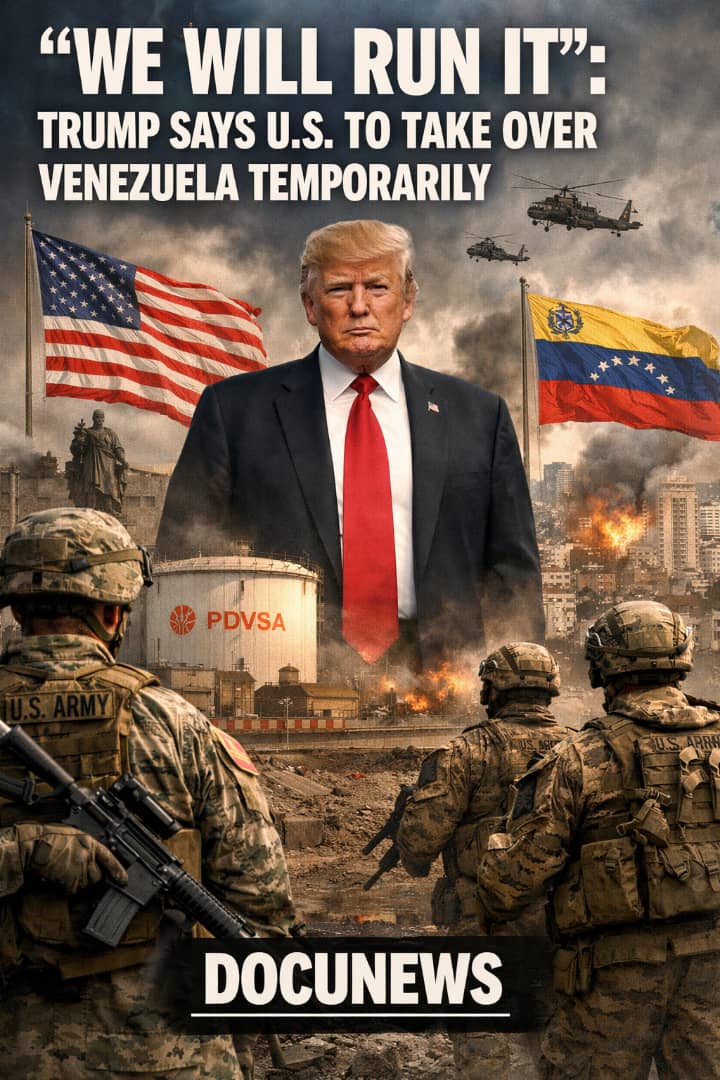
The world is watching with shock and uncertainty. Following a dramatic raid in Venezuela, U.S. President Donald J. Trump announced that the United States would temporarily assume control of Venezuela’s governance. He stated that the U.S. would “run” the country until a safe, proper, and judicious transition takes place. And this made headlines “Trump Announces Temporary U.S. Control Over Venezuela”
Trump made the declaration shortly after U.S. forces confirmed the operation, framing the move as a stabilising effort rather than a permanent takeover. According to reporting by Reuters, Trump said the U.S. could not allow Venezuela to remain in political limbo following the raid.
The announcement immediately drew international attention, raising urgent questions about sovereignty, legality, and the real meaning of temporary foreign control. As events unfold, Venezuela now stands at a critical turning point.
What “Take Over Venezuela Temporarily” Could Look Like
Understanding what it means to take over Venezuela temporarily requires examining the scope of U.S. involvement described by officials. Early statements suggest that the transition would focus on restoring order, securing national assets, and stabilising institutions weakened by years of economic and political strain.
Trump placed special emphasis on Venezuela’s oil sector. According to Associated Press, he said U.S. energy companies would play a role in repairing damaged refineries and restarting production, describing the infrastructure as badly broken.
Beyond energy, governance oversight may include financial systems, border security, and coordination with international partners. While no detailed roadmap has been published, U.S. officials insist the arrangement remains limited and transitional.
However, analysts warn that even short-term control carries long-term consequences. Governing a nation of more than 28 million people requires cooperation from local institutions, security forces, and communities.
Without trust and coordination, rebuilding efforts could face resistance and delays. Read also Breaking: Zamfara Bandits Strike Again, Burn Two Vehicles and Abduct Travelers
Why Trump Says the U.S. Will “Run” Venezuela
Trump justified the move by citing security concerns and long-standing allegations against the previous Venezuelan leadership. According to coverage from The Guardian, U.S. officials accused the former government of links to organised crime and regional instability.
Economic factors also featured prominently. Venezuela holds some of the world’s largest proven oil reserves, and restoring output could reshape the country’s finances. Trump argued that restarting oil production would provide revenue needed to rebuild essential services.
He also claimed that U.S. oversight would prevent rival factions or foreign interests from exploiting the power vacuum. Allowing uncontrolled transition, he warned, could plunge the country deeper into chaos.
Supporters see the move as decisive intervention. Critics, however, argue it reflects a pattern of external influence in Latin American affairs. People are reacting to this headline too BREAKING: Military Combat Drone Crashes in Kontagora Forest, Niger State
Global Reactions to “We Will Run It”: Trump’s Venezuela Claim
International reaction has been swift and divided. Several governments expressed concern over the precedent set by one nation assuming control of another. Legal experts questioned whether the action aligns with international law and existing treaties.
Within Venezuela, responses vary. Some citizens hope foreign oversight will restore stability, access to food, and functioning public services. Others view the move as an erosion of national sovereignty.
According to Al Jazeera, former officials condemned the announcement and called for resistance, while opposition groups remain cautious about the transition.
Humanitarian organisations warn that political uncertainty often slows aid delivery and worsens living conditions for vulnerable populations.
What Temporary U.S. Control Could Mean for Venezuelans
For everyday Venezuelans, the announcement brings mixed emotions. Short-term improvements in fuel supply, electricity, and public services could ease daily hardships.
Yet uncertainty remains. Many citizens question how long temporary control might last and whether local voices will influence decision-making.
Economic recovery, even with foreign investment, takes time. Inflation, unemployment, and shortages may continue during the transition period.
Public perception will depend on visible improvements rather than political promises.
What Happens Next in Venezuela’s Transition
Key questions remain unanswered. The U.S. has not announced a clear timeline for returning authority to Venezuelan leadership. Without benchmarks, skepticism is likely to grow.
Diplomatic engagement, international monitoring, and negotiations could shape the legitimacy of the process.
Oil infrastructure repairs, governance reforms, and humanitarian relief will test the credibility of the transition plan.
The situation remains fluid, with each decision carrying significant consequences.
A Defining Moment for Venezuela and the Region
“We Will Run It”: Trump Says U.S. to Take Over Venezuela Temporarily may prove to be one of the most consequential political moments in the region’s modern history.
The outcome will influence regional stability, global diplomacy, and future intervention norms.
For now, Venezuela remains under intense international scrutiny as the world waits to see whether temporary control leads to recovery or deeper division.