
Breaking news
China Condemns U.S. Strikes on Venezuela as Violation of International Law

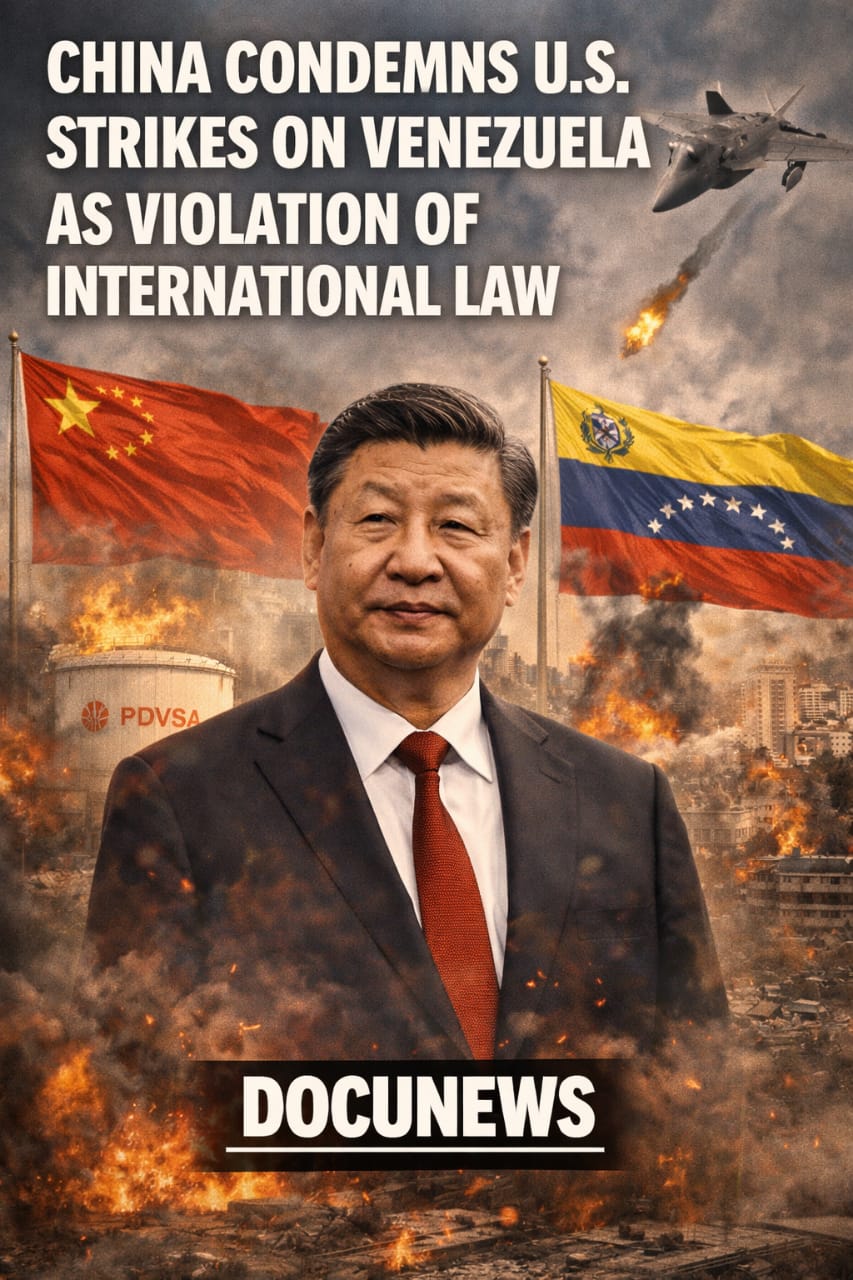
China Condemns U.S. Strikes on Venezuela as Violation of International Law has become a major talking point in global diplomacy, as Beijing openly criticized Washington’s latest military actions involving Venezuela. The statement has triggered international debate, renewed geopolitical tension, and raised questions about the future of international law enforcement. As power blocs react, the global community watches closely. And this made headlines “China Condemns U.S. Strikes on Venezuela as Violation of International Law”
In recent days, China publicly condemned the U.S. strikes on Venezuela, describing them as a clear violation of international law and a dangerous precedent for global stability. According to Chinese officials, the use of force without international authorization undermines sovereignty, worsens regional instability, and weakens multilateral systems that protect weaker nations.
This development matters because Venezuela already faces economic pressure, diplomatic isolation, and internal political challenges. Therefore, any external military action draws intense scrutiny. At the same time, China’s response reflects its broader stance on non-interference and respect for national sovereignty, principles Beijing consistently emphasizes in international forums.
As a result, the situation now extends beyond bilateral disagreement. Instead, it has evolved into a wider confrontation over international norms, global leadership, and the rules governing military intervention. Pause and also read this China, Russia, Iran, and Cuba Unite to Support Venezuela Against U.S. Pressure
China Condemns U.S. Strikes on Venezuela as Violation of International Law: Beijing’s Official Position
China’s foreign ministry reacted swiftly after reports of U.S. strikes linked to Venezuelan territory surfaced. Officials stated that any military action taken without approval from the United Nations Security Council violates the UN Charter. Moreover, they stressed that sovereignty remains a cornerstone of international relations.
According to Beijing, powerful nations should not act as global enforcers. Instead, they should pursue dialogue, diplomacy, and multilateral engagement. China warned that unilateral strikes weaken trust among nations and increase the risk of long-term conflict.
Furthermore, Chinese diplomats urged all parties to exercise restraint. They emphasized that escalation would only deepen humanitarian suffering and disrupt regional balance in Latin America. Notably, China avoided inflammatory language, yet its message remained firm and direct.
This response aligns with China’s consistent voting record at the United Nations, where it often opposes foreign military interventions lacking international consensus. In this case, Beijing framed its criticism as a defense of global order rather than an attack on U.S. leadership.
To understand this position fully, it is important to examine China’s long-standing foreign policy doctrine. China traditionally promotes peaceful coexistence, mutual respect, and non-aggression. Therefore, the condemnation followed a predictable pattern, although the timing increased its impact. Many people are reacting to this headline too “We Will Run It”: Trump Says U.S. to Take Over Venezuela Temporarily
Why the U.S. Strikes on Venezuela Triggered International Law Concerns
The controversy surrounding the U.S. strikes centers on legality rather than capability. International law strictly limits the use of force between states. Under the UN Charter, military action becomes lawful only under self-defense or with Security Council authorization.
In this case, critics argue that neither condition applied clearly. As a result, China and several other nations raised alarms about precedent. If unchecked, such actions could normalize unilateral interventions worldwide.
Additionally, Venezuela’s status as a sovereign nation complicates any justification for external force. Despite political disagreements, international law protects state borders and internal governance. Consequently, China framed its objection as a defense of global rules, not Venezuelan politics.
Legal scholars also point out that selective enforcement of international norms weakens the credibility of global institutions. When powerful countries act alone, smaller states lose faith in collective security systems.
This concern explains why China’s reaction resonated beyond diplomatic circles. It echoed broader fears about the erosion of international law in an era of rising geopolitical rivalry.
China Condemns U.S. Strikes on Venezuela as Violation of International Law: Global Reactions
China’s condemnation quickly drew global attention. Several countries in Latin America expressed concern over increased militarization in the region. Meanwhile, some European voices called for restraint and renewed diplomatic engagement.
Although reactions varied, many observers agreed that the incident exposed deep fractures in the international system. On one side, the United States emphasized security priorities. On the other, China highlighted legal frameworks and sovereignty.
International organizations also weighed in. Analysts within multilateral institutions warned that unresolved disputes risk undermining peace efforts across multiple regions. Therefore, the Venezuelan situation became a symbol of wider global tension.
Importantly, China avoided isolating itself. Instead, it positioned its argument within accepted international principles. This approach strengthened its credibility among nations concerned about unchecked power.
As discussions continued, the focus shifted toward accountability and future prevention. Many diplomats called for renewed dialogue within the United Nations, reinforcing the need for collective decision-making.
The Strategic Context Behind China’s Strong Language
China’s condemnation did not occur in a vacuum. Over recent years, Beijing has increasingly challenged unilateral military actions worldwide. This pattern reflects China’s growing role as a global power seeking to shape international norms.
Moreover, Venezuela holds strategic importance due to energy resources and geopolitical alliances. China maintains economic ties with Caracas, including infrastructure investment and energy cooperation. Therefore, stability in Venezuela aligns with China’s broader interests.
However, China’s response focused on principles rather than economics. By emphasizing international law, Beijing avoided appearing self-interested. Instead, it framed itself as a defender of global order.
This strategy enhances China’s soft power among developing nations. Many countries facing external pressure view China’s stance as protective rather than domineering.
Consequently, the statement served multiple purposes: defending sovereignty, reinforcing legal norms, and strengthening diplomatic influence.
Impact on U.S.–China Relations
The condemnation adds another layer of complexity to U.S.–China relations. Already strained by trade disputes, security concerns, and ideological differences, the relationship now faces renewed diplomatic friction.
While neither side signaled immediate escalation, analysts believe such disputes accumulate over time. Each disagreement deepens mistrust and narrows cooperation space.
Nevertheless, both countries continue to engage through diplomatic channels. Despite public criticism, China avoided direct confrontation, leaving room for dialogue.
This careful balance reflects the reality of global interdependence. Although rivalry exists, cooperation remains necessary on issues like climate change, health security, and global finance.
Therefore, the Venezuela issue may strain relations without causing immediate rupture.
International Law and the Future of Military Intervention
At the heart of the debate lies a fundamental question: who enforces international law? China argues that collective institutions, not individual states, should hold that responsibility.
If unilateral actions continue, international law risks becoming symbolic rather than binding. This concern resonates with many nations that rely on legal protections rather than military strength.
Therefore, China’s condemnation reflects a broader call to restore respect for multilateral systems. According to Beijing, legitimacy arises from consensus, not power.
This perspective challenges interventionist approaches that prioritize immediate security outcomes over long-term stability.
As global tensions rise, the debate over lawful force will likely intensify.
Why Venezuela Remains at the Center of Global Power Struggles
Venezuela’s political crisis has drawn international attention for years. Sanctions, diplomatic isolation, and internal divisions continue to shape its trajectory.
External involvement, however, complicates resolution efforts. Each intervention risks deepening polarization rather than promoting stability.
China’s stance highlights this risk. By opposing strikes, Beijing advocates for political solutions rather than military pressure.
This approach contrasts sharply with coercive strategies favored by some Western policymakers.
As a result, Venezuela remains a testing ground for competing visions of global order.
Internal and External Perspectives
For deeper insight into global diplomacy and international law, readers can explore our World News section and our analysis on International Relations.
For authoritative global perspectives, refer to the United Nations and the International Committee of the Red Cross.
Conclusion: A Defining Moment for Global Norms
China Condemns U.S. Strikes on Venezuela as Violation of International Law represents more than a diplomatic statement. It reflects a growing struggle over who defines legality, authority, and responsibility in global affairs.
As power dynamics shift, international law faces increasing pressure. Whether nations choose cooperation or confrontation will shape future stability. To know more about DocuNews Central please visit ABOUT US- DOCUNEWS CENTRAL
For now, China’s message remains clear: sovereignty matters, law matters, and unilateral force carries consequences.
The world watches closely as diplomacy, not missiles, determines the next chapter.